

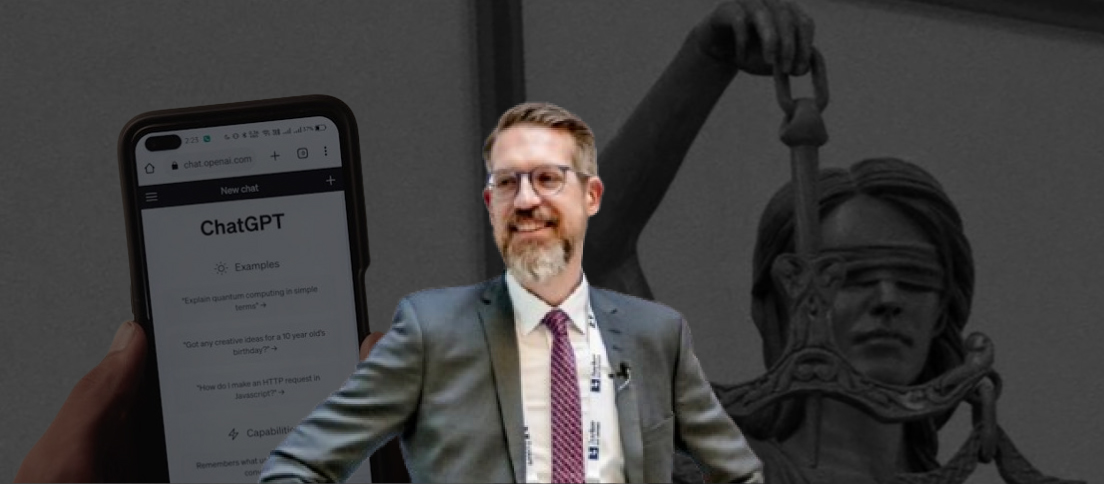
As the debate around AI prompt patent protection continues to evolve, few voices carry as much authority as Bastian Best, a European patent attorney who has emerged as one of the field’s leading experts.
Recognized by the European Patent Office as an “AI Patent Expert” and named among their “50 Leading Tech Voices,” Best runs BestPatent, a Munich-based hyper-niche patent law firm specializing exclusively in software, AI, and digital innovations. With a master’s degree in computer science and over 15 years of experience drafting software patents, he brings a unique technical perspective to the legal complexities of AI prompt patent protection.

Following our recent exploration of AI patent protection in DesignWhine’s Issue # 17 where we delved into the implications of seeking patents for prompt engineering work, we reached out to Best to get his expert take on where the industry stands today.
His insights reveal a legal landscape that’s more nuanced than many technologists might expect, where the line between patentable innovation and creative input depends heavily on technical implementation and measurable outcomes.
Drawing the Line: What Makes AI Patentable
When we asked Best about the boundaries of what’s patentable in AI and where we draw the line, his response highlighted the technical threshold that separates innovation from mere application:
“The boundaries of what’s patentable differ from country to country, especially when it comes to emerging technologies like AI. But across almost all modern patent systems, there’s a shared baseline: to be patentable, an invention must deliver some form of technological progress or technical effect.
In the context of AI, that typically means tangible technological improvements. For example, an AI system that enhances the efficiency of a robotic arm, improves the accuracy of medical diagnostics, or optimizes energy consumption in a data center. The key is that it solves a concrete technical problem, not just that it uses AI.
A novel AI model or algorithm may be patentable if it improves technical performance, such as processing speed or memory usage. But a prompt that simply produces more creative or relevant text? That’s unlikely to qualify. Abstract ideas, mathematical concepts, or results without a specific technical implementation generally fall outside the scope of patentability.
The line is crossed when AI shifts from being a generic computational tool to a means of achieving a concrete technical solution.
So where do we draw the line? The line is crossed when AI shifts from being a generic computational tool to a means of achieving a concrete technical solution. What matters is not the ‘magic’ of AI, but the engineering insight behind its application, the how and why it works to solve a technical problem in a novel and non-obvious way.”
This perspective aligns with the sophisticated prompt engineering work highlighted in our previous article, where Microsoft’s engineers spent months crafting prompts that improved financial summary output by 40%. Such measurable improvements in system performance could potentially cross the threshold for AI prompt patent protection.
The Creative Input vs. Technical Invention Debate
One of the most pressing questions in AI prompt patent protection concerns whether prompts can ever transcend their nature as creative inputs to become technical inventions. Best’s response reveals the nuanced reality:
“This is a fascinating and evolving area of patent law, sitting at the intersection of creativity and technical enablement. Traditionally, a prompt might be viewed as a creative input, akin to a detailed instruction or a recipe. However, in the context of advanced AI models, particularly large language models and generative AI, the distinction becomes blurred.
I believe a prompt can be considered a technical invention, but not in isolation. A standalone natural language prompt like ‘write a poem about a cat’ is unlikely to be patentable. It’s a creative input.
But there are edge cases where a prompt plays a functional, technical role. For example, if a prompt is carefully structured to guide a language model in controlling a robotic system or processing sensor data more effectively, it may contribute to a technical effect. In such scenarios, the prompt isn’t just a request. It’s part of a system that delivers a measurable technical outcome.
A standalone natural language prompt like ‘write a poem about a cat’ is unlikely to be patentable. It’s a creative input.
Another compelling example is when a prompt is formulated specifically to overcome known limitations of the model, such as its token window. If a team develops a strategy of chaining or segmenting prompts to allow the model to reason over much longer inputs than it otherwise could, that can be framed as solving a technical problem. It’s not about the prompt text itself being patentable, but about the method of using prompts in a way that improves system performance.
So, while most prompts are probably not technical inventions, they can be part of one, when they’re embedded in a broader technical context that delivers a concrete, repeatable effect.”
Strategic Considerations: Patents vs. Trade Secrets
When we posed a scenario about a team designing a unique prompt that drastically improves an AI model’s output and whether they should pursue patent protection or trade secret status, Best provided practical guidance:
“It depends on why the prompt works and what kind of improvement it enables.
If the prompt improves the model’s output in a way that solves a technical problem, say, increasing reliability in autonomous vehicle control or reducing false positives in medical diagnosis, then it might be possible to protect the method of using the prompt via a patent. The focus would be on how the prompt contributes to a technical effect, not the text of the prompt itself.
The key is always: does the prompt contribute to solving a technical problem in a way that’s repeatable and not obvious?”
But if the value lies purely in the knowledge that a certain phrasing leads to better results, like a ‘magic prompt’ that produces more persuasive marketing copy, then it likely doesn’t meet the threshold for patentability. In those cases, trade secret protection is more appropriate, assuming the prompt can be kept confidential and isn’t easily reverse-engineered.
Ideally, teams should evaluate both routes. If the use of the prompt forms part of a technical method with repeatable, measurable effects, a patent can be powerful. But for isolated prompt strategies that work through trial-and-error and are hard to explain technically, trade secrets may offer more practical protection.”
Real-World Patent Applications
Best’s practical experience offers valuable insights into how AI prompt patent protection actually manifests in real patent applications:
“Yes, but rarely as standalone elements. I’ve seen cases where prompts are central to the claimed invention, but always as part of a broader technical method or system. In those cases, the prompt is not the invention itself. It’s a key input that enables the system to achieve a technical effect.
So while you won’t see ‘here’s the prompt’ in the claims, you will see inventions where prompting is described as part of the input pipeline, conditioning method, or control mechanism. The key is always: does the prompt contribute to solving a technical problem in a way that’s repeatable and not obvious?”
The Speed of Legal Evolution
Perhaps the most pressing concern for AI companies involves whether patent systems can evolve quickly enough to match the pace of AI development. Best’s assessment is both realistic and optimistic:
“The patent system, by its very nature, is designed for thorough examination and deliberation, which is often a slow process. AI, on the other hand, is moving at an exponential pace.
Patent offices are still grappling with how to assess the inventiveness and technical contribution of AI-related inventions, especially when they rely on data, training techniques, or fuzzy outcomes.
But I think the problem isn’t just speed. It’s also interpretation. Patent offices are still grappling with how to assess the inventiveness and technical contribution of AI-related inventions, especially when they rely on data, training techniques, or fuzzy outcomes. There’s no global consensus on how to handle issues like AI-generated content, or who the inventor is if AI is involved.
That said, I’m optimistic. We’re already seeing more nuanced case law, better examiner guidelines, and more AI-literate patent professionals. It’s a learning curve, not a dead end. And in a way, the slowness of the system also forces us to focus on what really matters: capturing the core technical contribution, not just the hype.”
The Path Forward
Best’s expert perspective reveals that successful AI prompt patent protection will likely depend on demonstrating how prompts contribute to concrete technical solutions rather than focusing on their creative or linguistic qualities. As the legal landscape continues to evolve, companies investing in sophisticated prompt engineering should evaluate their innovations through the lens of technical contribution and measurable outcomes.
The insights from this interview suggest that while we remain in a period of legal uncertainty around AI prompt patent protection, understanding the technical thresholds and strategic considerations can help companies make informed decisions about protecting their AI innovations. Whether through patents or trade secrets, the key lies in recognizing when prompts transcend creative input to become part of genuine technical solutions.