
The Apple Vision Pro’s first generation (M2 model) discontinued production in late 2024, but the story behind its challenging market reception tells us more about the future of mixed reality than any marketing presentation ever could. What started as Apple’s boldest hardware bet in years ended not with fanfare, but with assembly lines going dark and warehouses full of unsold inventory of the original M2 model.
While Apple has since launched an updated M5 version in October 2025, the first-generation’s struggles offer a rare glimpse into how even a giant like Apple can misread a market, and what that means for the entire spatial computing industry.
The Numbers Paint a Devastating Picture
Apple’s initial projections were ambitious to the point of delusion. The company expected to sell a million Vision Pro units in year one, later scaling back expectations to 500,000 units as reality set in. The M2 model sold fewer than 370,000 worldwide by the time production ceased.
The manufacturing story tells an even more sobering tale. Production peaked at 2,000 units daily in early 2024 before dropping to 1,000 units per day by summer. Luxshare Precision, Apple’s primary assembler, received shutdown orders by November 2024. Component suppliers had already produced enough parts for between 500,000 to 600,000 headsets by October, leaving massive inventory overhangs that would take years to clear at current demand levels.
But the real story isn’t in the sales figures. It’s in the return rates and usage patterns that emerged during the M2’s lifecycle after Apple discontinued production. Return rates during the 14-day window reportedly exceeded 25%, an unprecedented figure for Apple hardware. Even more telling, users who kept their devices showed rapidly declining engagement over time.
When Innovation Collides with Human Biology
The first-generation Vision Pro represented a masterclass in miniaturization and display technology. Its dual 4K micro-OLED screens delivered unprecedented visual fidelity, while advanced sensors tracked eye movements with surgical precision. Hand tracking worked so seamlessly it felt like magic. On paper, it was everything spatial computing promised to be.
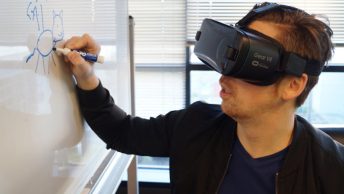
In practice, human biology had other plans. Early adopters flooded forums with complaints about headaches, neck strain, and motion sickness during extended use. The device’s weight distribution created pressure points across the face and skull that no amount of adjustment could eliminate. Users found themselves limiting sessions to 30-45 minutes, defeating the entire purpose of an immersive computing platform.
Early adopters flooded forums with complaints about headaches, neck strain, and motion sickness during extended use.
The ergonomic challenges weren’t just comfort issues – they were fundamental barriers to adoption. Unlike smartphones or laptops that users can engage with for hours, the original Vision Pro demanded physical tolerance that many simply didn’t possess. These lessons informed Apple’s development of the M5 successor, which launched in October 2025 with improved ergonomics.
The Software Mirage
Apple touted over 600 Vision Pro-specific apps at launch, a number that sounds impressive until you examine the actual catalog. The vast majority were basic utilities, tech demos, or hasty ports of existing iPad apps. The content desert became apparent within weeks of launch.
Major streaming services like Netflix never bothered building native applications. YouTube required awkward workarounds through Safari. Gaming remained limited to arcade-style experiences that felt more like proof-of-concepts than finished products. For a device positioned as the future of computing, the software landscape felt remarkably barren.
The developer reluctance wasn’t arbitrary – it was economically rational. Building Vision Pro apps required specialized skills, new development frameworks, and significant time investment. With such a limited user base, the return on investment simply didn’t make sense for most companies. Apple found itself trapped in a classic chicken-and-egg problem: no users without great apps, no great apps without users.
This software shortage became self-reinforcing. Users who initially embraced the hardware found themselves with little to do beyond basic productivity tasks and media consumption. The promised transformation of computing remained stubbornly theoretical.
The Price of Perfection
At $3,499, the M2 Vision Pro wasn’t just expensive – it was prohibitively costly for all but the most enthusiastic early adopters. Apple’s typical premium pricing strategy, which works brilliantly for iPhones and MacBooks, proved disastrous for an unproven product category.
The high price point reflected genuine technical achievements. The Vision Pro packed more advanced sensors and processors than most laptops into a form factor that could sit on someone’s face. Every component represented bleeding-edge technology, from the custom M2 chip to the revolutionary eye-tracking cameras.
Apple’s typical premium pricing strategy, which works brilliantly for iPhones and MacBooks, proved disastrous for an unproven product category.
But technical sophistication doesn’t automatically justify market pricing. Consumers needed compelling use cases that justified the premium, and those use cases never materialized. Professional applications remained limited, entertainment options were sparse, and productivity benefits were marginal compared to traditional computing setups.
Industry Implications Run Deep
The first-generation Vision Pro’s market struggles sends shockwaves through the broader mixed reality industry. If Apple, with its legendary product development capabilities, deep pockets, and marketing prowess, couldn’t successfully introduce mainstream audiences to spatial computing on the first attempt, what does that mean for everyone else?
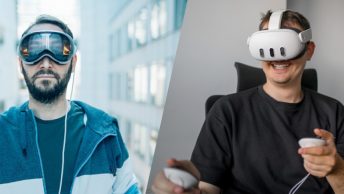
Early last year, Meta’s Mark Zuckerberg had publicly dismissed the Vision Pro after testing it, claiming Meta’s Quest 3 offered superior value at a fraction of the cost. This competitive positioning has proven prescient – Quest 3 sales have remained steady while Vision Pro demand evaporated. The market clearly preferred affordability and established gaming ecosystems over premium hardware and experimental interfaces.
The M2’s challenges also expose fundamental questions about spatial computing’s readiness for mainstream adoption. Current VR and AR technologies still require significant compromises in comfort, battery life, and social acceptability. The Vision Pro’s technical achievements couldn’t overcome these inherent limitations in its first iteration.
Apple’s Strategic Reset
Rather than doubling down on premium spatial computing, Apple has reportedly shifted focus toward developing a more affordable mixed reality headset. Industry analysts expect this device, touted to be the second generation of the Apple Vision pro, to launch between late 2025 and early 2026, with a target price closer to $1,500-2,000. The second generation would have an upgraded M5 chip to improve performance and battery life while maintaining the $3,499 price point.
This strategic pivot acknowledges what the market already demonstrated: innovation without accessibility is just expensive experimentation. The company has also suspended work on a second-generation Vision Pro for at least one year, providing breathing room to fundamentally reassess the entire product category.
Having said that, the reset isn’t an admission of failure so much as a recognition of market realities. Apple’s long-term vision for spatial computing remains intact, but the execution strategy requires iteration and refinement. There’s also a theory that Apple’s unveiling of the Liquid Glass design language in June 2025 was a deliberate strategy to acclimate users to the second generation of Apple Vision Pro and the broader spatial world of mixed reality.
Looking Forward
The story of the first-generation Vision Pro’s market struggles will likely become a case study in technology adoption curves and market timing. The device’s technical achievements were genuine – its display quality, eye tracking precision, and intuitive hand gesture controls set new industry standards. These innovations continue to influence the M5 model and will influence future devices even if the original Vision Pro becomes a commercial footnote.
For designers and technologists, the lesson is clear: advanced technology must serve genuine human needs, not just showcase engineering capabilities.
For designers and technologists, the lesson is clear: advanced technology must serve genuine human needs, not just showcase engineering capabilities. The next generation of mixed reality devices needs to solve real problems rather than create artificial ones.
The M2 Vision Pro’s legacy isn’t its failure but its reminder that even the most sophisticated companies can misread market readiness on their first attempt. Spatial computing will eventually find its audience, but success requires understanding human behavior as deeply as technical specifications. Apple’s continued commitment with the M5 release demonstrates that the vision persists, even as the execution evolves.
The fact that Apple discontinued the M2 Vision Pro to make way for improved iterations teaches us that the future often arrives later than we expect, and in forms we don’t anticipate.
Wondering how the Vision Pro compared to its biggest rival during its first generation? Don’t miss our full Apple Vision Pro vs Meta Quest 3 comparison for all the design and feature differences.