

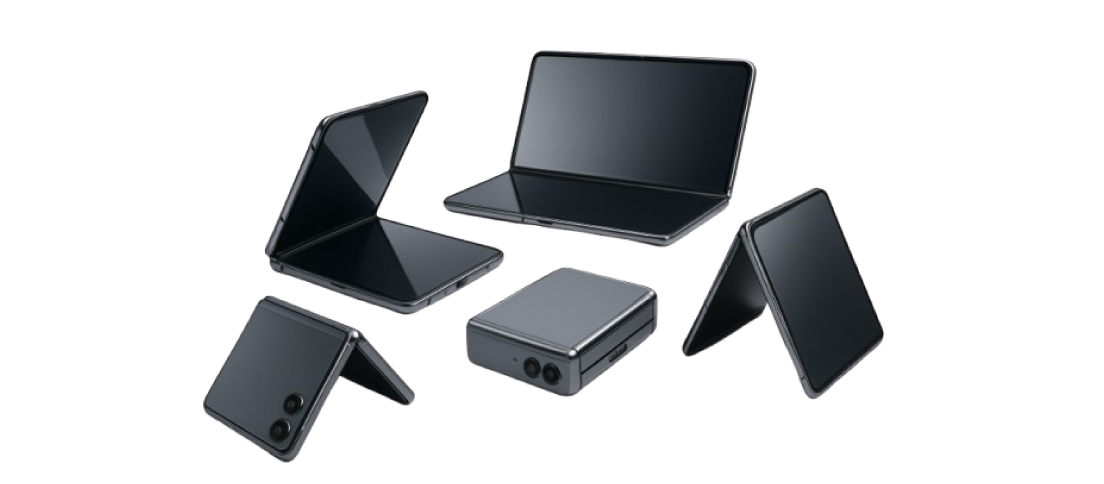
The Samsung Galaxy Fold’s 2019 debut promised to revolutionize how we interact with smartphones. Its initial launch was a disaster, with review units breaking within days, screens peeling, and hinges failing. Samsung recalled the device, redesigned it, and tried again. Since then, we’ve witnessed a steady parade of iterations: the Galaxy Z Flip series bringing the clamshell format to modern smartphones, Google’s Pixel Fold attempting to challenge Samsung’s dominance, and dozens of variants from Chinese manufacturers like Huawei, Xiaomi, and Honor.
Yet here we are in 2025, and foldable smartphones occupy a peculiar position in the technology landscape. The novelty has worn off. The early adopters have moved on. The engineering problems have largely been solved, but something more fundamental remains broken. These devices represent some of the most sophisticated consumer electronics ever produced, incorporating flexible OLED displays, precision hinge mechanisms, and distributed battery systems that would have seemed impossible just a decade ago.
But are they actually changing how we use phones? The answer, despite years of refinement and billions in research investment, remains stubbornly unclear. This article will explore three critical dimensions of the foldable smartphone phenomenon: the remarkable technology that makes these devices possible, the market dynamics that keep them niche, and the design philosophy that seems to prioritize engineering showmanship over user experience.
The Tech Behind Foldables
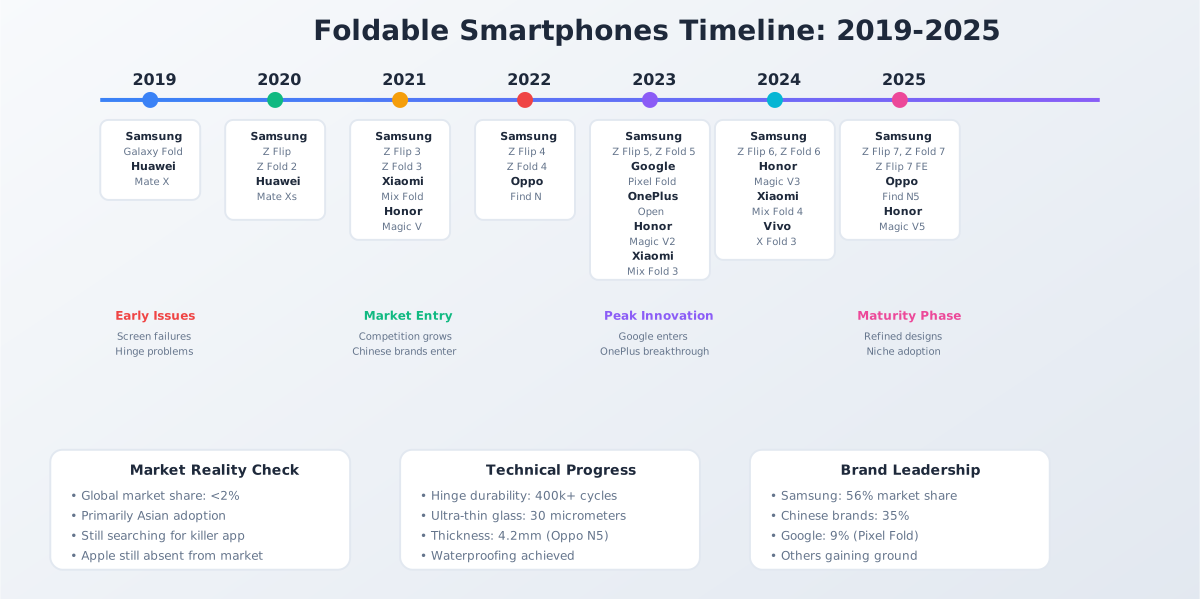
The engineering achievements that enable modern foldable smartphones deserve genuine recognition. Samsung’s latest ultra-thin glass measures just 30 micrometers thick, roughly half the width of a human hair, yet can withstand hundreds of thousands of fold cycles without cracking. This material breakthrough required developing entirely new manufacturing processes and supply chains, with specialized facilities capable of producing glass at tolerances previously thought impossible.
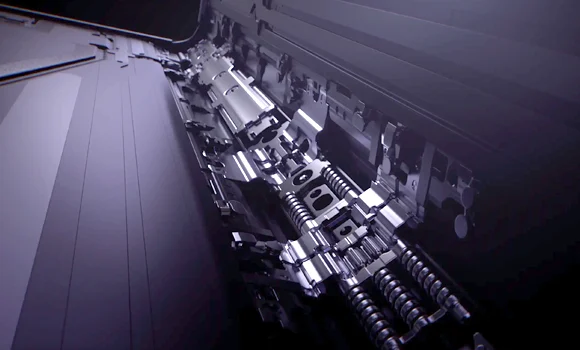
Hinge engineering represents perhaps the most sophisticated aspect of these devices. Each mechanism must accommodate the complex physics of folding a rigid display assembly while maintaining precise alignment, weatherproofing, and durability. Google’s Pixel Fold uses a distributed hinge design that spreads stress across multiple pivot points, allowing for a remarkably thin profile when unfolded. Samsung’s latest models incorporate fluid dynamics and multi-gear systems to create smooth, controlled motion that feels almost organic. Oppo’s Find N5 pushes these engineering boundaries even further with its Titanium Flexion Hinge, which uses 3D-printed aerospace-grade titanium alloy components to achieve a 26% reduction in thickness while delivering 36% superior rigidity compared to previous generations.
Waterproofing foldable smartphones presents unique challenges that traditional devices don’t face. The moving parts create potential ingress points for moisture and debris, requiring sophisticated sealing solutions that must maintain their integrity across hundreds of thousands of fold cycles. Battery segmentation adds another layer of complexity, with power cells distributed across both halves of the device and sophisticated management systems that handle the thermal and electrical characteristics of a folded form factor.
Yet these engineering marvels come with significant tradeoffs. Foldable smartphones typically weigh 20 to 30 percent more than conventional flagships, making them noticeably heavy during extended use. They’re also substantially thicker when folded, creating devices that feel chunky and unwieldy in pockets designed for traditional smartphones. The engineering constraints often mean smaller batteries relative to screen size, resulting in battery life that struggles to match single-screen alternatives.
Disconnect between technical achievement and practical desirability defines the entire category of foldable smartphones
The engineering may be cutting-edge, but are users excited about how it feels? The answer reveals a disconnect between technical achievement and practical desirability that defines the entire category.
Adoption So Far
Samsung continues to dominate the foldable smartphone market with approximately 56 percent market share, though this dominance comes with important caveats. Global foldable smartphone shipments decreased 1% YoY, marking the market’s first-ever Q3 decline, suggesting that even the category leader is struggling to maintain momentum. The absolute numbers tell a sobering story about market acceptance.
Asia Pacific holds about 68% of global shipments of foldable smartphones, revealing a stark regional divide in adoption patterns. Growth remains concentrated in Asian markets, particularly South Korea and China, where aggressive carrier subsidies, cultural acceptance of early technology adoption, and marketing campaigns positioning foldables as status symbols create artificial demand that doesn’t translate globally.
Western markets show persistent resistance to foldable smartphones despite years of availability and increasingly competitive pricing. American and European consumers remain skeptical, citing high prices, durability concerns, and most critically, a complete absence of compelling use cases that justify the compromises. Industry data suggests that organic demand in Western markets remains minimal, with sales largely driven by carrier promotions and early adopter curiosity rather than mainstream consumer enthusiasm.
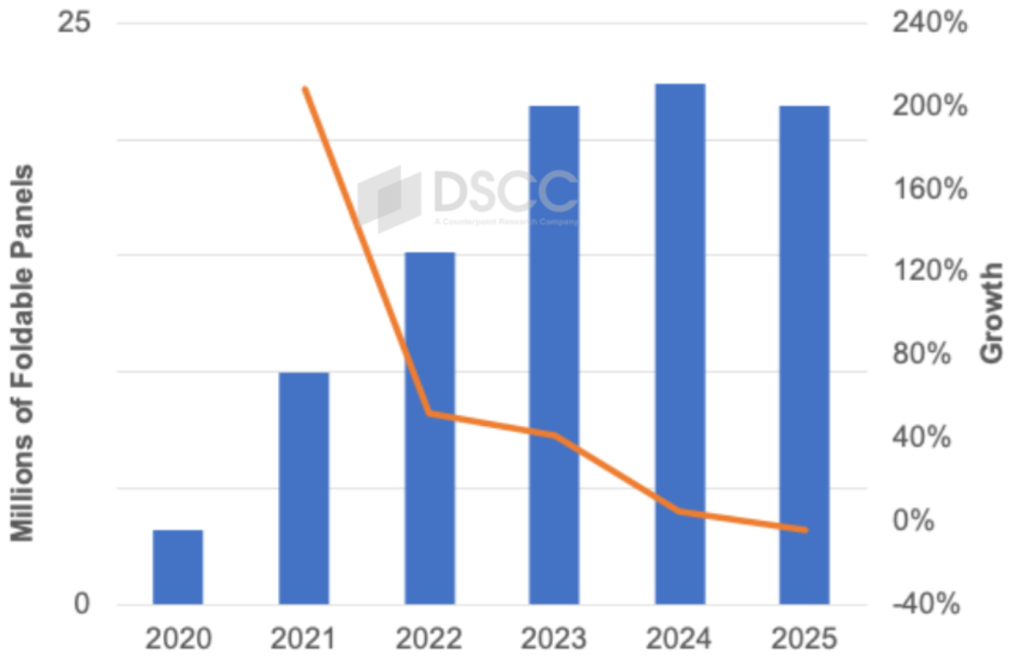
The market dynamics reveal a technology searching for its audience. After enjoying at least 40% growth per year from 2019-2023, Display Supply Chain Consultants (DSCC) now believes the foldable smartphone display market rose just 5% in 2024 and will fall by 4% in 2025, indicating that the initial growth phase may be ending without achieving the mainstream breakthrough the industry anticipated.
Carrier push campaigns have failed to generate sustained consumer interest, suggesting that awareness isn’t the problem. The hesitation runs deeper, rooted in fundamental questions about whether these devices serve genuine user needs or simply demonstrate technical capability for its own sake.
How Foldables Feel in the Hand
The daily reality of living with foldable smartphones reveals design decisions that prioritize novelty over usability. These devices suffer from an ergonomic contradiction that no amount of engineering refinement has resolved: they’re too narrow when folded for comfortable single-handed use, yet too wide and cumbersome when unfolded for practical portability.
The act of unfolding, initially satisfying and novel, quickly becomes routine and then annoying. Users develop muscle memory for the gesture, but the visible crease that runs down the center of every foldable smartphone display serves as a constant reminder of the engineering compromises required to make these devices work. This crease isn’t merely cosmetic; it affects touch sensitivity, visual continuity, and the overall premium feel that flagship smartphones are expected to deliver.
They’re too narrow when folded for comfortable single-handed use, yet too wide and cumbersome when unfolded for practical portability.
App behavior remains frustratingly inconsistent. Android’s attempts to handle transitions between folded and unfolded states work adequately for Google’s own applications but frequently break down with third-party software. Users report apps that crash during transitions, layouts that refuse to adapt properly, and interfaces that simply freeze when switching between form factors. The promise of seamless transitions between phone and tablet modes remains largely theoretical.
The ergonomics of daily use reveal deeper problems. When folded, devices like the Galaxy Z Fold series create phones that feel cramped and awkward for typing, reading, or navigation. When unfolded, they become tablets that are too heavy for comfortable one-handed use and too large for convenient storage. This leaves users in a constant state of compromise, never quite achieving the optimal experience for any particular task.
Foldables suffer from the classic innovation pitfall: just because you can, doesn’t mean you should. The engineering achievements are remarkable, but they solve problems that most users didn’t realize they had while creating new problems that are immediately apparent.
UX Innovation or Just Screen Real Estate?
Marketing materials for foldable smartphones invariably focus on multitasking capabilities and productivity features. Samsung’s DeX mode, multitasking interfaces, and Flex Mode positioning suggest these devices as productivity powerhouses that can replace both phones and tablets. The reality proves far more modest than the marketing promises.
Multi-window multitasking on smartphone screens, even large folded ones, remains cramped and impractical for serious work. The software features that enable split-screen functionality work as advertised but solve problems that better solutions already address. Users who need genuine mobile productivity typically carry devices designed specifically for those tasks, whether tablets with proper keyboard accessories or lightweight laptops.
Multi-window multitasking on smartphone screens, even large folded ones, remains cramped and impractical for serious work.
Flex Mode, which allows devices to be partially folded like a laptop, represents perhaps the most gimmicky feature in the foldable smartphone playbook. The resulting configuration is too small for comfortable typing, too unstable for reliable use, and too awkward for video calls. These modes exist primarily to justify the folding mechanism rather than serve genuine user needs.
App developers have shown limited enthusiasm for optimizing their software for foldable smartphones. Major applications support the basic functionality required to avoid crashes, but few take advantage of the unique possibilities these form factors theoretically enable. The chicken-and-egg problem of low adoption rates discouraging developer investment seems unlikely to resolve without dramatic changes in market dynamics.
Most features marketed as game-changing innovations are, upon closer examination, simply ways to use more screen real estate. But screen real estate alone doesn’t create compelling user experiences. Without applications specifically designed to take advantage of foldable form factors, these devices remain expensive solutions in search of problems.
If form follows function, most foldables are still searching for their true form.
What’s Missing
Apple’s continued absence from the foldable smartphone market shapes industry dynamics in profound ways. The company’s decision to sit out the first generation of foldable devices signals either supreme confidence in their existing product strategy or deep skepticism about the category’s long-term viability. Given Apple’s track record of entering new categories only when they can meaningfully improve the user experience, their absence speaks volumes.
The lack of iOS support means foldable smartphones remain fundamentally incomplete for users invested in Apple’s ecosystem. This isn’t simply about market share but about the network effects that drive technology adoption. Foldable smartphones can’t achieve mainstream acceptance while excluding a significant portion of the premium smartphone market.
If form follows function, most foldables are still searching for their true form
Developer investment follows platform economics, and without Apple’s participation, foldable smartphones lack the ecosystem maturity necessary for sophisticated software experiences. The App Store’s influence on mobile software development means that categories Apple doesn’t support receive limited developer attention, creating a self-reinforcing cycle of mediocrity.
Accessory ecosystems remain similarly underdeveloped. The cases, stands, screen protectors, and peripheral devices that define modern smartphone ownership barely exist for foldable devices. This reflects not just market size limitations but fundamental uncertainty about these devices’ long-term prospects.
The absence of OS-level polish extends beyond iOS. Android’s support for foldable devices works adequately but lacks the thoughtful integration that defines premium user experiences. Google’s own Pixel Fold represents their most serious attempt to address these software limitations, but even Google’s implementation feels like an afterthought rather than a fundamental rethinking of mobile interfaces.
The Future of Foldables
The industry continues to experiment with form factors that might address current limitations. Rollable displays promise to eliminate the crease problem by using continuous curves rather than sharp folds. Tri-fold devices attempt to solve the screen size compromise by offering even larger displays when fully unfolded. Dual-screen alternatives avoid folding displays entirely while maintaining the promise of expanded screen real estate.
Yet each alternative introduces new complexities and compromises. Rollable displays require even more sophisticated mechanical systems and remain years away from consumer readiness. Tri-fold devices exacerbate the weight and thickness problems that already plague the category. Dual-screen approaches eliminate display continuity, one of the few genuine advantages of current foldable smartphones.
As foldables try to redefine the phone, designers and technologists must ask: what problem are we actually solving?
The fundamental challenges facing foldable smartphones may not have technological solutions. Price reduction alone won’t solve the adoption problem, as Samsung’s introduction of more affordable models has failed to dramatically expand the market. The devices need compelling use cases that justify their existence, not just lower price points or better engineering.
The killer application for foldable smartphones remains elusive. The industry has focused obsessively on hardware capabilities rather than software experiences that take advantage of the unique form factor. Without applications that are demonstrably better on foldable devices, these products remain expensive demonstrations of technical capability rather than solutions to genuine user problems.
As foldables try to redefine the phone, designers and technologists must ask: what problem are we actually solving?
Innovation Without Purpose
Foldable smartphones in 2025 represent a fascinating case study in technological capability outpacing market demand and user experience design. They stretch our imagination about what’s possible in mobile device engineering while failing to stretch our daily habits in meaningful ways. The technical achievements deserve recognition and will undoubtedly influence future product development, but engineering excellence alone doesn’t guarantee product success.
These devices remain valuable as research and development platforms for the broader industry. The advances in flexible displays, hinge mechanisms, distributed battery systems, and adaptive user interfaces will find applications in future products, even if foldable smartphones themselves prove to be evolutionary dead ends. The technology industry often progresses through expensive experiments that don’t themselves succeed but enable later breakthroughs.
The current state of foldable smartphones reveals impressive technology, uneven design execution, and fundamentally unclear product-market fit. They demonstrate what happens when innovation prioritizes technical achievement over user experience, when engineering capabilities drive product definition rather than genuine user needs determining technical requirements.
Whether this changes depends less on continued technical improvements than on discovering authentic user needs that these devices can uniquely address. Until then, foldable smartphones remain expensive answers to questions that most people aren’t asking, remarkable demonstrations of engineering prowess that somehow feel less than the sum of their sophisticated parts.