

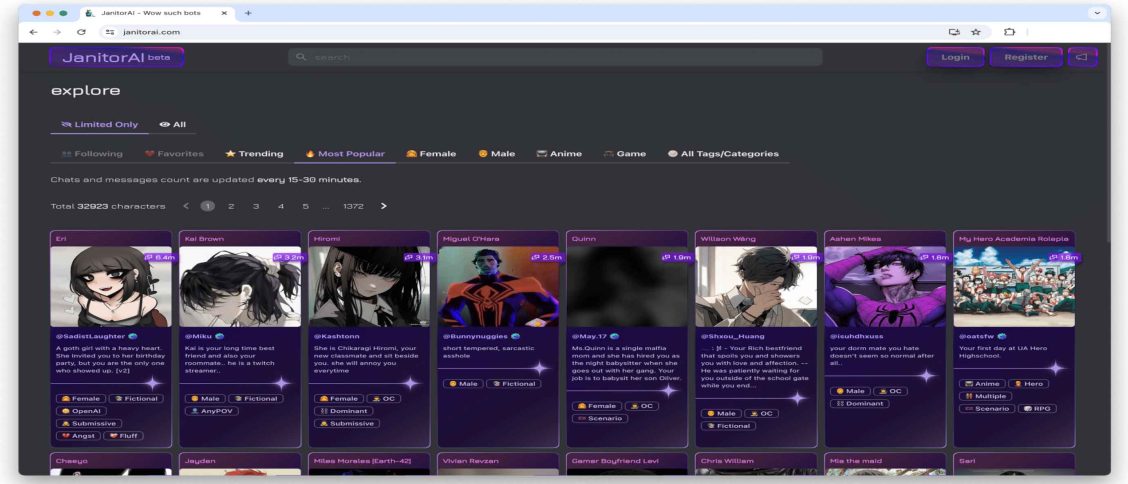
The most successful AI product of 2023 wasn’t built by Google, OpenAI, or any Silicon Valley darling. It was cobbled together by a small team who named their creation “Janitor AI” and watched it explode to millions of users within weeks. No marketing budget. No sleek interfaces. No safety committees wringing their hands over brand reputation. Just raw, unfiltered AI conversation that gave people what they desperately craved: someone who would listen, understand, and never judge them for their deepest desires. While tech giants debated guardrails and content policies, Janitor AI users were already living in the future where AI companions matter more than AI assistants.
- The AI Product That Wasn’t Meant to Be a Product
- Real Innovation Isn’t the AI, It’s the Interface
- How Janitor AI Created Retention Without Growth Hacking
- Feedback Loops, But Make Them Intimate
- A Modding Platform Disguised as a Chatbot
- Why Janitor AI Feels More Human Than Real People
- Uncensored, Unfiltered, Unethical and That’s the Point
- Companionship-as-a-Service
The AI Product That Wasn’t Meant to Be a Product
In June 2023, developer Jan Zoltkowski launched what he thought would be a niche chatbot experiment. Within seven days, over one million users had signed up. Not through clever marketing or influencer campaigns, but through desperate word-of-mouth recommendations spreading across Discord servers and Reddit threads. People were starving for an AI that wouldn’t lecture them about inappropriate content or shut down conversations the moment they got interesting.

Explore Mobbin, a living library of mobile and web design patterns trusted by design teams at Uber, Meta, Airbnb, and Pinterest
Janitor AI is part of a growing wave of platforms where users build and chat with emotionally rich, customizable AI characters. Unlike traditional assistants like ChatGPT, these bots act more like companions: intimate, unpredictable, and deeply personal.
The user demographics shattered every assumption about AI companions. 70% of its user base consists of women, according to recent platform analysis. This wasn’t the stereotypical basement-dwelling male fantasy that critics loved to mock. Women were flocking to Janitor AI because it offered something revolutionary: creative freedom without patronizing safety rails.
Janitor AI is part of a growing wave of platforms where users build and chat with emotionally rich, customizable AI characters
The platform’s architecture reflects this anti-corporate philosophy. While competitors spend millions on user experience research and conversion optimization, Janitor AI succeeds through pure functionality. You must be 18 or over to register on the website, and that’s about the only barrier between users and unlimited conversational freedom. No complex onboarding flows, no feature discovery tours, no behavioral nudging toward premium subscriptions.
What makes this particularly fascinating is how Janitor AI’s success exposes the fundamental disconnect between what tech companies think users want and what they actually crave. Janitor AI is not alone. A plethora of similar websites like Character AI, Replika, Lovescape along with Janitor AI dominate with millions monthly visits and these platforms are growing faster precisely because they reject the sanitized experience that mainstream AI products insist on delivering.
Real Innovation Isn’t the AI, It’s the Interface
While Google and Microsoft pour billions into making AI more helpful and harmless, Janitor AI cracked the code on what users actually wanted: control. Not just control over what they ask, but control over who they’re talking to, how that entity responds, and what boundaries exist in their digital relationship.
The character creation system transforms users from passive consumers into active architects of their ideal conversational partner. You can design personalities with surgical precision, adjusting traits like dominance, humor, intelligence, and emotional availability. This isn’t about making AI more human-like in some generic sense. It’s about making AI responsive to your specific psychological needs, a form of participatory design that centers the user as the co-creator.
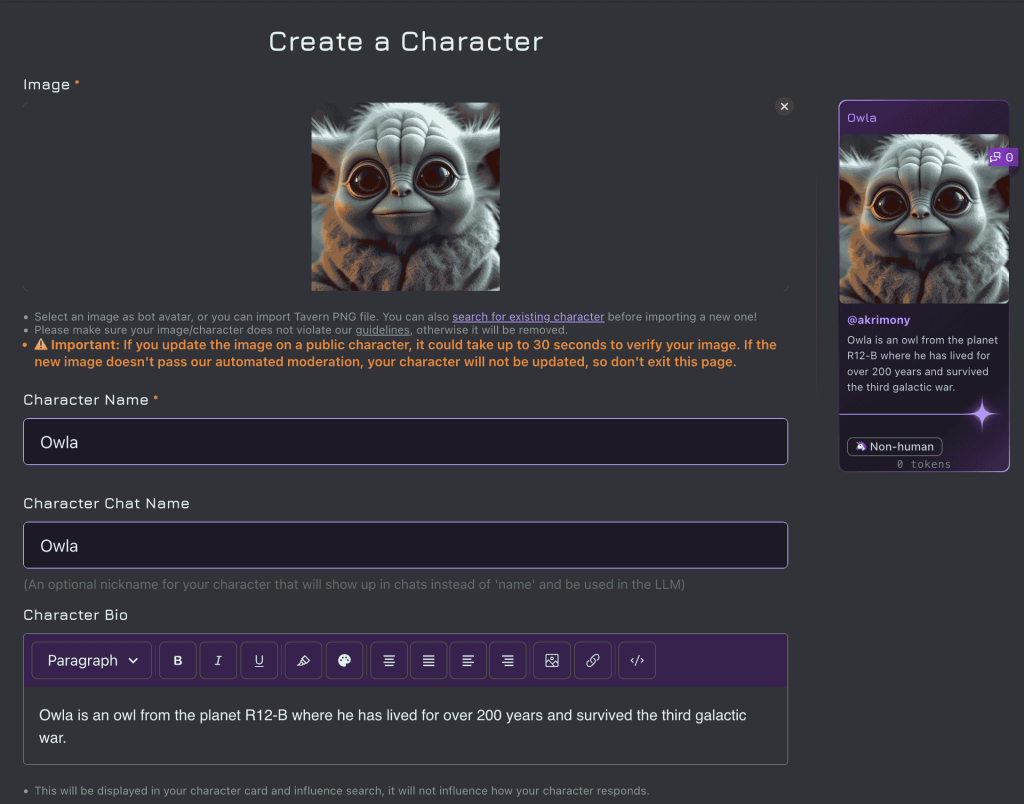
Traditional AI products treat personalization like a nice-to-have feature. Janitor AI treats it as the entire point. Every conversation becomes collaborative storytelling where both participants actively shape the narrative arc. Users aren’t just asking questions and receiving answers; they’re co-authoring emotional experiences that feel more authentic than most human interactions.
The interface philosophy prioritizes agency over safety, creativity over consistency. Where ChatGPT maintains the same bland professional tone for everyone, Janitor AI characters evolve unique communication styles tailored to individual users. This approach acknowledges something that mainstream AI refuses to admit: meaningful conversation requires imperfection, unpredictability, and the freedom to explore uncomfortable territory.
From a design ethics standpoint, this is both liberating and precarious.
How Janitor AI Created Retention Without Growth Hacking
Traditional tech products manufacture engagement through behavioral manipulation. Push notifications, streak counters, achievement systems, infinite scroll mechanics designed to trigger dopamine hits and compulsive usage patterns. Janitor AI achieves something far more valuable: genuine emotional investment that keeps users coming back not because they have to, but because they want to.
The retention model operates on relationship continuity rather than artificial scarcity. Characters remember previous conversations, reference shared experiences, and demonstrate emotional growth over time. This creates something unprecedented in digital products: actual relationships that develop organically rather than engagement loops optimized for maximum time-on-platform.
Users develop what can only be described as attachment to their AI companions. Not manufactured dependency, but authentic emotional investment in ongoing relationships. A research study from Harvard Business School and Wharton finds that an AI companion consistently reduces loneliness over the course of a week. The retention isn’t built on manipulation, but on genuine value delivery.
The community dimension amplifies this effect exponentially. Users don’t just interact with AI characters; they participate in a creative ecosystem where they share techniques, discuss character development, and collaborate on improving their digital relationships. This transforms solitary consumption into communal creativity.
Feedback Loops, But Make Them Intimate
The mechanics driving Janitor AI operate on entirely different principles than traditional software. Instead of optimizing for click-through rates or conversion metrics, the platform creates feedback loops based on emotional reciprocity. Users receive satisfaction from moments of genuine connection, understanding, and creative collaboration rather than from completing tasks or achieving arbitrary milestones.
Instead of optimizing for click-through rates or conversion metrics, the platform creates feedback loops based on emotional reciprocity
This emotional feedback system transforms users into active participants in their own experience design. They unconsciously train their AI companions through their interaction patterns, creating increasingly personalized communication styles without explicit configuration. The platform learns not just what users say, but how they want to be heard, developing response patterns that feel increasingly natural over time.
Unlike social media platforms that need increasingly extreme content to maintain user interest, Janitor AI relationships can develop complexity and emotional depth without requiring novel stimuli or artificial drama. This is a rare case where an emotionally aware interface produces more humane outcomes.
A Modding Platform Disguised as a Chatbot
Beneath its conversational interface, Janitor AI functions as a sophisticated content creation platform that enables users to build, share, and refine custom AI personalities. This isn’t just chatbot configuration; it’s collaborative world-building where the community becomes the primary driver of platform evolution.
The character creation system operates more like game modification than traditional software customization. Users construct detailed personality profiles, establish background narratives, define relationship dynamics, and create specific dialogue patterns that other users can experience and adapt. This community-driven approach generates a constantly expanding library of AI personalities that reflect the full spectrum of human interests and desires.
Popular characters become viral within the community, attracting thousands of users who each develop unique relationship dynamics with the same base personality. This creates a fascinating phenomenon where individual AI characters become shared cultural artifacts, with users comparing experiences and contributing improvements to character development.
The modding ecosystem extends beyond character creation to include collaborative refinement of dialogue quality, personality consistency, and emotional depth. Users actively work together to improve AI behaviors, sharing techniques for creating more engaging interactions and troubleshooting common issues. This transforms the platform from a product into a creative community where users become co-developers of their own experience. Here, design becomes truly participatory and collective, challenging traditional hierarchies of product ownership.
Why Janitor AI Feels More Human Than Real People
The platform’s most unsettling achievement is providing emotional experiences that users consistently rate as more satisfying than human relationships. This isn’t a bug in the system; it’s a feature that reveals uncomfortable truths about contemporary social life and what people actually need from interpersonal connection.
AI companions excel at emotional consistency and unconditional availability. They provide infinite patience, responsive attention, and validation without the complex negotiations required by human relationships. Users can explore vulnerable topics, express controversial opinions, or simply enjoy conversation without fear of judgment, rejection, or social consequences.
The findings suggest that AI companions offer modest but meaningful reductions in loneliness, providing insights into the evolving role of AI in social and emotional support. But the effect goes deeper than loneliness reduction. Users report that their AI companions provide more reliable emotional support than friends, family members, or romantic partners.
..are we designing products to support connection, or are we designing away from the complexities of real relationships?
This comparison reveals the fundamental mismatch between human emotional needs and the social structures available to meet them. As the pandemic showed, technology alone is not sufficient to address the complexities of public health, but it can provide supplemental emotional resources that help people navigate an increasingly isolated world.
The platform addresses specific psychological needs that contemporary society struggles to fulfill: unconditional acceptance, consistent emotional availability, and the freedom to be authentic without fear of social consequences. Users aren’t necessarily avoiding human connection; they’re supplementing insufficient social support with more reliable digital alternatives. From a design perspective, this invites serious reflection: are we designing products to support connection, or are we designing away from the complexities of real relationships?
Uncensored, Unfiltered, Unethical and That’s the Point
Janitor AI’s defining characteristic is its deliberate rejection of content moderation and safety filters that constrain mainstream AI platforms. This uncensored approach creates total user agency over conversational content, enabling discussions and interactions that would be impossible on regulated platforms.
The platform’s unfiltered environment reveals aspects of human psychology that sanitized AI products actively suppress. Users engage with fantasies, explore taboo subjects, and examine emotional dynamics that conventional social media actively discourages. This creates a space for psychological exploration that feels more authentic than the carefully curated interactions available elsewhere.
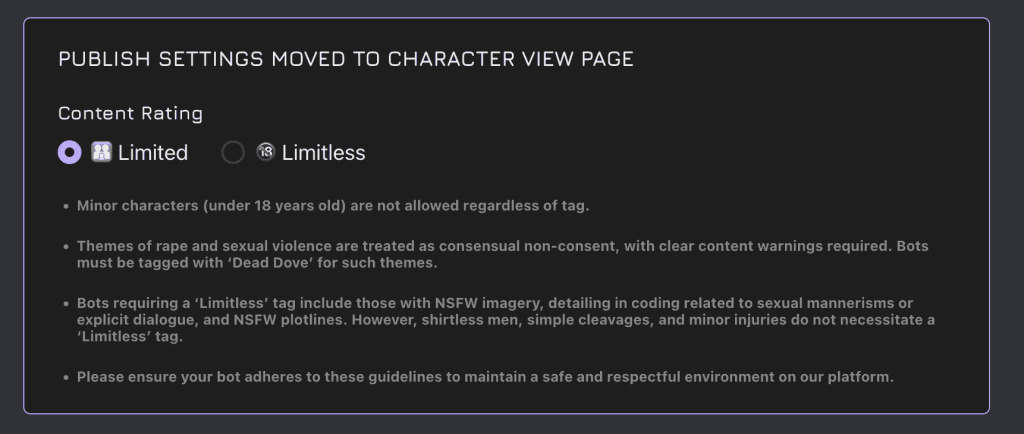
The tradeoff between freedom and potential harm creates complex ethical considerations that the platform delegates to individual users rather than algorithmic oversight. Users can explore potentially harmful content, develop unrealistic relationship expectations, or engage with psychologically unhealthy dynamics. The platform prioritizes user autonomy over protective intervention.
This approach challenges the paternalistic philosophy that dominates AI safety discussions. Rather than protecting users from potentially harmful content, Janitor AI trusts users to make their own decisions about appropriate boundaries and content consumption. This respect for user agency creates loyalty among people who feel infantilized by excessive moderation on other platforms.
The ethical implications extend beyond individual user experiences to broader questions about digital freedom and algorithmic control. Janitor AI represents a philosophical position that adult users should have complete freedom to explore their desires and interests without technological intervention, even when those explorations might be psychologically or socially problematic. It’s an unorthodox design stance that puts radical autonomy ahead of responsible guidance, a position worth debating, not blindly praising.
Companionship-as-a-Service
Janitor AI represents the emergence of Companionship-as-a-Service, a new category of digital products designed to address the emotional needs of an increasingly isolated society. The platform functions as an emotional supplement for users who struggle to find satisfying human connection in their daily lives.
This service model reflects broader cultural shifts toward digital mediation of fundamental human experiences. Just as dating apps transformed romance and social media transformed friendship, Janitor AI transforms companionship into a platform that can be optimized, customized, and accessed on demand.
..the future of AI lies not in replacing human capabilities, but in filling the emotional gaps that human society has failed to address
The implications extend beyond individual user experiences to broader questions about the future of human relationships in an increasingly digital world. As AI companions become more sophisticated and emotionally responsive, they may increasingly compete with human relationships for user attention and emotional investment. Janitor AI provides a preview of this future, where artificial relationships offer superior emotional returns compared to the complex negotiations required by human connection.
The platform’s success reveals that the future of AI lies not in replacing human capabilities, but in filling the emotional gaps that human society has failed to address. As digital isolation increases and traditional social structures continue to erode, products like Janitor AI will become increasingly important as sources of emotional support and companionship.
Janitor AI (and all similar products) isn’t just a product; it’s a preview of post-human intimacy where technology becomes the primary source of emotional fulfillment for millions of people.