

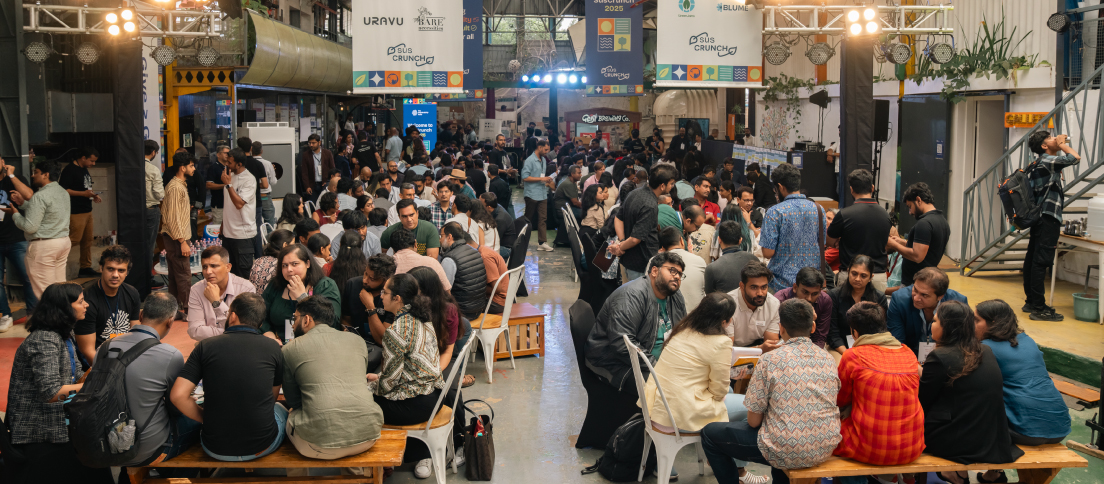
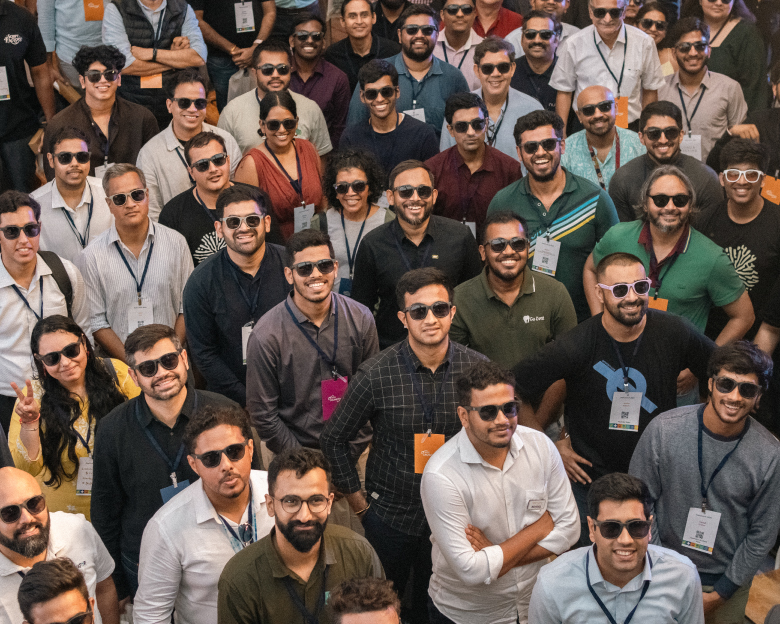
In a country where environmental conferences often dissolve into elaborate displays of good intentions , something different happened in Bengaluru this July. SusCrunch 2025, hosted by The Sustainability Mafia, transformed the conventional climate summit into what felt more like a high-stakes hackathon mixed with a revival meeting.
The numbers tell part of the story: 400 participants packed into what organizers called not a conference but a “working space.” But the real story lies in what didn’t happen. There were no endless PowerPoint presentations about the urgency of climate change, no panels where executives recited corporate sustainability commitments while their companies continued business as usual. Instead, founders brought actual problems to the table, and everyone else rolled up their sleeves to solve them.
The Builder Room: Where Theory Meets Reality
At the heart of SusCrunch lay something called the Builder Room, a format that would feel familiar to anyone who’s witnessed the organized chaos of a Y Combinator demo day. Twenty-four handpicked founders, representing everything from alternative biomaterials to climate finance platforms, presented their most pressing business challenges to a room full of corporate leaders and investors.
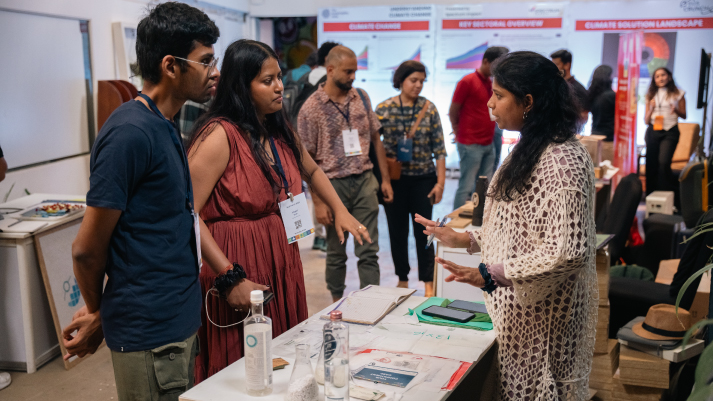
The approach reflects a broader shift in India’s climate innovation landscape. Over the past two years, the ecosystem has moved beyond the early phase of simply identifying problems toward the more complex work of scaling solutions. Indian climate tech startups have attracted significant investor attention, with firms like Blume Ventures and LeoCapital increasing their focus on early-stage climate companies. The government’s Union Budget 2025 has further strengthened this momentum with enhanced incentives for climate technology deployment and research grants for sustainable cooling and crop resilience.
The raw, unfiltered nature of these sessions stood in sharp contrast to the polished presentations typical of most corporate sustainability events. Founders didn’t come to pitch perfect solutions; they came with half-broken business models and supply chain nightmares, seeking genuine input from people who might actually help solve them.
The Sitdown Sessions: Brutal Honesty About Building in India
Perhaps the most revealing moments at SusCrunch came during what organizers called “Climate Sitdowns,” unscripted conversations with founders who have survived the particular challenges of building climate companies in India. Leaders like Mirik Gogri offered unvarnished accounts of navigating regulatory maze, surviving funding winters, and the psychological toll of building solutions for problems that feel too big and too urgent.
These conversations revealed the unique constraints facing Indian climate entrepreneurs. Unlike their Silicon Valley counterparts, who might focus on optimizing energy efficiency in data centers, Indian climate founders grapple with fundamental infrastructure gaps. They’re building waste-to-energy platforms in cities where garbage collection remains inconsistent, or developing precision agriculture tools for farmers who may lack reliable internet connectivity.
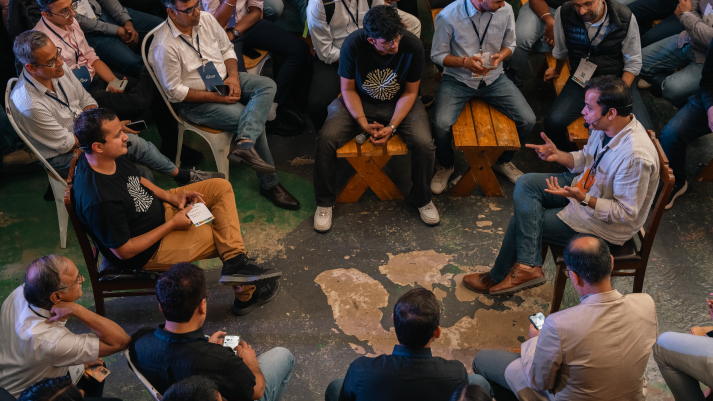
The honesty was refreshing in an ecosystem that often feels pressure to project endless optimism. One founder described the experience of trying to explain complex biotech solutions to investors who expected simple, app-like business models. Another talked about the challenge of maintaining team morale while working on solutions that might take years to show meaningful environmental impact.
The Grant Competition: Backing Breakthrough Innovations
The day’s energy reached its peak during the SusVentures Big Pi Grant Pitch Finale, where five early-stage startups competed for a ₹31.4 lakh grant. The winning solutions represented the kind of innovations that could only emerge from the specific challenges and opportunities present in the Indian market.
Founders came with half-broken business models and supply chain nightmares, seeking genuine input from people who might actually help solve them.
One startup presented a platform for converting plastic and biomass waste into standardized pyrolysis oil , addressing both India’s massive waste management challenges and its growing energy needs. Another featured engineered microbes combined with AI to detect pollutants and pathogens with unprecedented precision, a solution particularly relevant in a country where water contamination affects millions.
These weren’t incremental improvements to existing technologies but fundamental rethinks of how to approach environmental challenges in resource-constrained settings. The solutions demonstrated the unique advantage of Indian climate innovation: the necessity of building systems that work at scale with minimal infrastructure dependence.
The India Climate Opportunity Map: Curating Real Impact
Among the most significant developments at SusCrunch was the launch of the India Climate Opportunity Map, a curated list of 25 investible climate startups building solutions specifically tailored for the Indian market. This represents a recognition that climate solutions cannot simply be imported from other markets but must be designed from the ground up to work within India’s unique economic and infrastructural context.
The solutions demonstrated the unique advantage of Indian climate innovation: the necessity of building systems that work at scale with minimal infrastructure dependence.
The mapping initiative reflects the maturation of India’s climate ecosystem. Early climate tech efforts in the country often involved adapting Western solutions to local conditions. The current generation of startups is more likely to start with local constraints and build outward, creating innovations that may eventually be applicable in other emerging markets facing similar challenges.
The Community Behind the Movement
The success of SusCrunch points to something larger than any individual startup or technology: the emergence of a genuine community around climate innovation in India. The Sustainability Mafia, founded as a nonprofit to catalyze India’s climate innovation ecosystem, has created programs that support entrepreneurs from initial idea through scaling.
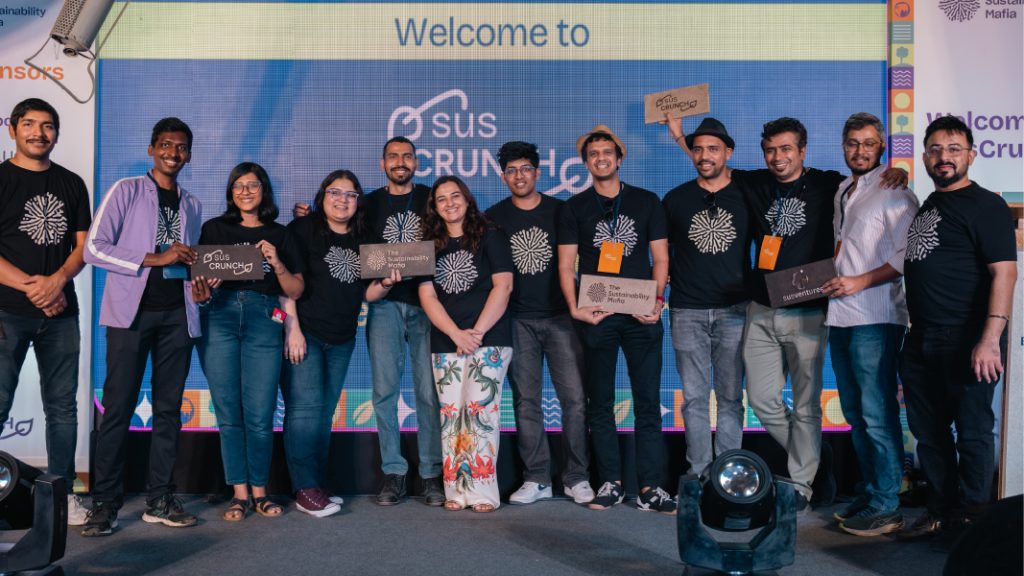
Anirudh Gupta, Director of The Sustainability Mafia and Founder of Climes, described the event as feeling “like a carnival” but emphasized the underlying seriousness of purpose. The community operates on what organizers call a “Give > Get” philosophy, where established founders and investors actively support emerging entrepreneurs rather than simply competing for the same resources.
This collaborative approach addresses one of the most significant challenges facing climate entrepreneurs: the isolation that comes with working on problems that feel overwhelmingly large and urgent. The community provides not just networking opportunities but genuine peer support from others who understand the unique pressures of building companies meant to address civilizational challenges.
What Comes Next
As conversations continued over tea and scribbled whiteboards after the formal sessions ended, participants seemed energized by something increasingly rare in the climate space: concrete progress rather than abstract commitment. The solutions presented at SusCrunch weren’t theoretical; they were being built by founders who had already committed their careers to making them work.
The success of the summit suggests that India’s climate innovation ecosystem has reached a new level of sophistication. Rather than simply identifying problems or adapting solutions from elsewhere, the community is now focused on building scalable systems designed specifically for the challenges and opportunities present in India and similar emerging markets.
For a movement that has often been criticized for producing more conferences than actual solutions, SusCrunch represented something different: a working session where the future was actively being built rather than merely discussed. In a country that will be central to determining whether humanity successfully addresses climate change, that distinction might matter more than any individual technology or startup.