

In the basement of a Bangalore co-working space in 2017, something unusual was taking shape. A handful of climate tech founders, exhausted from pitching to investors who didn’t understand their market or building products in regulatory vacuums, began meeting informally. They weren’t there to network or close deals. They came to confess their struggles, share tactical knowledge, and build the kind of trust that survives market downturns and product pivots.
What emerged from those early conversations was SusMafia, a community that has quietly become one of India’s most influential forces in climate entrepreneurship. The name is deliberate provocation. Like its organized crime namesake, this collective operates on loyalty, mutual aid, and an unspoken code. The difference is their business: instead of extracting value, they’re creating it through a philosophy they call “Give > Get.”
Today, SusMafia counts over 80 climate founders among its ranks, operating everything from regenerative agriculture platforms to AI-powered carbon sensing tools. They’ve built infrastructure that didn’t exist before: vulnerability-forward programming, founder-first mentorship, and capital pathways designed for the messy realities of climate tech. Their annual conference, SusCrunch, has become a pilgrimage site for anyone serious about climate solutions in India.
In an exclusive conversation with DesignWhine, Co-Founder of Climes and Director at SusMafia Anirudh Gupta traced how this “mafia for good” evolved from crisis-time companionship into a national backbone for climate builders.
When Isolation Breeds Innovation
When DesignWhine asked Anirudh Gupta, Co-Founder of Climes and Director at SusMafia, what sparked the creation of SusMafia and how they landed on the ‘Give > Get’ philosophy, he traced the community’s genesis to a fundamental problem in India’s early climate ecosystem. “The Sustainability Mafia or SusMafia began as a response to a simple but critical gap; climate tech founders in India, especially in the early years, often felt like they were building in isolation. In 2017, a few of us came together informally to share challenges and ideas. That trust-based peer exchange quickly grew into something deeper; a support network that could withstand the ups and downs of climate entrepreneurship.”
The informal became institutional through necessity. Climate entrepreneurship in India meant navigating not just technical challenges but regulatory uncertainty, fragmented supply chains, and investors who often viewed sustainability as a luxury market. “Over time, this evolved into SusMafia: a grassroots collective of over 80 climate founders who are all-in on climate action. The ‘Give > Get’ philosophy came naturally from this culture where we built a community on trust, and an ethos of leading with generosity and collaboration; it shapes everything we do.”
The ‘Give > Get’ philosophy came naturally from this culture where we built a community on trust, and an ethos of leading with generosity and collaboration.
That philosophy isn’t marketing speak. It’s visible in how members share pilots, make introductions, and support each other through the brutal middle years of building hardware-intensive businesses. The community operates on reciprocity, but not the transactional kind found in most founder networks.
The Death of the Climate App
At this year’s SusCrunch, a theme emerged that captured something larger happening in Indian climate tech: the shift from “SaaS to systems.” Founders are no longer building apps that gamify sustainability or dashboards that track carbon footprints . They’re building physical infrastructure, redesigning supply chains, and tackling the behavioral psychology of consumption at scale.
Speaking to DesignWhine about how this systems thinking influences their work, Gupta explained, “This shift is both necessary and exciting. Climate problems aren’t just tech problems; they’re systemic and solving them requires hardware, infrastructure, behavior change, and entirely new economic models. That’s why we’ve always supported startups building real-world interventions, from regenerative agri-tech to circular economy logistics to AI-powered bio-sensing tools. Even our community building reflects this systems’ lens. We design interactions not just for networking, but for co-creation: through Builder Rooms, open challenges, and shared labs. The idea is to connect founders, mentors, and institutions in a way that simulates how real systems work: interdependent, messy, and high-trust.”
This isn’t accidental. Climate solutions that work in Indian markets must account for constraints that Silicon Valley frameworks ignore: unreliable power grids, informal labor markets, regulatory opacity, and consumer behavior shaped by scarcity rather than abundance.
The Emitter’s Advantage
India presents a peculiar paradox for climate entrepreneurs. The country is simultaneously one of the world’s largest greenhouse gas emitters and its most promising laboratory for climate innovation. For most founders, this tension is paralyzing. For SusMafia’s community, it’s their competitive advantage.
While Western climate tech often optimizes for affluent early adopters, Indian solutions must work for the bottom of the pyramid.
When DesignWhine pressed him on how they navigate India’s paradox as both a major emitter and innovation hub, Gupta reframed the contradiction entirely: “Yes, India is a major emitter, but it’s also where the climate fight will be won or lost. Our emissions are deeply tied to development: energy access, agriculture, jobs. That means we’re not just solving for climate, we’re solving for livelihoods, equity, and resilience. SusMafia works at this intersection, backing founders who are creating solutions tailored for Indian realities. They’re homegrown innovations, often frugal, decentralized, and high-impact. India’s contradiction is actually its superpower: we have the potential to leapfrog into climate leadership and invent climate solutions the rest of the world can learn from.”
This reframing is crucial. While Western climate tech often optimizes for affluent early adopters, Indian solutions must work for the bottom of the pyramid from day one. The result is innovation that’s resilient by design, efficient by necessity, and scalable across diverse economic contexts.
The Jugaad Advantage
When DesignWhine asked about India’s unique advantages for climate entrepreneurship, Gupta’s response highlighted the country’s distinctive innovation environment: “India offers scale, urgency, and ingenuity. Our constraints spark creative, frugal, jugaad-driven, deeply contextual innovation . India’s climate builders and entrepreneurs are solving for constraints, not just capital, but infrastructure, behavior, and regulation, and that leads to incredibly resilient models. With growing talent pools from institutions like BITS Pilani, IIT Madras, and emerging ecosystems, rising climate awareness, and massive market needs, India is uniquely positioned to design climate solutions for both local and global impact.”
This combination of constraints and capability produces companies that are antifragile. They’re built to survive infrastructure failures, regulatory changes, and market volatility because they’ve had to from the beginning.
Engineeing Trust
What sets SusMafia apart from typical founder communities is their intentional design for collaboration over networking. Most entrepreneur groups optimize for serendipitous connections and hope valuable relationships emerge. SusMafia reverse-engineers the conditions that make collaboration inevitable.
We design for collaborations through formats like the builder room and even vulnerability-driven formats like the ‘Climate Sitdown’ where founders and funders get real about the journey.
When DesignWhine asked Gupta about this approach, his response revealed the careful architecture behind their success: “We believe real collaboration happens when people feel safe, seen, and supported. That’s why our community is structured around trust-first interactions. We design for collaborations through formats like the builder room and even vulnerability-driven formats like the ‘Climate Sitdown’ where founders and funders get real about the journey. By onboarding value-aligned members, we’ve built an ecosystem where mentors step up, pilots happen, and capital flows organically.”
The architecture matters. A Climate Sitdown creates permission for honesty about the unglamorous parts of building climate companies. Builder Rooms are structured for doing, not presenting. The community’s onboarding process filters for values alignment, not just achievement. The result is a network where the social fabric is strong enough to support the kind of long-term, high-risk collaboration that climate problems demand.
The Thousand Venture Vision
SusMafia’s ambitions extend far beyond community building. By 2030, they want to see a pipeline of 1,000 active climate ventures shaping systems across India—an audacious target that requires reimagining how capital, talent, and institutions interact around climate challenges.
When DesignWhine asked what India’s climate innovation ecosystem needs to mature by 2030, Gupta outlined three critical requirements: “What we need is: Patient, risk-tolerant capital; especially non-dilutive grants and early-stage seed to support IP-heavy or hardware-led ventures. Collaborative institutions where universities, corporates, and governments go beyond CSR or funding and become active co-creators: offering labs, pilots, and access. Founder-first support via mentorship, community, and mental health resources for the bold builders who are often flying blind.”
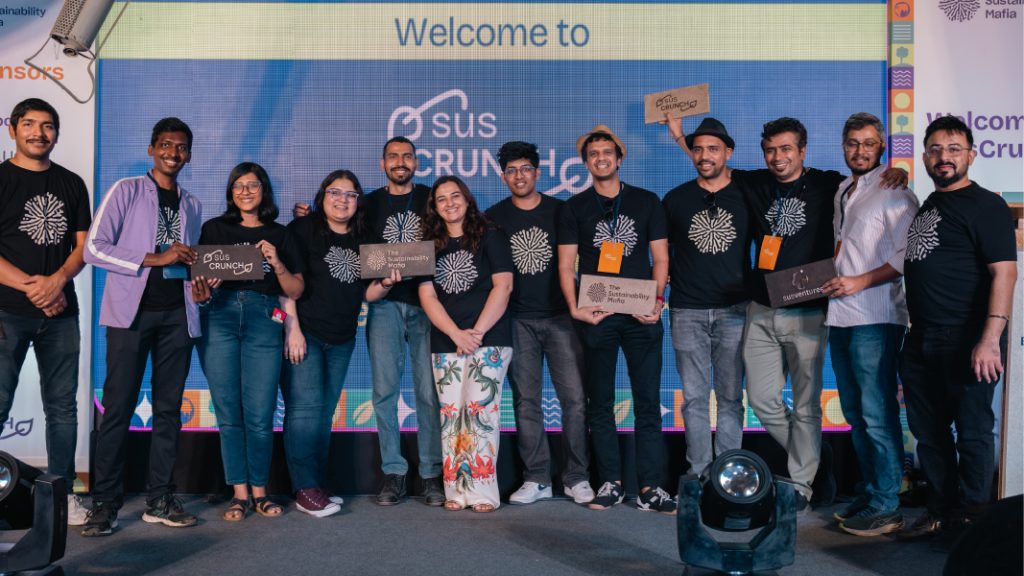
“By 2030, we need a pipeline of 1000+ active climate ventures, shaping systems,” he continued. “This means creating an ecosystem where climate entrepreneurship is as supported and celebrated as software startups were in the last decade. If we get this right, India won’t just be part of the climate problem, we’ll be a major part of the climate solution.”
It’s precisely the kind of audacious thinking that climate problems demand. In a world where incremental solutions won’t suffice, perhaps what India needs isn’t more entrepreneurs playing it safe, but more communities willing to organize like a mafia for good.