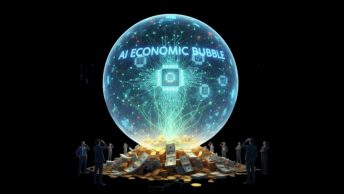

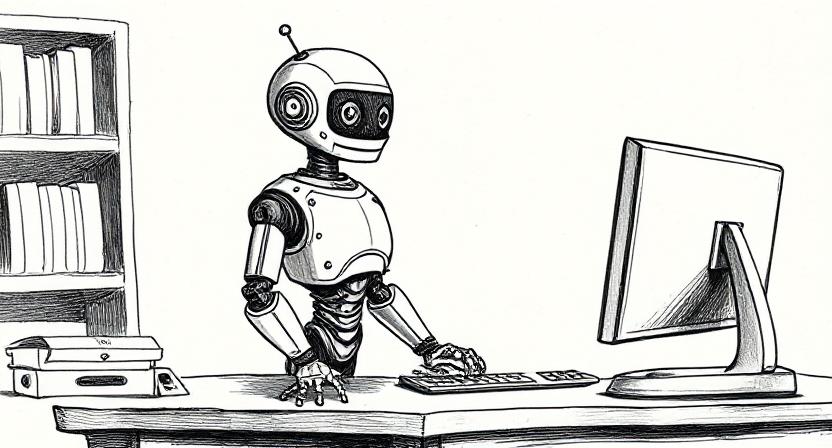
The question “Will AI take your job?” haunts workers and leaders alike. With artificial intelligence advancing at breakneck speed, anxiety about job security is at an all-time high. But is this fear justified? To answer definitively, we must look at history, current trends, and what experts are saying.
- A Brief History of Automation: From Steam Engines to AI
- The Evolution of Automation and AI
- The Changing Impact of AI on Jobs and Careers
- Will AI Take Your Job? What the Experts Say
- The Real Impact: Job Displacement, Job Creation, and Adaptation
- The Future of Work: Opportunities and Challenges
- Will AI Take Your Job? The Final Truth
- Embracing Change in the Age of AI
A Brief History of Automation: From Steam Engines to AI
The story of automation begins long before computers. The Industrial Revolution of the 18th and 19th centuries introduced machines like the steam engine and spinning jenny, which transformed manufacturing and agriculture. These innovations sparked fear among workers, who saw their livelihoods threatened. The Luddite movement, for example, protested against new machines by destroying them.
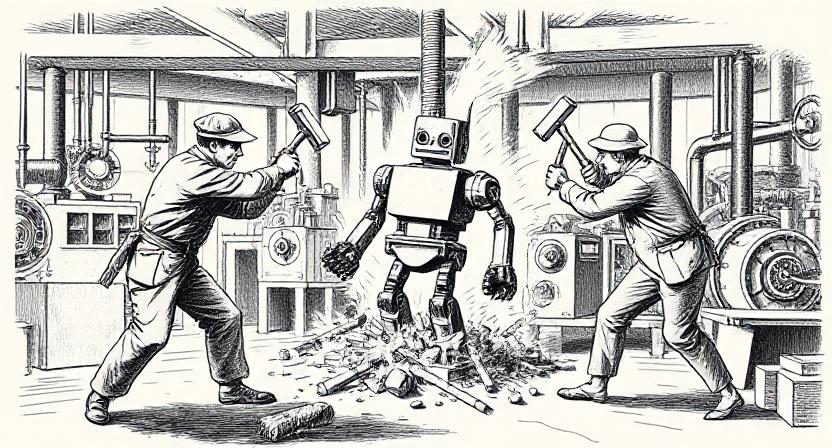
Despite initial panic, history shows that technological progress rarely wipes out entire job sectors. Instead, it changes the nature of work. The shift from agriculture to manufacturing, and later to services, created new opportunities even as old jobs disappeared. Automation has always led to a mix of job loss, job creation, and job modification.
The Evolution of Automation and AI
Automation evolved from simple mechanical devices to complex computer systems. In the 20th century, factories adopted assembly lines and robotics, while offices embraced typewriters, calculators, and eventually computers. Each wave of technology made certain jobs obsolete but also created new roles that required different skills.
Artificial intelligence represents the latest and most powerful wave. Early AI focused on process automation and scripting repetitive tasks. Then came supervised machine learning, where AI learned from examples. Generative AI, like ChatGPT, can now create original content. The next frontier is agentic AI, which can make decisions and act autonomously.
The Changing Impact of AI on Jobs and Careers
Technological advancements, particularly in artificial intelligence, are reshaping the landscape of work at an unprecedented pace. While automation has historically led to increased productivity and even job creation by opening up new opportunities for human workers, the current wave of AI-driven change is fundamentally different. Today’s AI systems can not only handle repetitive, entry-level tasks but are increasingly capable of taking on complex functions, which is creating significant challenges for those entering the workforce. This trend threatens to reduce the availability of early-career positions, making it harder for new professionals to gain the experience needed to advance their careers.
As AI continues to penetrate various industries, there is growing concern about the broader economic and social consequences. The rate at which jobs – especially those involving routine or mid-level responsibilities – are being automated may soon outpace the emergence of new roles, even as some companies leverage AI to innovate and expand their offerings. This imbalance could lead to a net loss of employment opportunities, wage stagnation, and heightened inequality. The integration of AI with robotics and other technologies further intensifies these risks, putting not only manual labor but also cognitive and creative professions at greater risk of displacement.
Despite these challenges, there is also the potential for AI to create entirely new industries and job categories that are difficult to predict today. The transition ahead will likely be turbulent, with significant disruption expected across multiple sectors. Success in this evolving environment will depend on the ability of individuals and organizations to adapt, upskill, and embrace lifelong learning. While uncertainty remains about the ultimate impact of AI on the workforce, one thing is clear: flexibility and continuous development will be essential for anyone hoping to thrive in the age of automation.
Will AI Take Your Job? What the Experts Say
Experts agree that AI will transform the job market, but not necessarily in a simple way. The World Economic Forum estimates that one-third of all jobs could be at risk of automation in the next decade, especially for those with low educational attainment. However, technology could also create millions more jobs than it displaces.
The McKinsey Global Institute predicts that automation could displace up to 800 million jobs by 2030, but also create new roles that require new skills. The challenge is ensuring that displaced workers can transition quickly to new opportunities. If they do, the economy can maintain full employment and even see wage growth.
The Real Impact: Job Displacement, Job Creation, and Adaptation
History shows that automation rarely eliminates entire occupations. Instead, it changes them. For example, the rise of ATMs did not eliminate bank tellers, it changed their roles to focus on customer service rather than cash handling. Similarly, AI is likely to automate parts of many jobs, making workers more productive but also requiring them to learn new skills.
The new wave of automation, powered by AI and robotics, is different from previous ones because it affects not just manual labor but also cognitive and creative tasks. This means that even professionals like lawyers, accountants, and healthcare workers could see parts of their jobs automate.
The Future of Work: Opportunities and Challenges
The future of work will be shaped by how quickly workers can adapt. Upskilling and reskilling will be critical. Workers who can work with machines will be more productive and valuable than those who cannot. Governments, businesses, and individuals must invest in education and training to prepare for this shift.
AI will also create new industries and opportunities that we can’t yet imagine. The rise of the internet, for example, created jobs that didn’t exist 30 years ago. The same will likely be true for AI.
Will AI Take Your Job? The Final Truth
So, will AI take your job? The answer is nuanced. AI will automate many tasks, especially those that are repetitive or require little creativity. Entry-level and junior roles are most at risk, as are jobs in industries that rely on routine processes. However, AI is unlikely to replace all jobs especially those that require human judgment, empathy, or creativity.
The key to surviving and thriving in the age of AI is adaptability. Workers who embrace new technologies, learn new skills, and focus on tasks that require human insight will be in high demand. Businesses that use AI to innovate and grow will create new jobs, while those that use it only to cut costs may shrink their workforce.
History teaches us that technological progress is disruptive but ultimately leads to new opportunities. The challenge is to ensure that the benefits of AI are shared widely and that no one is left behind.
Embracing Change in the Age of AI
The question “Will AI take your job?” is not new. Every generation has faced technological change and the anxiety that comes with it. The difference today is the speed and scope of change. AI is transforming every industry, from manufacturing to healthcare to finance.
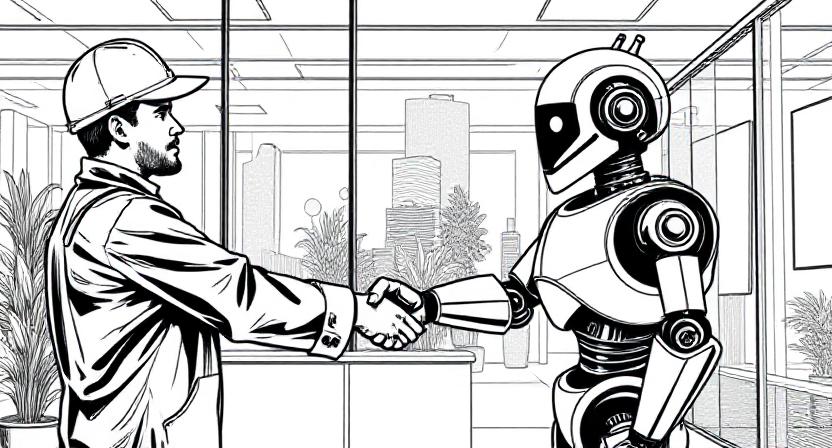
The final truth is that AI will change the nature of work, but it won’t eliminate the need for human workers. The future belongs to those who can adapt, learn, and collaborate with machines. By understanding the lessons of history and the realities of today’s technology, we can prepare for a future where AI and humans work together to create a better world.