


Design systems usually fail slowly. There is rarely a dramatic moment when a team announces that the system is dead. Instead, a product squad creates one local component because the shared one cannot handle an edge case. Another team overrides a token to meet a deadline. Documentation falls one release behind. The component in Figma changes while the production implementation does not. Six months later, the organisation still technically has a design system, but nobody is quite sure which parts of it are trustworthy.
That matters because the visible symptoms are easy to misdiagnose. Teams often respond to low adoption by redesigning the library, adding more components or buying another documentation tool. But most design-system failures are not visual-design problems. They are operating-model problems.
If you are still defining the system itself, start with the DesignWhine Guide to Design Systems. If you are still building it, our guide to building a design system teams actually use covers the foundation. This article starts at the more uncomfortable point: the system exists, people know it exists, and yet consistency is still leaking out of the product.
A design system is not failing when someone creates an exception. It is failing when exceptions become easier than contributing back to the system.
1. The System Becomes a Bottleneck
The most common failure mode begins with good intentions. A central team wants to protect quality, so every component change requires review. Over time, review becomes queueing. Product teams face delivery pressure, the shared system cannot respond quickly enough, and local workarounds become rational.
This is the point where governance turns into gatekeeping. The system team may believe it is preventing fragmentation while consuming teams experience the same process as friction. If a team can ship a local component today or wait two sprints for approval, the system has created an incentive to fragment.
Recovery: define contribution paths with response expectations, lightweight review for low-risk changes and clear criteria for what genuinely requires central approval. Our deeper guide to design-system governance looks at ownership, contribution, lifecycle and response speed in detail. Governance should make the right behaviour easier, not merely enforce it.
2. Components Drift From Production
A component can be immaculate in Figma and still be irrelevant if it no longer represents what users actually receive. Design systems split when design assets and coded components evolve independently: properties have different names, interaction states diverge, accessibility behaviour is implemented only in code, or the codebase contains several versions of the same control.
Once designers stop trusting production parity, they compensate with annotations and custom frames. Once engineers stop trusting the design library, they copy existing code or build local variants. Both groups are solving the same problem: the shared source of truth is no longer true enough.
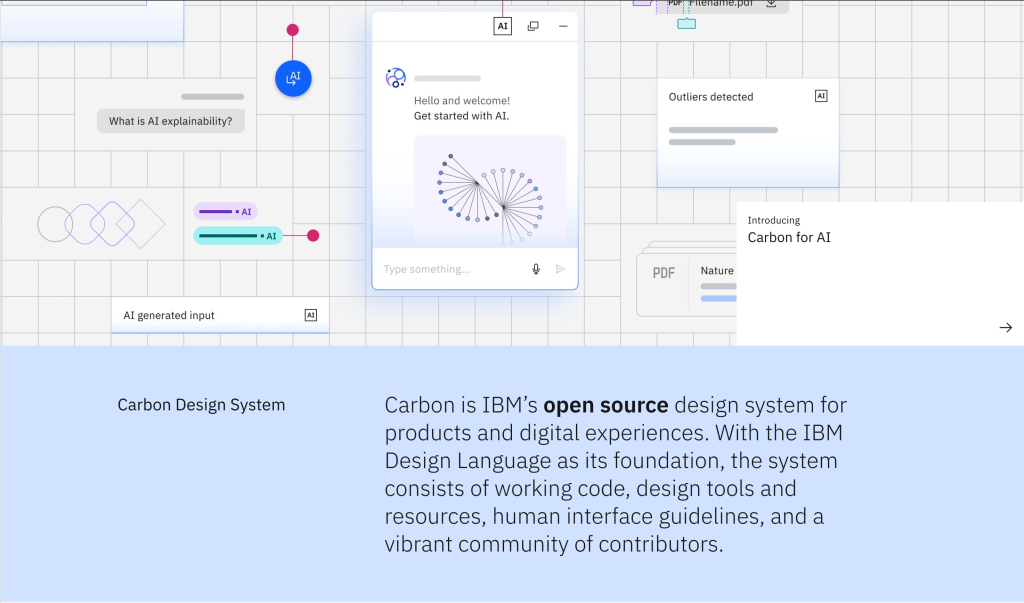
Recovery: audit a small set of high-use components across design and code. Align names, states and properties, decide which implementation is canonical, and make parity a release requirement rather than an occasional cleanup project. Storybook is useful here because stories capture rendered component states and can sit alongside component documentation. (Source: Storybook.)
3. The System Absorbs Every Edge Case
At the other extreme, a system can fail by trying too hard to accommodate everyone. Each product request adds another prop, variant, exception or special mode until the shared component becomes harder to understand than a local implementation.
This often happens because “reusability” is interpreted as “must support every conceivable use”. But a shared system needs a boundary. Some needs are specific enough that they belong to a product, not to the platform.
The goal of a design system is not to eliminate local design. It is to standardise the decisions that benefit from being shared.
Recovery: define the conditions under which something graduates into the system. Repeated use across teams, meaningful risk reduction and proven stability are better signals than one urgent request from an influential product group.
4. Documentation Stops Being Trusted
Outdated documentation is worse than sparse documentation because it trains people to verify everything elsewhere. Once users discover several examples that no longer match the component, the documentation site stops being the first place they look.
The problem is rarely lack of prose. It is separation between the documentation process and the component lifecycle. A system team updates the code, then hopes someone remembers to update usage guidance later.
Recovery: treat documentation changes as part of the component change itself. Keep live states close to code where possible and document the decisions that matter: purpose, valid states, accessibility, content, constraints and when not to use the component. Storybook’s current documentation model is built around the idea that component stories can generate living documentation rather than a separate static reference. (Source: Storybook Docs.)
5. Tokens Become a Second Language
Design tokens are meant to turn repeated values into named decisions. They fail when the token architecture becomes so abstract that consuming teams cannot predict which token to use, or when design and code use completely different naming systems.
Another failure pattern is token inflation: every value becomes a token because token coverage is treated as maturity. The result is a large vocabulary with weak semantics. Our guide to design tokens as an API layer makes the same point from the architecture side: every published token becomes part of a contract somebody has to understand and maintain.
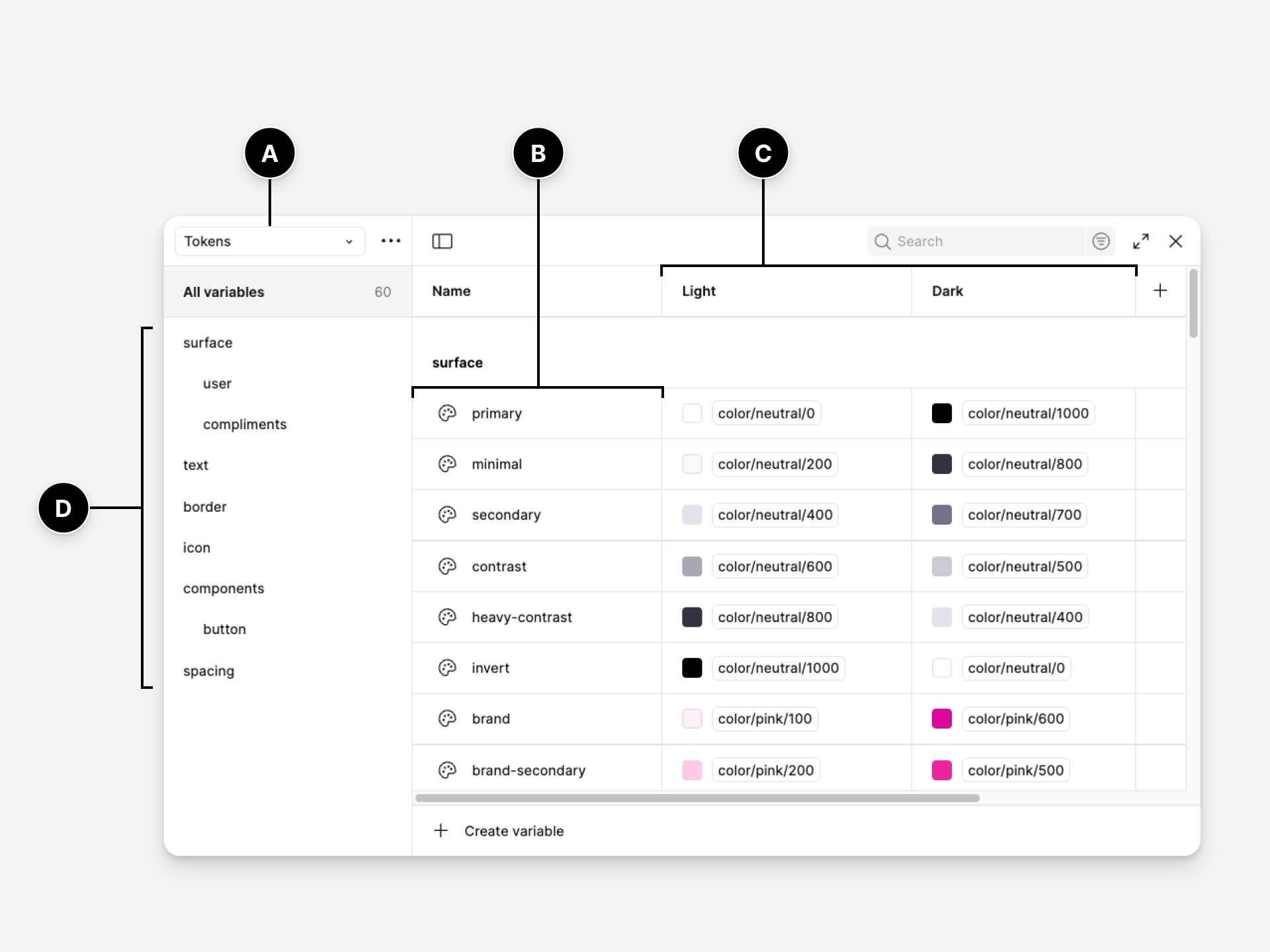
The Design Tokens Community Group’s stable 2025.10 format is specifically aimed at interoperability between tools, which makes clear naming and portable structure increasingly valuable. But a standard exchange format cannot rescue a poor conceptual model. (Source: Design Tokens Community Group.)
Recovery: reduce the token vocabulary to decisions teams can explain. Separate primitives from semantic tokens only where the distinction creates real flexibility. Align names across design and code closely enough that a human, and increasingly an AI agent, can follow the relationship.
6. Adoption Is Treated as Training
When adoption is weak, system teams often respond with workshops, office hours and launch presentations. Those activities can help, but they cannot compensate for a system that does not solve enough of the consuming team’s problems.
Adoption is product-market fit inside the organisation. Teams use a design system because it helps them ship with less ambiguity, less duplicated work or less risk. If the system creates more work than it removes, training only teaches people how to tolerate the friction.
Recovery: measure where teams detach components, override tokens, fork code and request exceptions. Ask what they still rebuild. Prioritise those gaps over the system team’s internal roadmap.
7. Ownership Becomes Invisible Work
Many systems begin with passionate contributors rather than durable capacity. A few designers and engineers maintain the system because they care, until their product responsibilities grow or they leave. The organisation then discovers that the system was never really owned. It was volunteered for.
This is particularly dangerous because maintenance is hard to celebrate. Deprecating an old component, updating documentation, improving migration tooling and answering contribution questions rarely look as impressive as launching a new product feature. Yet these are the activities that keep shared infrastructure trustworthy.
Recovery: assign explicit design and engineering ownership, define recurring maintenance capacity and measure the system as a product. Our interview with Diana Wolosin on design systems at Indeed is useful precisely because it shows how mature systems become cross-functional work involving accessibility, localisation, content and engineering rather than a side project for designers.
8. AI Accelerates Existing Entropy
AI introduces a new failure mode because it can generate interface variation faster than organisations can govern it. If an agent does not know which components are canonical, which tokens are valid or which patterns are prohibited, it will invent plausible alternatives. A human team may create design debt slowly. An automated workflow can create it repeatedly.
This is why we have argued that AI needs a design system before it can design coherently. The more practical version of that argument appears in our guide to making a design system AI-ready: machine-readable context amplifies whatever quality already exists in the system.
Recovery: do not begin with agent access. Begin with semantic component names, explicit properties, trustworthy tokens, production mappings and rules that tell the agent what it is allowed to reuse or create.
Do You Need a Rebuild?
Usually, no. A struggling design system does not automatically need a fresh library. Rebuilding can even make the problem worse by replacing familiar components while leaving ownership, governance and adoption unchanged.
Before rebuilding, diagnose where trust broke. Is the production library behind the design library? Is contribution too slow? Are tokens impossible to understand? Is documentation stale? Are product teams asking for patterns the central team repeatedly refuses to support? The failure mode should determine the intervention.
If the system needs a significant reset, estimate the work explicitly rather than treating it as routine maintenance. Our design-system estimation model separates audit, foundations, tokens, components, code alignment, documentation, governance and adoption so the organisation can see what it is actually funding.
Design Systems Fail Organisationally
The uncomfortable pattern across all eight failures is that the system itself is rarely the entire problem. A component library can be technically excellent and still fail if teams cannot contribute to it. Documentation can be beautifully written and still fail if it is not maintained. Tokens can be sophisticated and still fail if nobody understands them.
That is why the healthiest systems are not necessarily the most comprehensive. They are the systems whose users understand what is shared, trust that it reflects production, know how to change it and believe the central team will respond when reality no longer fits the model.








[…] coverage of design systems over the years, you’ll know we’ve already explored why design systems fail, how to create one, and how to estimate the effort involved. Those fundamentals remain unchanged […]
[…] Once teams understand the power of tokens, the next mistake is predictable: they tokenize everything. It is one of the quieter ways a system can become harder to use, and it appears again in our analysis of why design systems fail. […]