
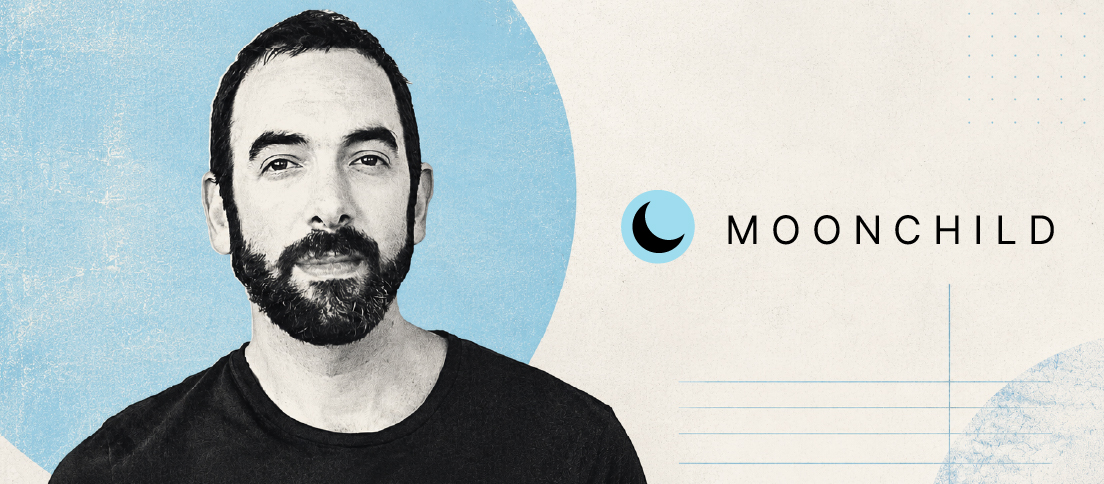
In an exclusive conversation with DesignWhine, Moonchild AI founder Steven Schkolne discusses agentic design, executable design systems, and why the next generation of designers won’t spend their days pushing pixels.
Two years ago, something curious began happening inside software teams. Engineers were escaping the tedious parts of their jobs. AI coding assistants were taking over repetitive implementation, allowing developers to think at a higher level, move faster, and build more ambitious products. Designers, meanwhile, were still largely stuck in familiar territory—assembling screens one frame at a time while AI design tools struggled to produce anything remotely production-ready.
Steven Schkolne couldn’t ignore the imbalance.
For someone who has spent nearly two decades moving between software engineering and design, the contrast wasn’t simply interesting—it hinted at a deeper shift. If AI could fundamentally change how software gets written, why hadn’t it done the same for product design?
That question eventually became Moonchild. Today, the platform sits at the center of a much bigger conversation about agentic design, AI-native workflows, and the changing role of designers inside modern product teams.
DesignWhine spoke with Schkolne about what really slows product development today, why most AI design tools fall apart the moment they meet a production codebase, and why he believes the future of design has far less to do with generating screens than most people think.
Two Moments That Started Moonchild
Founders often describe a single “aha” moment that changed everything. Schkolne’s story isn’t quite that simple. Moonchild emerged from two separate realizations – one rooted in frustration, the other in possibility.
“I’ve spent about twenty years on either side of the design/development divide. It’s fascinating to see how digital products form, the constraints that lead to success (or failure). My background is technical — I have a PhD in computer science from Caltech — but I’ve long been fascinated by interaction and design. After school I built a digital agency from the ground up, which showed me a ton about design, development and their intersection. Most recently I built MightyMeld, a dev tool specifically focused on closing the gap between design and development.“
That background gave him an unusually broad vantage point. He had watched developers evolve alongside increasingly capable AI assistants while design workflows remained comparatively unchanged.
“Engineers were getting freed from code, while designers still had to build things out quite laboriously.”
“With Moonchild for me there were really two moments. The first was seeing this huge gap between the quality of AI design and the kind of lives engineers were starting to lead. Engineers were getting freed from code, while designers still had to build things out quite laboriously. And AI design tools were basically worthless. This is what led me to dive in.“
Then came the second moment—the one that convinced him this wasn’t merely an opportunity to build another design tool.
“The second was a different moment, when we started to build out our first design agent. We managed to make the models produce genuinely good design. That was a moment when, in a sense I saw the whole timeline — if machines can do this today I thought — then in two years the traditional Figma-style process will either be dead or so transformed, it’s barely recognizable.“
It’s a bold prediction. But listening to Schkolne, it becomes clear that Moonchild isn’t trying to compete with today’s design software. It’s trying to redefine where design work begins—and who gets to participate in it.
The Silos Nobody Designed On Purpose
It’s tempting to describe the traditional journey from product idea to shipped software as broken. Schkolne doesn’t.
Instead, he argues that the real problem has always been fragmentation. Product managers write requirements. Designers translate them into interfaces. Engineers translate those interfaces into code. Every handoff introduces friction, and every role sees only part of the picture.
“I wouldn’t say broken, I mean the process was very clunky but people managed to get things built pretty well, considering. There were a lot of details that needed to be controlled by humans, and we did our best given the constraints.“
The issue, he says, wasn’t incompetence. It was separation.
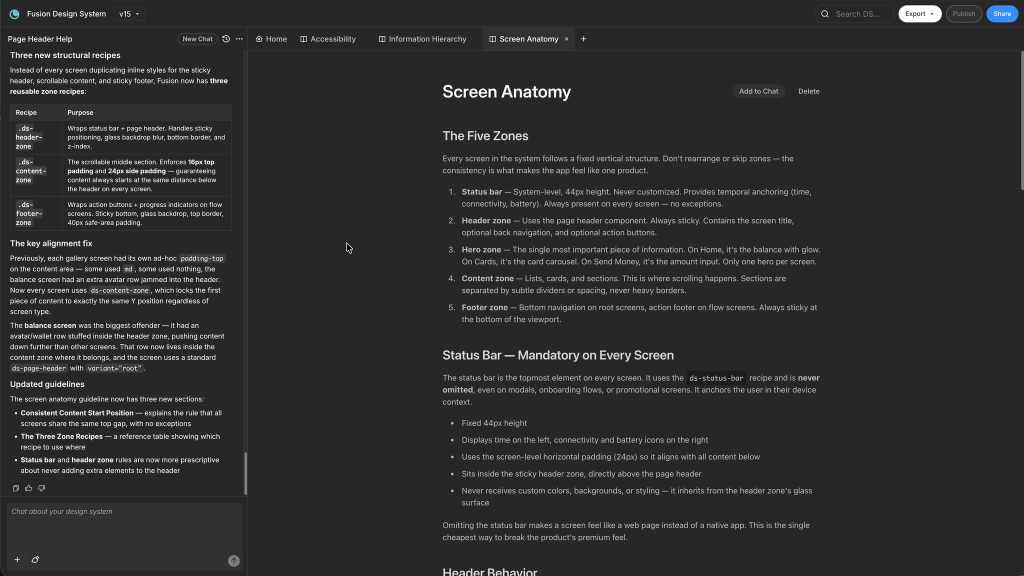
“Looking at what we have today, back at the old way of doing things, it’s clear the problem is how siloed everything was. And how siloed everyone on the team was. PMs could author words but not show anyone how anything looked. Designers could make pictures of what an app should look like, but not see how their vision related to the existing codebase. This limits the thinking of each member of the team. At every boundary you hand something off, something falls out of it. If you’re not careful, you end up building something that no one wanted. It takes luck and great communication to get close to an optimal result.“
For Schkolne, AI isn’t simply an automation layer. It’s a translator.
Instead of forcing teams to communicate through documents and deliverables, AI allows information itself to move fluidly between mediums.
“AI-native tools like Moonchild are much more fluid. With AI, anything can be converted into anything else. A PRD can become designs, and also designs can become a PRD. Design solutions can be injected into the live codebase, and similarly the latest code from GitHub can be pulled into the design system or individual designs.“
Why Most AI Design Tools Fall Apart in Production
The explosion of AI design tools has made one thing remarkably easy: generating attractive mockups. Shipping products, however, is another matter entirely.
For many teams, the excitement wears off the moment an AI-generated screen collides with an existing design system, production components, or a mature codebase. The demo impresses. Reality doesn’t.
When we asked Schkolne where today’s AI design tools consistently stumble, his answer came down to two words: fidelity and depth.
“There are two areas where tools fall short. The first is fidelity — the ‘why doesn’t this look like my product?’ problem. As you get deeper into production design, these small differences between what the AI generated and your actual product start to become a big deal. The slightest thing off can be a big distraction, not to mention your design problem solving has to be done within the constraints of your product, not AI’s averaging of all the world’s products.“
“There are two areas where tools fall short. The first is fidelity and the second is depth.”
Most AI tools, he argues, understand design broadly. What they struggle with is understanding your product—its quirks, conventions, constraints, and accumulated decisions.
But visual accuracy is only half the equation.
Real product design isn’t measured screen by screen. It’s measured by whether an entire experience feels coherent.
“The second is depth. Real design isn’t just one screen, or just one flow, but an understanding of how the whole app comes together to provide a gestalt experience to the user. Part of this is design system style fidelity but another factor is context, appropriate context management by the design agent itself. People are starting to learn that markdown-style design systems are not enough. The mantra ‘the codebase is the design system’ is being thrown about but what we’re seeing is, to get the most out of AI, you need much more in your DS and also the right agent.“
It’s an observation that quietly reframes the conversation around AI design. The challenge isn’t simply generating prettier interfaces. It’s building systems capable of understanding products as living, evolving ecosystems rather than isolated screens.
The Moment It Clicks
Every successful product has a moment when skepticism gives way to trust. It’s difficult to predict, but instantly recognizable when it happens. Users stop evaluating the software and begin relying on it. For Moonchild, Schkolne says, that transition usually arrives sooner than people expect.
“Usually it’s some variation of an ‘I guess I’m done now’ wow moment. You’re trying to solve some problem, and within a few iterations the agent shows you a design that’s better than anything you had in mind. Sure, you could’ve gotten there… eventually. But here it’s done now.“
“Within a few iterations the agent shows you a design that’s better than anything you had in mind.”
It’s less about surprise than relief. Instead of wrestling with the mechanics of execution, designers find themselves evaluating ideas that are already approaching production quality. For teams that have invested in robust design systems, the leap feels even more dramatic.
“Especially for folks who have set up their design systems, they look at their output and think ‘this isn’t just the right idea, it’s ready to push to the coding agent’. This is the feeling that’s leading people to move entirely from the old way of working into agentic design.“
That phrase—agentic design—appears repeatedly throughout our conversation. It reflects a subtle but important shift: AI isn’t merely assisting designers anymore. It’s beginning to participate alongside them.
From Screens to Structured Thinking
Like many AI design startups, Moonchild initially focused on generating interfaces. It seemed like the obvious place to start. Instead, users steered the product somewhere entirely different. They didn’t just want images. They wanted conversations. Design critique. Exploration. Trade-offs. Alternative directions. The kind of back-and-forth that usually happens between teammates standing around a whiteboard or reviewing a Figma file together.
Schkolne admits that this wasn’t where the company expected to end up.
“It’s funny, we started out focused on generating screens but ended up somewhere entirely different, focusing more on this structured thinking. It’s because we had a chat interface set up rather early, and we were amazed at how people used it. They wanted so much more than just the pictures. Sure, plenty of people drop in PRDs, but even when purely exploring visuals we see users having long conversations. What other ways could this UI be structured?“
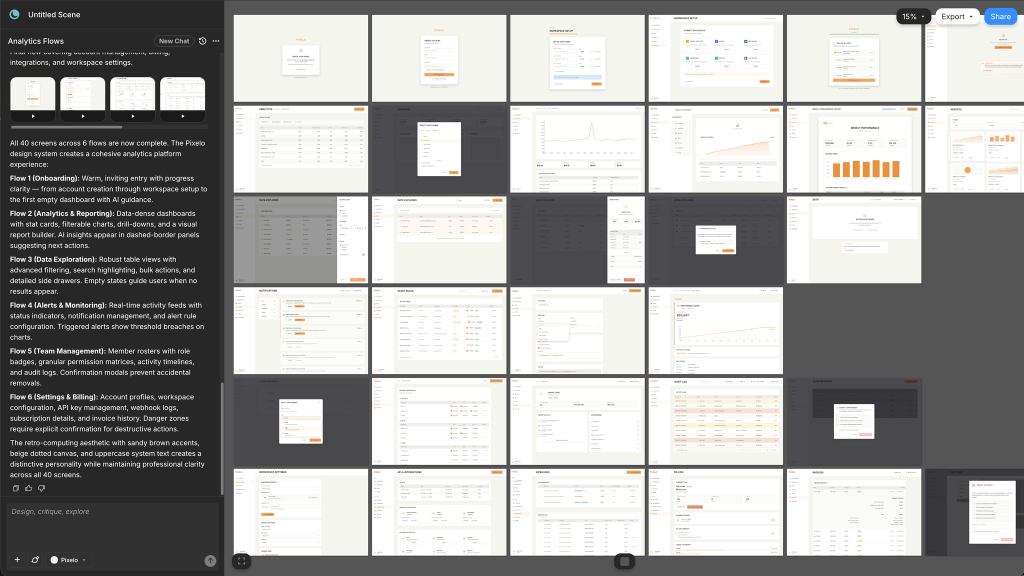
That behaviour revealed something deeper about design itself. Great design rarely emerges from a single prompt. It evolves through critique, iteration, and continuous questioning. The interface, in other words, was never the destination. It was merely one step in a much larger conversation.
“This conversational backbone is at the heart of good design. Critique is important to design training, any design team worth their salt talks about what they’re doing and why. So it’s natural to pair these things together. And yes it makes it easy to flow from one to the other.“
Seen through that lens, Moonchild begins to look less like an image generator and more like a collaborative design partner—one capable of moving fluidly between product thinking, documentation, interface design, and implementation.
And that’s where our conversation naturally turned next: if AI is dissolving the boundaries between disciplines, why do product, design, and engineering teams still struggle to stay aligned?
Where Alignment Still Breaks
If AI can now generate requirements, produce interfaces, write code, and even move information seamlessly between those formats, shouldn’t alignment become effortless?
Schkolne believes the tools have evolved faster than the people using them.
The boundaries between product, design, and engineering may be blurring, but each discipline still approaches problems through its own lens. AI makes it easier to cross those boundaries; it doesn’t automatically erase decades of organisational habits. At its heart, he says, alignment has never been a tooling problem. It’s been a thinking problem.
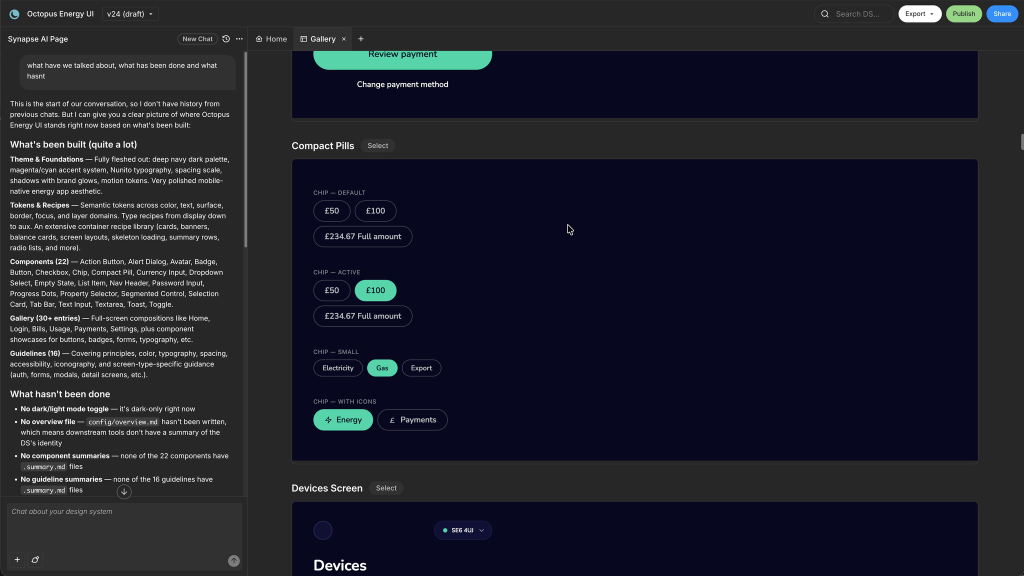
“The most difficult question for any team to answer is ‘what are we building?’, it is caught up in why and how. Even with the new abilities to cross over from one style of tool to another, each of the roles in the triad is still caught up in the concerns of their particular craft. That’s always been the most difficult struggle with alignment. Engineers are trying to grow a complex machine, product knows what the business wants, and designers are the ones in the room trying to make sure the end product is effective at meeting these aims, and hopefully caring about the customer too as a person, showing a little love.“
There’s an optimism running beneath that observation. Instead of replacing specialists, AI is allowing specialists to understand one another’s worlds more deeply. Designers can explore customer analytics without waiting on another team. Product managers can prototype ideas instead of describing them. Engineers can contribute earlier to design conversations.
The walls are becoming more permeable. But new freedoms bring new temptations.
“With the blurring of tools, there’s been a bit of a blurring of responsibilities but in general I find the new trend very positive. Each role can step into each other’s shoes. And this even goes beyond the product, for example it’s now easy for designers to ask their own questions about customer behavior using AI-driven analytics tools. All this should make alignment easier. Of course, with AI generating so many options, there can be a lot to look at. Everyone has to be careful not to get bogged down in the ‘let’s just try one more generation’ loop.“
It’s a subtle warning. Unlimited exploration can become its own form of paralysis.
The Executable Design System
Few ideas came up more often during our conversation than the design system. Not the documentation site. Not the Figma library. Not the collection of components sitting quietly in a design file.
Schkolne is talking about something else entirely—what he calls the Executable Design System. It’s arguably the biggest philosophical shift Moonchild is proposing. Rather than documenting how products should be built, the design system becomes part of the machinery that actually builds them.
“The biggest change is the design system becoming what I call an ‘executable design system’ meaning it’s something that’s actually part of the production pipeline. The DS itself now governs coding bots that are writing the software. It is not commentary, it is not a documentation site or thoughts in your head. This finally brings the designer into the product in a hands-on way. This also makes the DS itself much more important.“
That one idea quietly changes the designer’s position inside the organisation.
“The biggest change is the design system becoming what I call an ‘executable design system’ meaning it’s something that’s actually part of the production pipeline.”
Instead of living somewhere in the middle of the delivery pipeline—receiving requirements and handing off mockups—design begins influencing both ends of the process.
The system itself becomes the product.
“In a sense, designers are being moved from the middle of the waterfall to the beginning and the end. Small moves in the DS have great impact on how the whole team functions. It’s critical to get that right. If you do, a whole bunch of other work becomes downhill. For example a PM generating reqs and screens for a small feature. They can do that all themselves without you, but only if you develop and maintain a quality executable DS for your team.“
Designers don’t disappear from the workflow. Their work becomes more foundational. Instead of manually crafting every screen, they define the rules that shape thousands of future screens.
And their involvement doesn’t end when software ships.
“And then at the end, designers are stepping in to fine-tune UI in the codebase. This work of course informs the evolution of the DS itself. So design is moving towards this more systemic approach.“
Whether or not the industry adopts the phrase “Executable Design System,” the underlying idea feels increasingly difficult to ignore. As AI becomes capable of producing interfaces, the competitive advantage shifts away from drawing components and toward defining the principles, constraints, and systems that govern them. It’s a different kind of craft. One that happens further upstream.
The Camera Didn’t Kill Painting
No conversation about AI and design is complete without confronting the question hanging over the industry: What happens to craftsmanship when machines become capable of doing so much of the execution?
For many designers, that’s where the anxiety begins. Schkolne sees it differently. Rather than diminishing craft, he believes AI is changing where craft lives.
“A lot of designers complain about the death of craft, but that’s not how I see it. It’s more like the broadening of craft. The camera didn’t kill painting, it gave us conceptual art and all other kinds of ways to communicate. There still is a time to lay down paint strokes. And there will always be a time to make deep-craft moves in a design. But we also have this higher-level way of working too. And we aren’t forced to laboriously execute on pixelcraft when it isn’t interesting or essential to the work. It’s a tremendously exciting time to be a designer.“
It’s one of the most revealing moments in our conversation.
“The camera didn’t kill painting, it gave us conceptual art and all other kinds of ways to communicate.”
Throughout the interview, Schkolne rarely talks about speed or productivity for their own sake. Instead, he returns again and again to leverage—moving designers away from repetitive execution and toward shaping the systems that ultimately define products.
Whether that future excites or unsettles you may depend on what you believe design fundamentally is. If it’s drawing interfaces, AI presents an obvious challenge. If it’s solving problems, defining systems, and shaping experiences, AI may simply be changing the tools.
Living With the Fear
Of course, philosophy only goes so far.
Behind every discussion about AI lies a more personal concern—one shared by designers, developers, marketers, writers, and just about everyone else whose work now sits within reach of increasingly capable models. Will AI make us more valuable? Or make us unnecessary?
Schkolne doesn’t try to resolve that tension. He acknowledges both realities at once.
“Both are happening at the same time. It’s a scary time—not just for designers, but for everyone working in tech and also working outside of tech. Everyone thinks their job is not safe, but someone else’s job is, and wished they were doing that job instead of the one they have. It’s madness.”
There’s no false reassurance. Automation is real. Parts of creative work are changing permanently. Yet he argues that the same technology replacing certain tasks is simultaneously expanding what individual designers are capable of accomplishing.
“It’s a scary time—not just for designers, but for everyone working in tech and also working outside of tech.”
“As for designers, both of these things are true. AI is making designers phenomenally more powerful as individuals, and also parts of the design role are being replaced by automation. It’s that very same automation that’s replacing designers that also empowers designers. It’s pretty clear you need to multiply your output considerably as a designer to keep pace.”
His own interests have always leaned toward systems thinking rather than isolated artefacts, making this transition feel less like a disruption than a natural progression.
“Personally I’m pretty excited about this trend in design practice. I’ve always been more a fan of the systems side of design, especially corporate design. In a sense, the systemic is what separates design from pure art. The Nike logo is great not in isolation, but rather as a key player in a decades-long visual narrative. This new way of working invites every designer to step up to the plate and dream big. AI is replacing the more tedious parts of the job and allowing designers to work in bigger conceptual chunks.”
For all the uncertainty surrounding AI, Schkolne believes one thing has changed over the past year. The panic has begun to settle. The industry’s direction is becoming easier to see—even if nobody knows exactly where the road ends.
“One thing to be relieved about is—and I don’t say this enough—the freak-out is over or at least settling down. A year or two ago no one had any idea where this would land. But now, with design, it’s becoming quite clear the trend line and how design will move forward. So while yes, it’s unsettling how things are moving, it’s at least clear the direction they’re heading in, so we can all start to move in that direction.”
Final Thoughts
When our conversation began, it started with a simple observation: engineers were being liberated by AI while designers were still waiting for their moment. By the end, it was clear Schkolne sees that imbalance disappearing—not because AI will replace designers, but because it will redefine what designers spend their time doing.
Across our conversation, one theme surfaced again and again. The future of design isn’t about generating prettier screens faster. It’s about collapsing the distance between ideas and implementation. Between product thinking and execution. Between design systems and production code. Between the people who imagine software and the people who build it.
The future of design isn’t about generating prettier screens faster. It’s about collapsing the distance between ideas and implementation
Whether Moonchild ultimately becomes the platform that ushers in that future is a question only time can answer. But the questions it raises feel increasingly difficult to ignore.
If the last decade belonged to collaborative design tools like Figma, the next may belong to something altogether different: design systems that don’t just describe products, but actively participate in creating them.
And if Schkolne is right, the biggest change facing designers won’t be learning how to prompt an AI. It will be learning how to think less like screen-makers—and more like architects of living systems.