

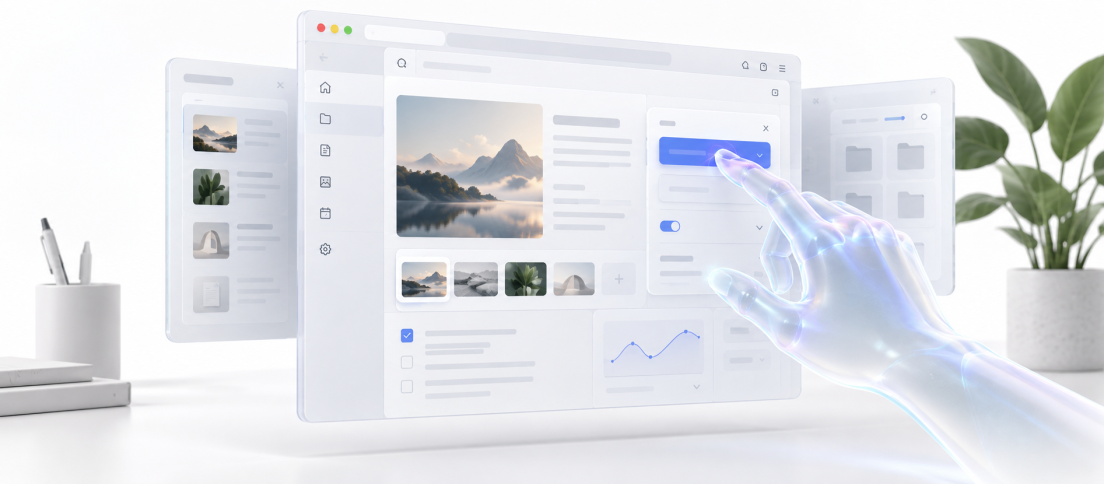
OpenAI’s GPT-6 Astra can navigate computers and web browsers, operate software and complete complex multi-step work with a level of competence that pushes AI agents closer to using digital interfaces the way people do.
OpenAI introduced GPT-6 Astra on September 3, calling it its most capable model yet and highlighting state-of-the-art performance in computer use and browsing. Astra is rolling out first to a limited set of organisations, with broader availability planned across paid ChatGPT plans and the OpenAI API. WIRED describes the model as unusually capable at navigating computers and web browsers, writing software and handling practical digital tasks.
The obvious story is that OpenAI has released another more powerful AI model. The more consequential story for product and UX teams is what Astra’s computer use suggests about the interface itself.
For most of software history, the interface has been the human layer. People clicked buttons, filled forms, opened menus and learned the strange little rituals required to make software do useful things. Machines, meanwhile, communicated through something cleaner: APIs, structured endpoints and integrations designed specifically for them.
GPT-6 Astra makes that separation look increasingly temporary.
The interface is no longer guaranteed to have a human on the other side of it.
Why Astra’s Computer Use Matters
Until now, giving an AI meaningful access to software usually meant building a bridge for it. A developer exposed an API. A product team created an integration. Someone defined the available functions, permissions and data structures so the model could interact with the service safely and predictably.
That architecture remains important, and probably will for a long time. But computer-using AI introduces a second route. Instead of asking software to expose a machine-readable doorway, an AI agent can increasingly walk through the same front door as everyone else.
It can look at a screen, infer what controls do, navigate between states and act through an interface originally designed for a person. Astra’s advances in browser use and computer use make that route significantly more credible.
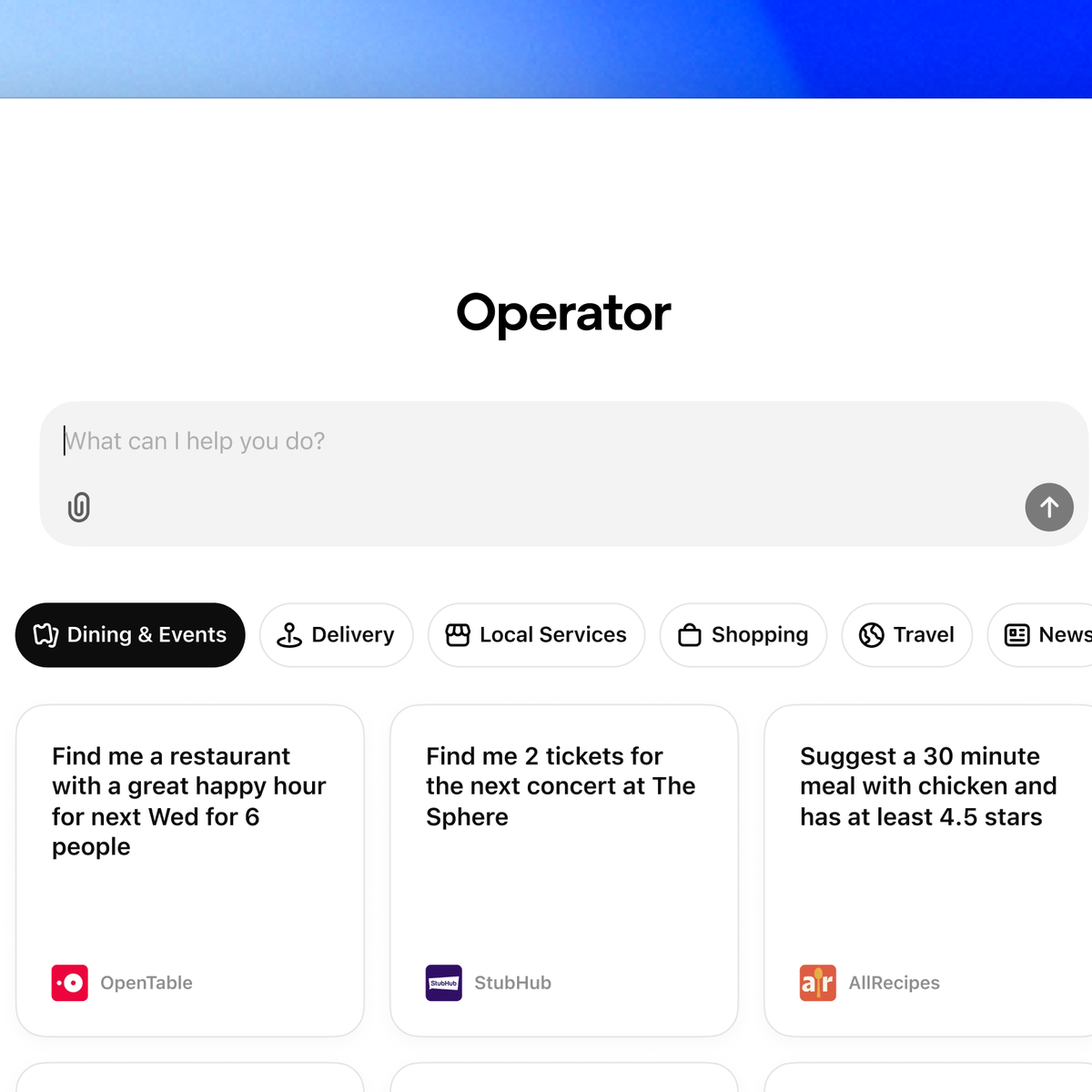
This sounds like a subtle technical distinction. It is not.
APIs require cooperation from the software maker. Computer use does not always require the same degree of cooperation. If an AI agent can successfully operate a website, desktop application or browser-based workflow by understanding its interface, then the UI itself becomes a kind of universal compatibility layer.
That possibility connects directly to a shift DesignWhine has been tracking elsewhere. In our recent piece on Meta’s move toward Slack for AI agents, the important question was already becoming whether workplace software would be selected partly for how effectively agents could work inside it. Our guide to making design systems AI-ready approached the same transition from the other direction: structured product knowledge increasingly needs to travel beyond human teams and into machine workflows.
GPT-6 Astra pushes both ideas further. The machine may not always wait for the product to be made AI-ready.
Good UX Gets a Second Audience
Designers have spent decades optimising interfaces around human cognition: recognition over recall, visible system status, meaningful affordances, consistency, error prevention and recoverability.
Computer-using AI agents introduce an unexpected beneficiary of all that work.
A clear interface is easier for an agent to interpret too. Stable control placement, legible labels, predictable states, explicit confirmation and transparent progress all improve the odds that a machine can understand what is happening and what it should do next.
The irony is that many qualities designers already associate with usability may become machine-usability principles almost by accident.
There are obvious exceptions. Humans and models do not perceive interfaces identically, and product teams should resist the temptation to invent a simplistic new checklist called “agent UX.” Still, the underlying shift is real enough to matter: product surfaces increasingly need to be interpretable by two kinds of actor.
A product can now be technically closed to AI while remaining practically usable by AI.
That could change product strategy in ways that are easy to underestimate. A service that never intended to support an AI workflow may nevertheless find its UI being used by one. A competitor that lacks an official integration may still become accessible through a browser agent. Internal tools that nobody considered worth exposing through APIs may suddenly be automatable because the interface is enough.
The distinction between “supports AI agents” and “does not support AI agents” starts to blur.
The API Moat Gets Thinner
APIs are not about to disappear. They remain faster, more reliable, more auditable and far easier to govern than an AI agent clicking its way through an interface. Serious systems will still want explicit machine access, structured permissions and predictable failure modes.
But APIs used to have another strategic function: they determined who could automate a product and how.
That control weakens when capable computer-use models can operate software from the outside.
Imagine a procurement platform with no public API, a legacy enterprise dashboard with almost no integration support, or a specialist web application whose vendor has never invested in automation. Historically, those limitations protected the product from many external workflows simply because connecting to it was too cumbersome.
A computer-using agent changes the economics. The integration layer becomes interpretation rather than engineering.
That does not mean every interface instantly becomes reliable infrastructure. Agents can misread states, choose the wrong control, become confused by unexpected layouts and make mistakes with very real consequences. OpenAI says GPT-6 Astra includes additional monitoring intended to detect cases where agents may have misunderstood instructions, with the ability to pause or stop a conversation for review. That safeguard is revealing in its own way: once models move from answering to acting, interface ambiguity becomes operational risk.
Designing for Recoverability
This is where the conversation becomes much more interesting than “AI can click buttons now.”
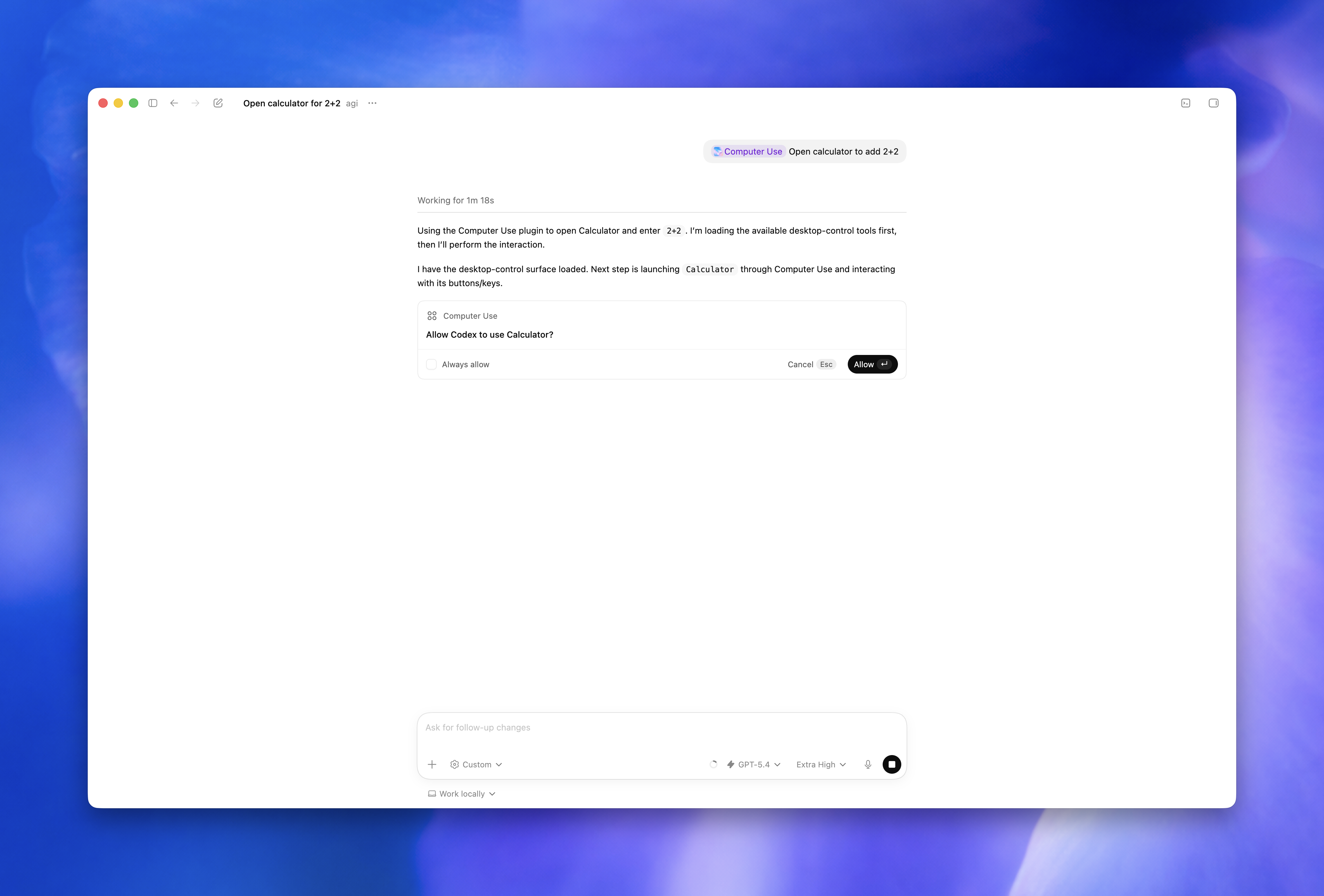
If autonomous or semi-autonomous AI agents begin acting through ordinary interfaces, product teams will need to think far more seriously about reversibility, confirmation and consequences.
A human can notice that something feels wrong, hesitate, reread a warning or recognise that an unexpected screen probably means they took a wrong turn. An agent may confidently continue.
That makes familiar UX principles newly important. Destructive actions should be unmistakable. Undo should be meaningful. State changes should be visible. Permissions should be bounded. Transactions with irreversible consequences should require explicit confirmation.
This also echoes the larger argument in our guide to building an AI-native UX team without destroying design practice: AI increases the speed and scale of execution, which makes human judgement more valuable rather than less. The faster systems can act, the more carefully teams need to design the boundaries around those actions.
There is a second implication too. Interfaces may start becoming part of an organisation’s automation architecture whether product teams planned for it or not. QA, accessibility, information architecture and interaction design could all influence not only how people experience a product, but how reliably machines operate it.
The Human Interface Isn’t Human-Only
GPT-6 Astra is still early. OpenAI’s rollout is limited, the company is placing substantial emphasis on safety, and computer use remains an imperfect substitute for purpose-built integrations. The temptation to extrapolate too far from one model release should be resisted.
But the direction is increasingly difficult to miss.
Software is moving from a world in which humans used interfaces and machines used APIs toward one where both may use both. The neat architectural boundary between human interaction and machine interaction is dissolving.
That changes the meaning of interface design.
The UI is no longer merely the presentation layer sitting above the “real” system. It may itself become an operational surface, something AI agents inspect, interpret and manipulate in order to get work done.
Designers have spent years asking whether AI will generate the interface.
The more consequential question after GPT-6 Astra may be whether AI is about to become one of its users.







GPT-6 Astra’s computer-use benchmarks will get most of the attention. The part I find more consequential is that software can increasingly become automatable without the product team explicitly building an AI integration. That feels like a much bigger product and UX shift than it first appears.