

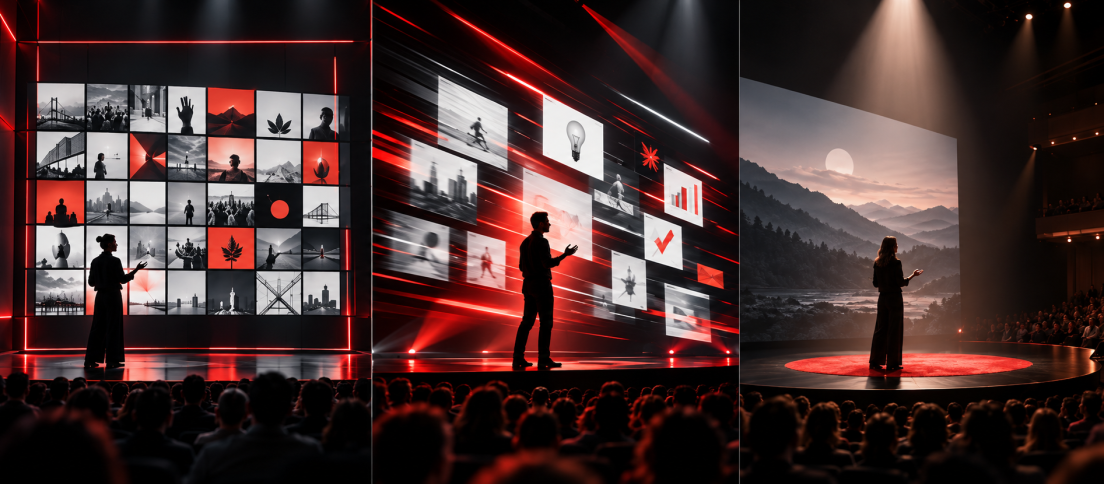
PechaKucha, Ignite and TED are often treated as three versions of the same thing: short talks for people with limited attention spans. That is too shallow a comparison. They do not simply differ in length. They distribute control differently between the speaker, the slides and the clock.
That distinction matters because the wrong format can make a good idea feel weak. A visual story can become bloated in an unconstrained talk. A nuanced argument can become mangled inside a 15-second slide rhythm. The useful question is not which format is more prestigious. It is which constraint improves the idea you actually have.
The Difference in One Glance
| Format | Core rule | Total time | Who controls the pace? | Best fit |
|---|---|---|---|---|
| PechaKucha | 20 slides × 20 seconds | 6:40 | The slide sequence | Visual stories, design work, compact case studies |
| Ignite | 20 slides × 15 seconds | 5:00 | The clock | Fast provocations, passion talks, multi-speaker events |
| TED-style | No fixed slide rhythm | Flexible, often under 18 minutes | The speaker | Ideas needing variable pacing, depth or long narrative beats |
PechaKucha gives the visual sequence authority. Ignite gives the clock more authority. TED gives the speaker more authority.
What PechaKucha Actually Changes
The official PechaKucha format uses 20 images that auto-advance every 20 seconds, producing a 400-second talk. The format was created in Japan in 2003 by Astrid Klein and Mark Dytham. That fixed visual rhythm is not a decorative rule. It changes how the idea has to be built.
Because every slide receives exactly the same amount of screen time, the deck starts behaving like a sequence of narrative beats. A photograph can establish a place. A screenshot can expose a problem. A diagram can reveal a system. But none of them can demand a minute of explanation. The format rewards ideas that can move visually and punishes slides that need to be decoded.
That makes PechaKucha especially strong for architecture, product and design stories, portfolios, travel narratives and compact case studies. If you want the mechanics in detail, our PechaKucha guide covers the format and history, while our 20-slide PechaKucha template shows how to structure the full sequence.

Ignite Looks Similar but Feels Faster
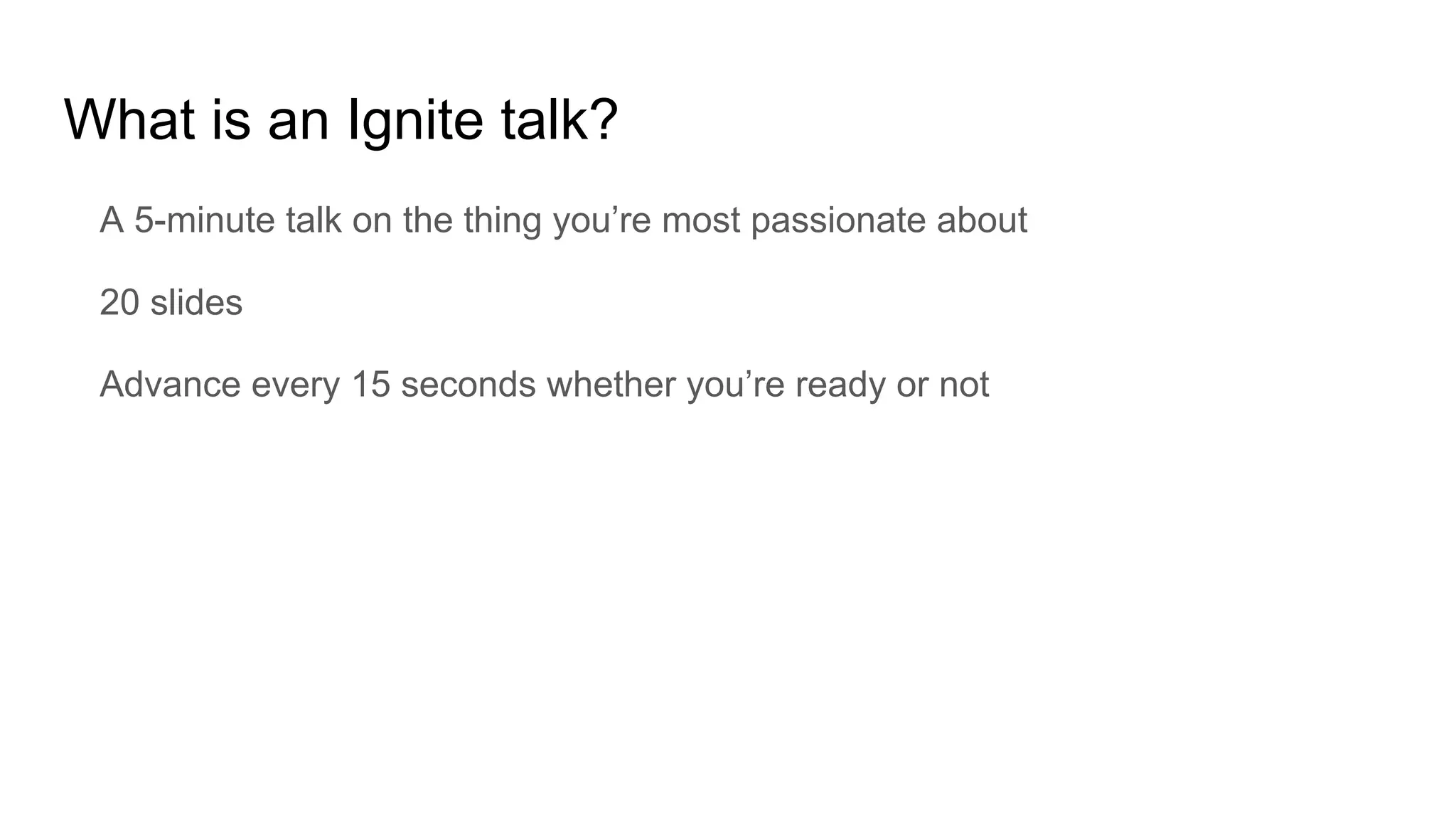
Ignite Talks also uses 20 auto-advancing slides, but each one stays on screen for 15 seconds. The total running time is exactly five minutes. Five seconds sounds like a small difference until you try to speak inside it.
In PechaKucha, a slide can often carry one complete thought. In Ignite, the slide behaves more like a beat. You have less room to qualify, pause or recover. Transitions matter more because the next image is always only a few sentences away.
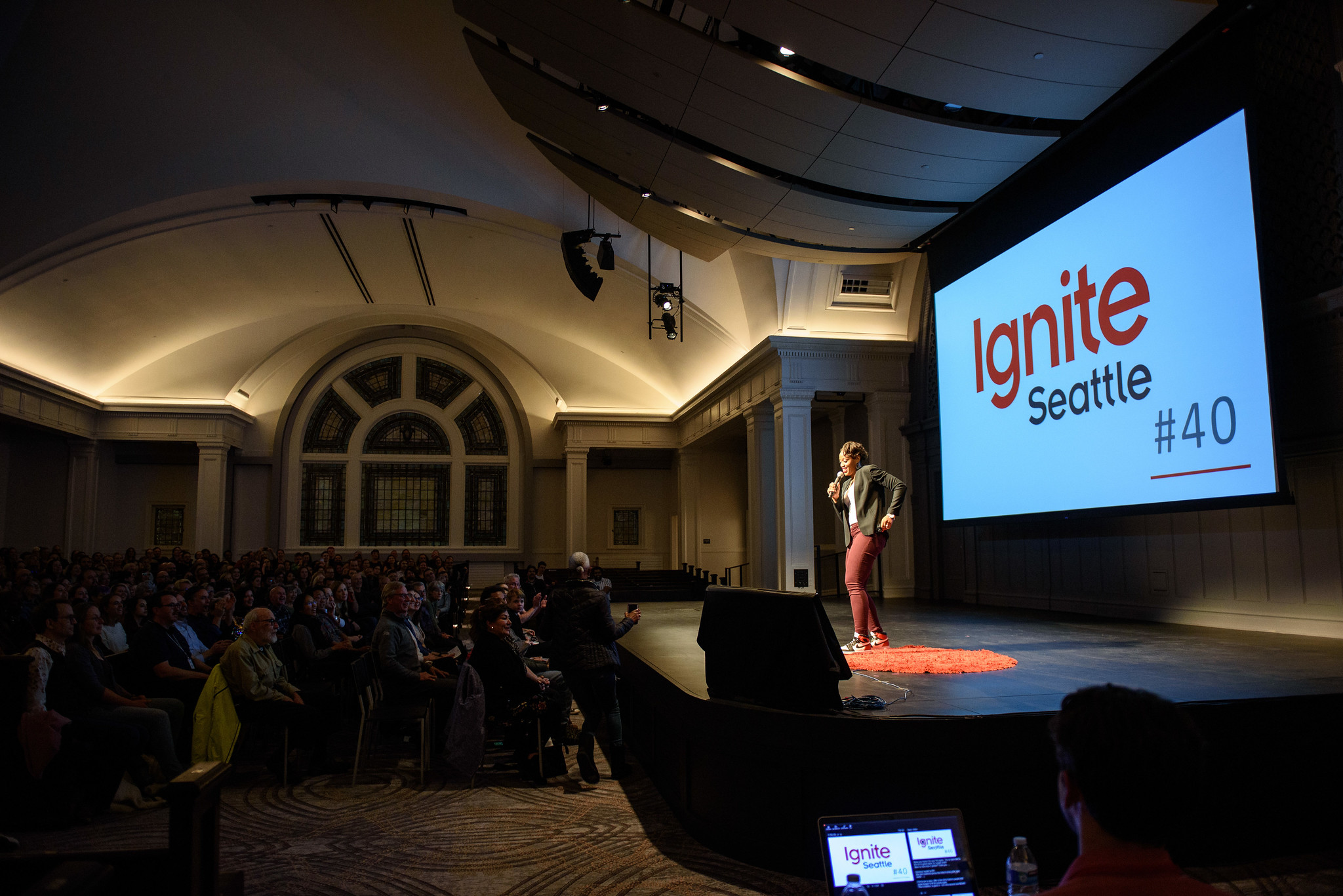
That makes Ignite effective for passion talks, event provocations and ideas with one sharp spine. It is also well suited to multi-speaker programs where timing discipline matters. The organizer knows exactly how long ten talks will take because the format itself prevents presentation creep.
TED Is a Different Kind of Constraint
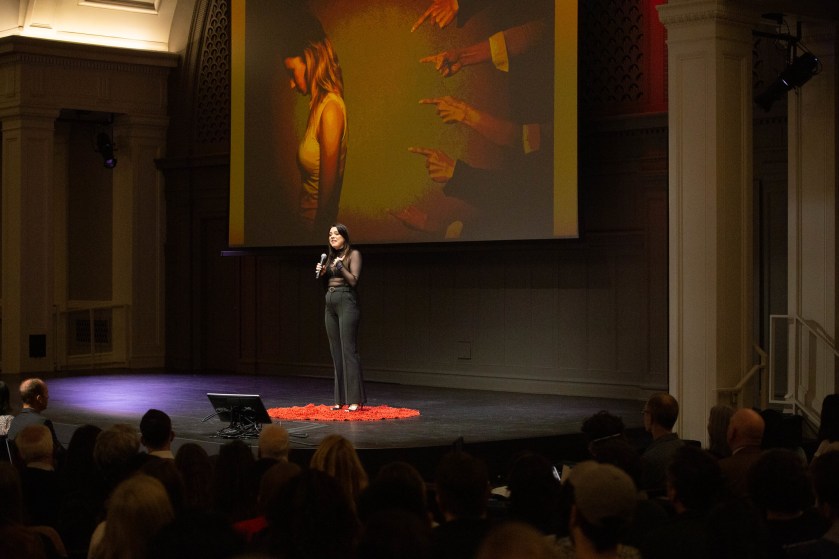
TED is not a fixed slide format. Slides may appear, disappear for long stretches or not be used at all. Current TED speaker guidance says talks are tightly time-limited, with many speakers working in roughly 10 to 12 minutes and plenty of strong talks running only 6 to 8 minutes; TEDx talks longer than 18 minutes are subject to additional review. The meaningful difference is not the exact ceiling. It is that the speaker controls the pacing inside the allotted slot.
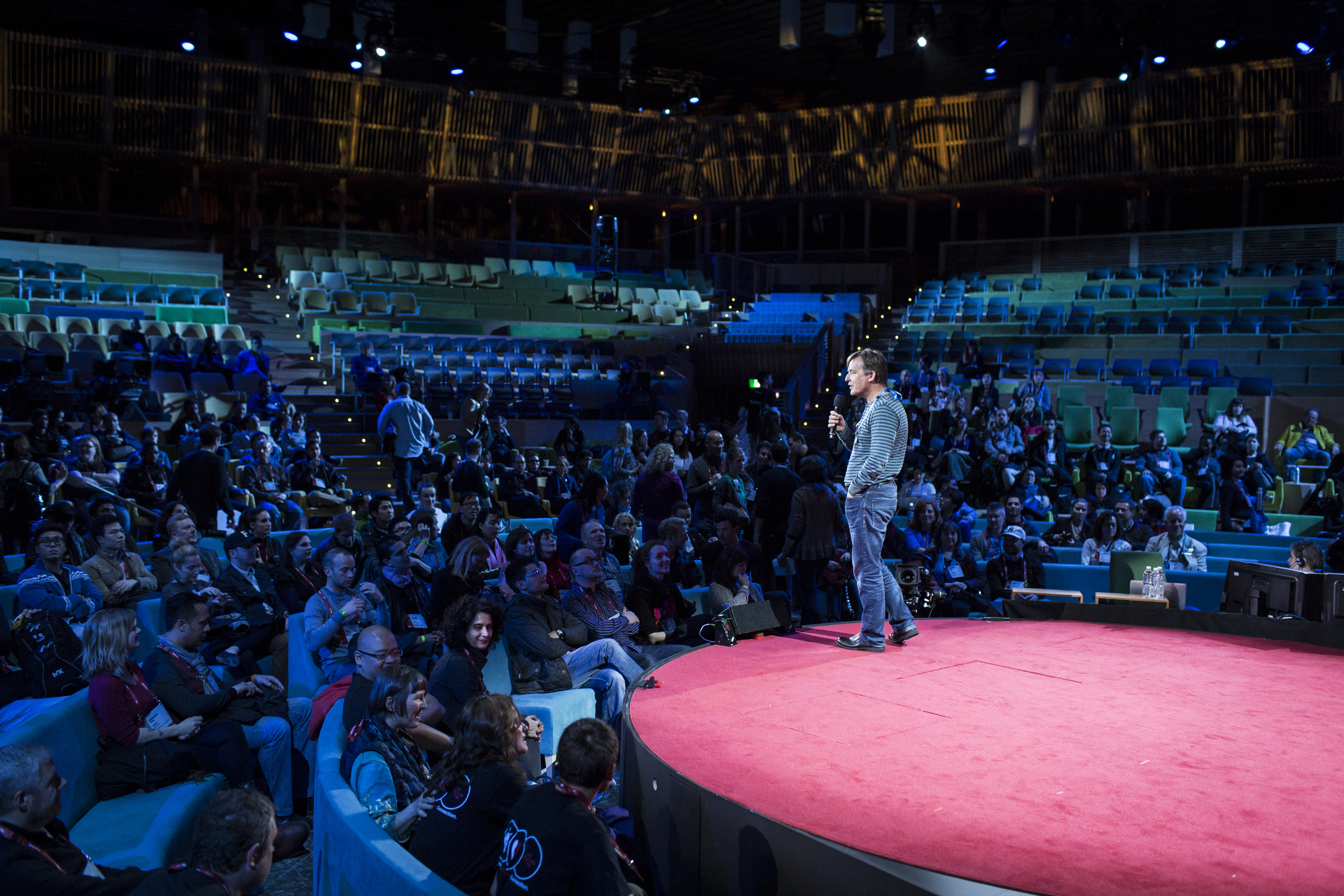
That freedom makes room for things PechaKucha and Ignite struggle with: a long personal story, a difficult concept that needs two minutes of explanation, a live demonstration, silence used deliberately, or an argument where the visual evidence appears only at key moments.
Freedom, however, is not automatically an advantage. A flexible format removes the external discipline that forces weak material out. If the idea is simple, a longer stage slot can tempt the speaker to repeat it three different ways simply because the time exists.
Which Is Better for Visual Storytelling?
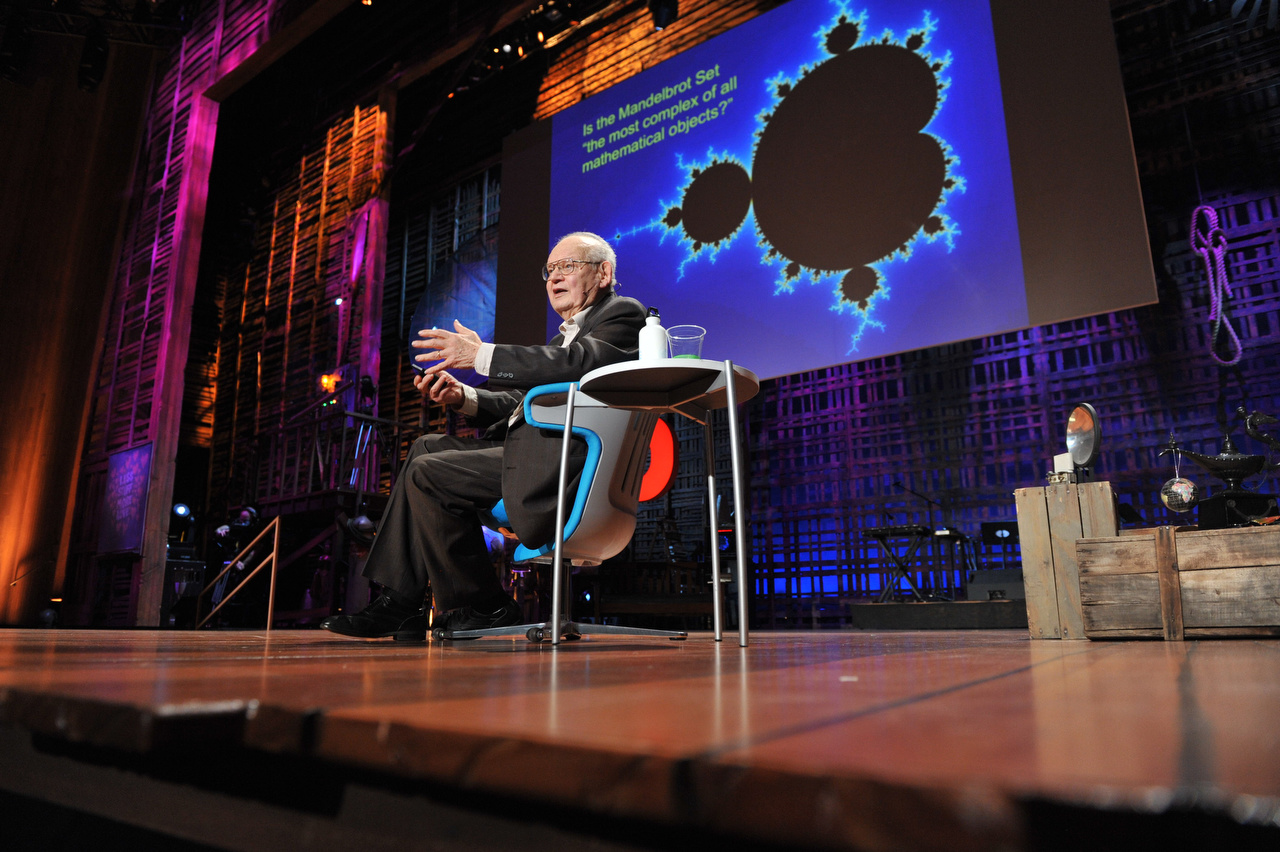
PechaKucha has the cleanest fit when the images are part of the argument rather than decoration. Twenty seconds gives the audience enough time to absorb a strong photograph, interface, illustration or simple diagram while the speaker supplies context.
Ignite can be equally visual, but the faster cadence demands simpler images. A busy slide that might barely survive 20 seconds becomes actively hostile at 15. TED offers the most visual freedom, but that freedom also makes it easier to fall back into conventional presentation habits: bullet lists, ornamental images and slides that merely repeat the narration.
Which Is Better for a Product or Design Case Study?
For a compact case study, PechaKucha usually has the best balance. Six minutes and 40 seconds is enough time to establish context, show a problem, reveal a turning point and land an outcome without letting the case study sprawl.
Ignite works when the case has one lesson and almost no setup. Think “the design decision that changed conversion,” not “everything our team learned over six months.” A TED-style talk works when the case study is evidence for a broader idea rather than the entire subject.
The right format should remove what the idea does not need, not amputate what it does.
Which Is Better for Teaching?
PechaKucha has been studied in higher education because its constraint is easy to standardize across students. Research indexed by ERIC has reported benefits in presentation quality and audience understanding in specific classroom contexts. That does not mean the format is universally superior. It means the constraint can be pedagogically useful when the learning objective includes concision, visual communication and preparation.
Ignite pushes those same skills further toward compression. TED-style talks make more sense when the learning goal is sustained explanation, argumentation or speaking craft rather than mastery of a rigid visual rhythm.
The Rehearsal Is Different Too
PechaKucha and Ignite demand timing rehearsal because the software controls when the visual changes. You are not only practicing what to say. You are practicing where the sentence should be when the next slide arrives.
Ignite is less forgiving because the beat is shorter. A sentence that drifts by three seconds can consume a meaningful part of the next slide. PechaKucha gives slightly more room to recover, but the deck still will not wait.
A TED-style talk demands a different discipline. The speaker controls the pace, which lowers mechanical timing pressure but increases responsibility for rhythm. Pauses, stories and audience reactions can breathe. That flexibility is useful only when the speaker knows why a section deserves more time than the one before it.
When Each Format Fights the Idea
Avoid PechaKucha when the audience needs to interrogate complex evidence slide by slide, when live discussion must interrupt the sequence, or when one visual genuinely needs more than 20 seconds of attention.
Avoid Ignite when the idea needs sustained explanation or careful qualification. The 15-second rhythm can turn nuance into breathlessness.
Avoid a longer TED-style structure when the idea is already complete in five or six minutes. More stage time is not automatically more depth. Sometimes it is simply more room for repetition.
A Better Decision Test
Ask what would make the idea stronger if you were forced to remove control. If the story naturally breaks into visual beats and benefits from a visible sequence, choose PechaKucha. If the same idea can survive an even faster five-minute sprint, Ignite may sharpen it further. If the argument needs variable pacing, extended explanation or moments where no slide should compete with the speaker, a TED-style talk is the better model.
For event organizers, there is a second question: how much schedule certainty do you need? PechaKucha and Ignite make running time predictable across many speakers. TED-style sessions provide more flexibility but require stronger curation and moderation because the format itself does not police the clock.
Choose the Constraint That Improves the Idea
The three formats are not a ladder from simple to sophisticated. They are different tools. PechaKucha is strongest when the visual sequence carries the story. Ignite is strongest when speed creates energy instead of panic. TED-style talks are strongest when the speaker needs room to vary the pace and let the argument breathe.
If PechaKucha is the right fit, continue with our PechaKucha presentation examples, topic ideas and slide design guide.




Which presentation constraint helps you most: a fixed slide count, a fixed timer or complete pacing freedom?