

SurveyMonkey has survived several generations of internet software by understanding something many research products forget: most people arrive with a question, not a desire to learn research software.
That accessibility remains its strongest advantage in 2026, but the product around it has changed considerably. SurveyMonkey can still build a straightforward questionnaire quickly. It can now also generate and edit surveys conversationally with AI, surface findings automatically, organise recurring feedback programs, run ready-made market-research studies through LaunchPad and connect survey work directly into AI assistants.
The interesting question is therefore no longer whether SurveyMonkey is more capable than a free form builder. It clearly is. The question is whether the platform can broaden without losing the simplicity that made it useful in the first place, and whether teams can justify the pricing once their research moves beyond the basics.
DesignWhine's Verdict
Overall
-
Capability
-
Ease of Use
-
Quality & Reliability
-
Value for Money
DesignWhine's Verdict
SurveyMonkey remains easy to recommend because it gets one fundamental thing right: most people want to run a survey, not learn survey software. It combines an unusually approachable workflow with enough logic, analysis and AI assistance for serious everyday research. Its weakness is pricing. The free tier is restrictive, and costs climb as soon as teams need more advanced capabilities. SurveyMonkey is strongest in the middle, more capable than a basic form builder and far less intimidating than enterprise research software.
Pros
Excellent ease of use
Strong everyday survey and analysis capabilities
Useful, well-integrated AI features
Cons
Restrictive free tier
Paid plans become expensive quickly
Less suited to highly specialised research
Survey Building Is Still the Product’s Superpower
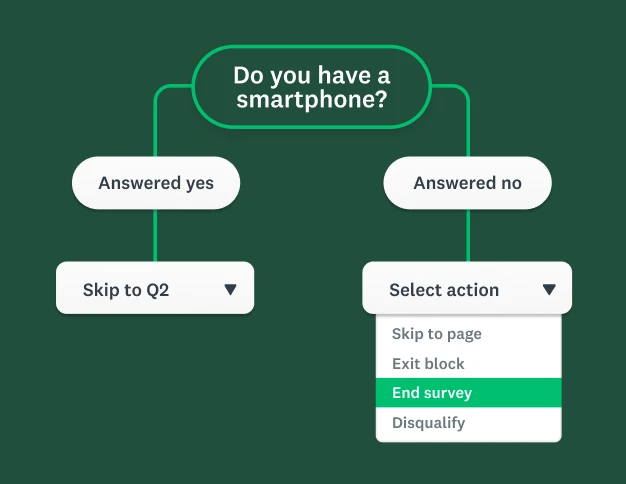
Creating a survey remains the clearest expression of SurveyMonkey’s product philosophy. Templates, familiar question types and an approachable editor let occasional researchers get something credible into the world without understanding the entire system first. More sophisticated studies can add logic, branching, disqualification, randomisation and response piping when required.
The distinction from a product such as Qualtrics remains useful. Qualtrics increasingly feels like research infrastructure that can also build surveys. SurveyMonkey feels like a highly accessible survey workflow that keeps accumulating deeper research capabilities around it.
That middle ground is not a weakness by itself. For marketers, product managers, customer-experience teams and researchers who need structured feedback without administering an enterprise research system, accessibility is a feature with real operational value.
SurveyMonkey’s enduring advantage is not that it can make surveys complicated. It is that it usually lets them remain simple until they genuinely need to become complicated.
AI Now Runs Through the Workflow
SurveyMonkey’s current AI story is more substantial than the simple “generate me a survey” feature that defined the first wave of AI-assisted forms.
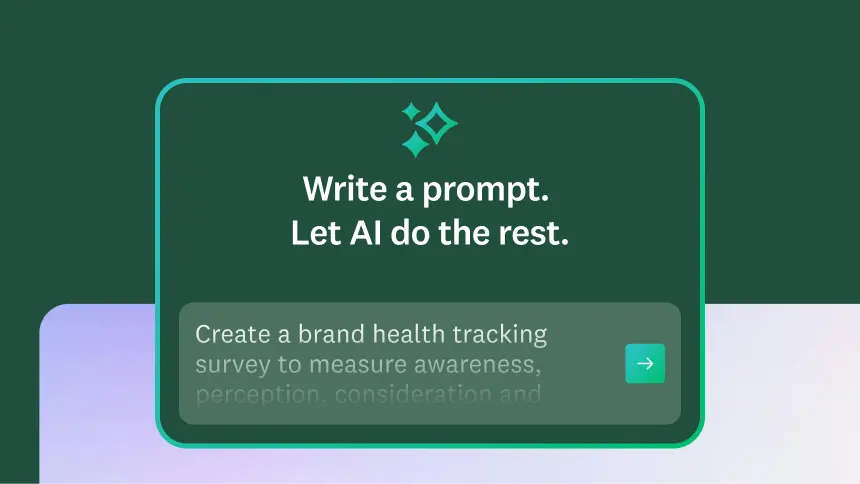
The company now lets users describe a survey goal and have AI generate a starting questionnaire, then continue editing conversationally by asking for changes to tone, wording, styling and structure. SurveyMonkey’s current product updates also show automatic Insights inside Analyze, designed to surface notable findings and explain why they matter rather than leaving teams to manually inspect every chart.
This is a sensible place for AI because survey work contains a large amount of blank-page labour. Generating a first structure can save time. Rewording a confusing question can be useful. Summarising several thousand responses can reduce mechanical analysis.
None of those features remove the methodological problem. An AI-generated survey can still ask the wrong audience the wrong question with impressive fluency. The more of the workflow SurveyMonkey automates, the more important it becomes that somebody understands why the study exists and what its results can actually support.

Programs Changes the Time Horizon
One of the more strategically important 2026 additions is Programs. Survey software traditionally produces snapshots: run a study, inspect the result and return months later when someone remembers to ask the question again. Programs turns related surveys into recurring feedback systems designed to track the same area over time.
SurveyMonkey introduced Programs in April 2026 and has since added recurring scheduling, dashboard views and KPI tracking. The company’s launch announcement positions the feature around ongoing customer, employee and market feedback rather than isolated questionnaires.
This moves SurveyMonkey slightly closer to the territory occupied by larger experience-management systems. The difference is that the product still tries to make continuous listening approachable to teams that do not want to build a full research operation around it.
LaunchPad Moves into Market Research
LaunchPad is an even clearer sign that SurveyMonkey wants to own more of the decision, not just the questionnaire.
Launched in June 2026, LaunchPad packages established research methodologies into guided, pay-per-study products for questions such as concept testing, pricing, messaging and creative validation. SurveyMonkey says these studies combine guided setup with targeted audiences and decision-ready outputs without requiring a subscription.
That proposition is potentially valuable for product and marketing teams that know the business decision they need to make but do not have an in-house market-research function. The important distinction is that methodological packaging is not the same as methodological infallibility. Teams still need to understand the population, sample and limits of what the study measures.
For the wider landscape, see our best market research tools guide and our Qualtrics vs SurveyMonkey comparison.
Analysis Is No Longer an Afterthought
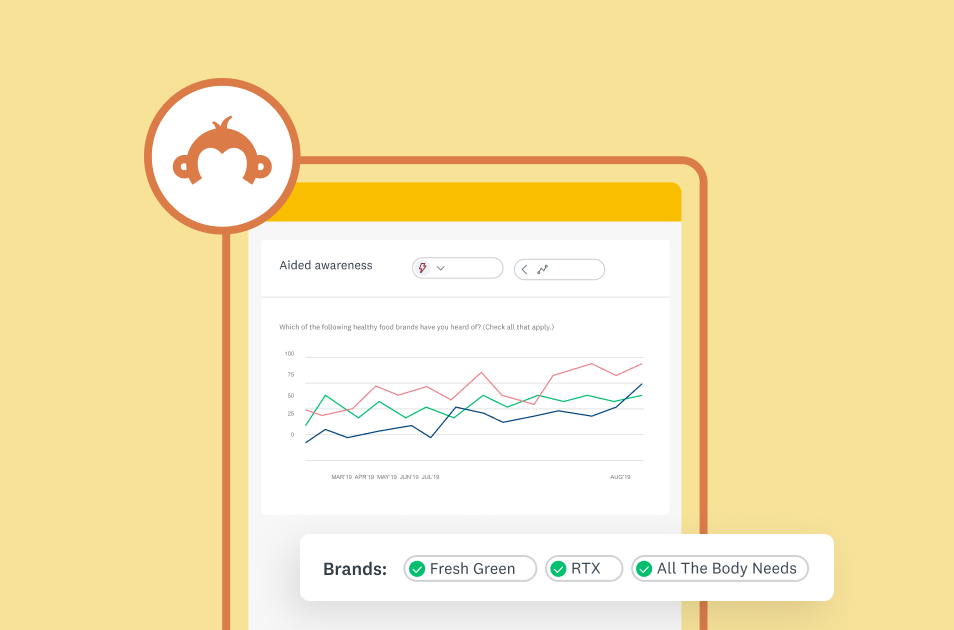
SurveyMonkey’s analysis environment already supported filtering, crosstabs, statistical significance, dashboards and exports. The current product increasingly layers automated interpretation on top of those tools rather than forcing users to choose between simple charts and a separate analysis package.
There is still a ceiling. Highly specialised research, complex governance, institutional research repositories and advanced multi-method programs remain stronger reasons to consider Qualtrics or specialist platforms. But most organisations do not hit that ceiling on every study.
The best research platform is not necessarily the one with the highest ceiling. Sometimes it is the one people will actually use without needing a training programme.
The Pricing Tension Has Not Gone Away
SurveyMonkey’s pricing remains the most obvious counterweight to its accessibility.
The free Basic plan remains useful for simple work but limits surveys to ten questions and restricts the number of responses a user can view. At the time of this update, Standard Monthly is listed at $129 per month. Advantage Annual is $39 per month when billed as $468 annually, while Premier Annual is $139 per month billed annually. Team Advantage starts at $30 per user per month with a three-user minimum and annual billing. The current details are published on SurveyMonkey’s individual pricing page and team pricing page.
This makes the free experience a trial of the product philosophy rather than a full long-term research stack. The interface is approachable enough to attract casual users, while capabilities that make recurring research genuinely powerful can move the organisation into a meaningful software commitment quite quickly.
The New Integrations Make SurveyMonkey More Ambient
SurveyMonkey is also trying to reduce the need to visit SurveyMonkey at all.
During 2026 the company added integrations that allow survey creation and analysis from conversational AI environments including Claude and ChatGPT. The strategic idea is more interesting than the individual integrations: feedback collection becomes something that can be initiated from the workflow where a decision is already happening rather than a separate destination users need to remember to visit.
That could make research more frequent. It could also make it more casual. The easier it becomes to ask a question, the more important it is to retain some friction around deciding whether the answer is meaningful.
DesignWhine’s Verdict
SurveyMonkey remains easy to recommend because it gets one fundamental product decision right: people want to learn something, not learn survey software.
The 2026 product is more ambitious than the familiar brand suggests. Conversational AI reduces survey-building work, Insights shortens analysis, Programs turns isolated studies into continuous feedback and LaunchPad pushes the company further into packaged market research. Those additions make SurveyMonkey increasingly useful to product and customer-insight teams that previously might have outgrown it.
The weakness remains economic and structural. The free tier is intentionally limited, paid capability becomes expensive quickly, and teams with genuinely sophisticated research requirements can still reach a point where the accessible middle ground is no longer enough.
That leaves SurveyMonkey in a stronger version of the same position it has occupied for years: more capable than its simplicity suggests and easier to adopt than research software with a higher ceiling.