
Design wanted democratization. AI may have delivered it in its most radical form. Now what?
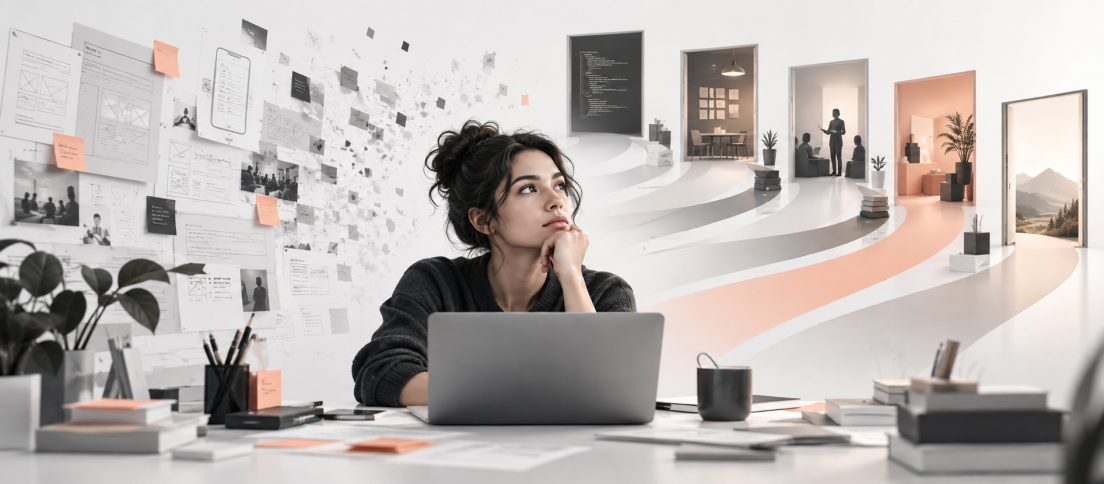
You have probably heard this sentence in a product meeting recently: “I made a quick prototype.”
The important part is who said it. Increasingly, not the designer.
It may be a product manager, business analyst, engineer or founder who opened an AI tool and came back with something clickable. Sometimes it is rough. Increasingly, it is not. It has states, interactions, real copy and enough polish to change the conversation in the room.
For most of digital product history, having an opinion about an interface and being able to make one were different things. Designers were the people who could turn ideas into something coherent, testable and real.
AI is closing that gap.
This Is Already Happening
This is not a prediction about some distant AI-native workplace. The boundaries have already moved.
Figma’s 2026 AI report, based on 8,403 survey responses and 639 qualitative interviews across ten markets, found that developers participating in design jumped from 44% to 60% in a single year. Designers participating in development nearly doubled, from 21% to 41%. Figma separately reports that 77% of product managers now spend at least half their time on the canvas, with AI enabling them to prototype and build in ways that previously required specialist skills.
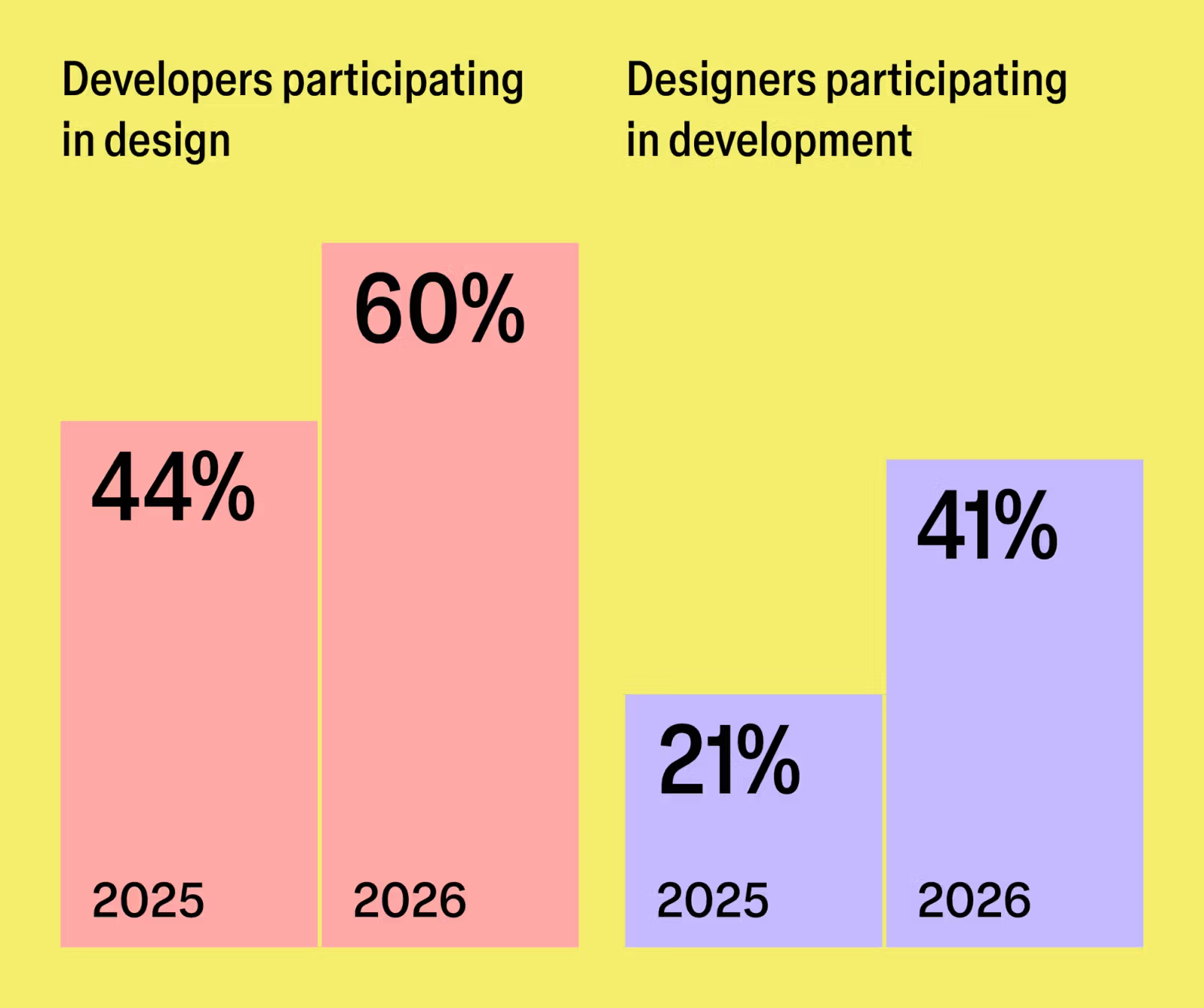
The speed matters as much as the direction: those shifts happened in one year.
AI may not need to replace designers. It only needs to make enough design possible without them.
Those numbers are striking because the behaviours are already familiar. PMs make prototypes. Engineers make interface decisions. Designers write production-adjacent code. BAs turn requirements into clickable experiences before a designer has opened a file. What used to require a handoff increasingly happens before the handoff exists.
DesignWhine has been following this from several directions: AI compressing the journey from PRD to UI, the rise of the AI design engineer, and the difference between generating an interface and understanding a product. Those once looked like separate stories. They increasingly look like symptoms of the same one.
Design Has Lost Its Gate
There is an irony here that DesignWhine cannot really dodge. In 2021, we argued for an end to gatekeeping in UX and celebrated communities such as ADPList for democratizing access to design knowledge and mentorship. Three years later, our study of nearly 1,000 UX professionals across 17 countries argued that self-taught designers and alternative paths into the profession deserved far more recognition.
In 2021, we argued for an end to gatekeeping in UX and celebrated communities such as ADPList for democratizing access to design knowledge and mentorship.
We wanted the gates opened. AI has taken that instinct to its logical extreme. It is not merely making design easier to enter. It is distributing pieces of design work to people who never intended to become designers at all.
The important change is not that everybody suddenly understands interaction design, accessibility, information architecture or research. They do not. It is that producing something that looks like the output of design work no longer requires the same amount of design skill, software fluency or time.
A PM has always been able to say, “I think onboarding should work like this.” Now they can show it. An engineer can generate an alternative before the meeting ends. A BA can turn business rules into an interface.
AI has not erased expertise. It has erased some of the friction that kept one profession from producing the artefacts of another. Typing survived when computers spread through offices. Photography survived when cameras moved into every phone. The activity can become more common while the specialist loses exclusive ownership of it.
But They Are Not Designers
A designer can reasonably object that a PM generating a prototype does not make that PM a designer. They may miss edge cases, accessibility or information architecture. They may make something polished enough to look finished while carrying problems an experienced designer spots immediately.
All true.
But they do not have to become as good as the best designer in the company. They only need to become capable enough that the organisation involves the specialist differently, later, less often, or on different problems.
The threat is not that everyone suddenly becomes a great designer. It is that everyone becomes capable enough to change when a designer is required.
That threshold is already visible in elite AI product teams. Jenny Wen, Head of Design for Claude at Anthropic, recently argued on Lenny’s Podcast that the classic discovery, mock, iterate design process is becoming obsolete in her environment. That does not mean every company should imitate Anthropic. It does mean one of the most watched design teams in technology is already working beyond a sequence many organisations still treat as standard.
What Is Actually Scarce
Here is the paradox. Figma’s research finds that 90% of respondents believe design is at least as important as it was before AI, and nearly six in ten say it is more important. Design is not becoming irrelevant. It is becoming harder to contain inside the job title “designer.”
So the harder question becomes: which parts of design still retain real, defensible value when the ability to produce design work is spreading across the team?
The reassuring answer is usually judgment. Taste. Empathy. Systems thinking. Understanding users. Knowing what not to build.
There is truth in that. There is also a danger in turning those words into comforting abstractions.
“Taste” is not a job description. Neither is “strategic thinking.” If designers believe those are the things that make them indispensable, the profession has to become much better at demonstrating what those qualities change in a product, not merely asserting that AI lacks them.
AI can already generate competent screens, and competent is enough to change workflows. The harder work is explaining why a decision is right, why a small interaction matters, why the obvious solution fails for a certain user, or why the fastest thing to ship is not the thing worth shipping.
We have argued before that AI needs systems and context to design coherently. But the same systems also make design knowledge portable. Once principles, components, patterns and constraints can be interpreted by machines, they can be applied by people who never spent years learning how to construct them.
That is why the designer’s value can no longer rest on being the person in the room who knows how to make the interface.
So What Does a Designer Do Now?
If judgment is what protects designers, designers have to make the consequences of that judgment visible.
Start by giving up one of the profession’s most persistent obsessions: tool expertise as identity. Being the fastest person in Figma, knowing every Auto Layout trick, or producing immaculate high-fidelity screens used to create useful professional distance. That distance is shrinking quickly. Tools still matter, but mastering the current tool is becoming hygiene, not a moat.
DesignWhine made this argument bluntly back in 2022. In Design Liberation: Breaking Free from UX Tools, we warned that attachment to Figma and its predecessors could become a trap, and even wrote that as tools automated more of the creative process, organisations might decide that “a BA may suffice.” That line reads rather differently now.
The point was never that tools were unimportant. Tool fluency and design ability were never the same thing. Learn enough code to prototype, understand constraints and work with AI-generated builds, but do not let coding become the new Figma, another tool designers mistake for the job itself.
The practical response is to move some attention away from the UI layer, especially polished screen production, and back toward the UX underneath it: research, user behaviour, flows, accessibility, product data, experimentation, context and the messy reasons people do or do not succeed with a product.
Use AI to accelerate that work. Transcribe interviews. Cluster observations. Interrogate large sets of feedback. Explore product data faster. Then spend the saved time where the leverage is higher: talking to users, interpreting evidence, challenging requirements and getting involved before the solution has already hardened into a screen.
Visual craft still matters. Bad UI can ruin good UX. But polished UI should increasingly be the consequence of good design thinking, not the thing a designer mistakes for their defensible value.
And yes, there is real exposure here. A role built mainly around taking settled requirements and turning them into attractive screens is easier to compress than a role that finds the right problem, understands the user, challenges the requirement, reads the evidence and changes what the team decides to build.
AI is making interface production cheaper. Designers should spend the dividend by becoming better at UX, not merely faster at UI.
Send this to your design team, or to someone trying to become a designer, before they spend another year becoming exceptional at the part of the job everyone else can increasingly do.
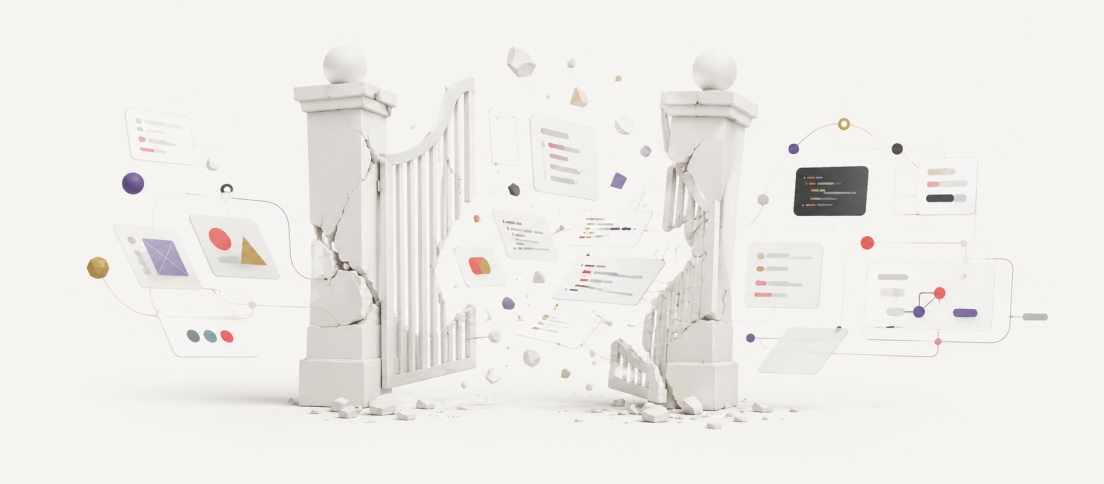
The gates have fallen. The danger is not that everyone becomes a designer. It is that designers keep perfecting the part everyone else can now do.




Design spent years arguing for fewer gatekeepers and more accessible paths into the profession. AI may have taken that idea further than anyone expected. Where has the boundary already moved on your team?