

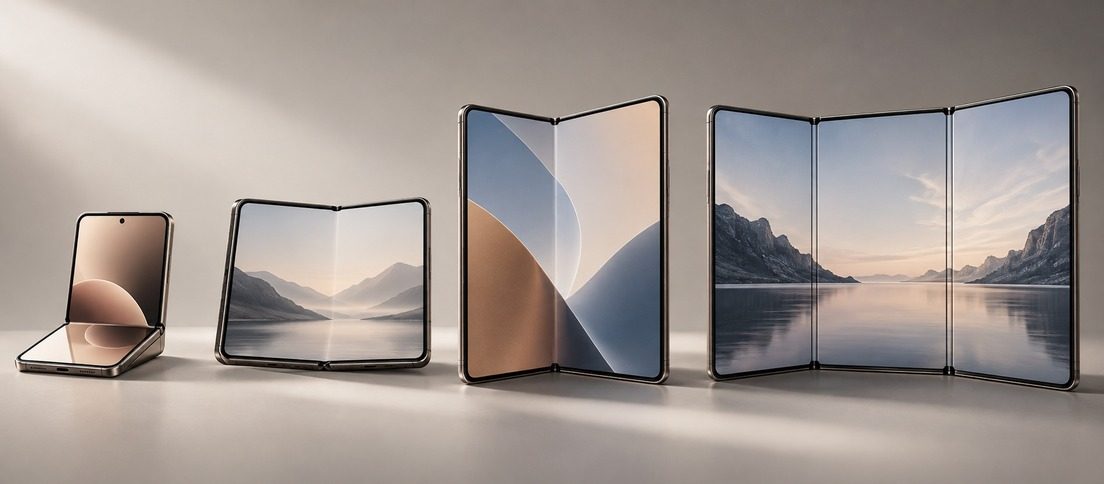
For years, “foldable phone” meant one fairly specific thing: a tall Android phone that opened into a small square tablet. In 2026, that description has stopped being useful. Samsung now sells two different kinds of book foldable. Huawei sells wide folds and tri-folds. Motorola has moved beyond flips into a full book-style device. Xiaomi has embraced the shorter, wider shape. And on October 23, Apple will put its first foldable iPhone on sale.
That makes the foldable market more interesting, but also harder to understand. A 10-inch tri-fold, a pocketable clamshell and a 7.6-inch passport-style phone may all use flexible OLED, yet they solve completely different interface problems. The hardware category has fragmented into competing geometries.
This guide maps the commercial foldable-phone landscape as it stands on October 1, 2026. It covers the major globally available devices, China-only models, meaningful regional products and a handful of niche foldables that broaden the category. It also separates phones that are actually on sale from devices that are announced, sold out or merely lingering in official catalogues.
In 2026, foldable is no longer a form factor. It is a family of competing interface geometries.
Every Foldable Phone in 2026
The quickest way to understand the market is to stop treating every fold as equivalent. The table below groups 31 commercially relevant devices by the shape they become when opened. Screen sizes are manufacturer figures and availability varies by country, carrier and stock.
| Phone | Form | Status on Oct. 1, 2026 | Inner / outer display | Market |
|---|---|---|---|---|
| Samsung Galaxy Z Fold8 | Wide book | On sale | 7.6 / 5.5 in | Global |
| Apple iPhone Duo | Wide book | Announced, ships Oct. 23 | 7.6 / 5.4 in | 70+ markets |
| Xiaomi 18 Fold | Wide book | On sale | 7.58 / 5.38 in | China |
| Huawei Pura X Max | Wide book | On sale | 7.7 / 5.4 in | China |
| Huawei Pura X | Wide compact fold | On sale | 6.3 / 3.5 in | China |
| Samsung Galaxy Z Fold8 Ultra | Full-size book | On sale | 8.0 / 6.5 in | Global |
| Google Pixel 11 Pro Fold | Full-size book | On sale | 8.0 / 6.5 in | Multiple markets |
| Motorola Razr Fold | Full-size book | On sale | 8.09 / 6.56 in | Select markets |
| HONOR Magic V6 | Full-size book | On sale | 7.95 / 6.52 in | Europe, MEA, APAC |
| OPPO Find N6 | Full-size book | On sale | 8.12 / 6.62 in | Multiple markets |
| vivo X Fold6 | Full-size book | On sale | 8.02 / 6.51 in | China |
| vivo X Fold5 | Full-size book | Still officially sold | 8.03 / 6.53 in | Global select |
| Huawei Mate X7 | Full-size book | On sale | 8.0 / 6.49 in | China |
| OnePlus Open | Full-size book | Still officially listed | 7.82 / 6.31 in | Select markets |
| TECNO PHANTOM V Fold2 5G | Full-size book | Still officially sold | 7.85 / 6.42 in | Regional |
| nubia Fold | Full-size book | On sale | 8.0 / 6.5 in | Japan |
| VERTU AlphaFold | Luxury book | On sale | 8.05 / 6.53 in | Direct/global |
| Samsung Galaxy Z Flip8 | Flip | On sale | 6.9 / 4.1 in | Global |
| Motorola Razr Ultra 2026 / Razr 70 Ultra | Flip | On sale | 7.0 / 4.0 in | Multiple markets |
| Motorola Razr+ 2026 | Flip | On sale | 6.9 / 4.0 in | US/select |
| Motorola Razr 2026 | Flip | On sale | 6.9 / 3.6 in | US/select |
| HONOR Magic V Flip2 | Flip | On sale | 6.82 / 4.0 in | China |
| Xiaomi MIX Flip 2 | Flip | On sale | 6.86 / 4.01 in | China |
| TECNO PHANTOM V Flip2 5G | Flip | Still officially sold | 6.9 / 3.64 in | Regional |
| Infinix ZERO Flip | Flip | Still officially sold | 6.9 / 3.64 in | Regional |
| nubia Flip3 | Flip | On sale | 6.9 / 4.0 in | Japan |
| Blackview HERO 10 | Flip | Still officially sold | 6.9 / 1.19 in | Direct/select |
| VERTU Quantum Flip | Luxury flip | On sale | Flip + cover display | Direct/global |
| Huawei Mate XT 2 Ultimate Design | Tri-fold | On sale | 10.2 / 6.5 in | China |
| Huawei Mate XTs Ultimate Design | Tri-fold | Still officially sold | 10.2 / 6.4 in | China |
| Samsung Galaxy Z TriFold | Tri-fold | Limited run sold out | 10.0 / 6.5 in | Limited markets |
What Counts as Current?
“Every foldable” needs a definition. This inventory includes manufacturer-supported commercial phones that are either currently sold, officially listed for sale in at least one market, or formally announced with a 2026 sale date. It excludes concepts, patent drawings, leaks, prototypes and discontinued generations that survive only as third-party retailer stock.
That distinction matters this year. Samsung’s Galaxy Z TriFold, for example, was a real 2026 retail product, but its limited US run is now sold out. Apple’s iPhone Duo is equally real, but as of this guide’s cutoff date it does not ship until October 23. Both belong in the landscape, but neither should be represented as an ordinary phone you can walk into any store and buy today.
The guide also avoids counting storage, finish and luxury-material variants as separate phones. VERTU may sell numerous AlphaFold editions, but they share one underlying foldable platform. Likewise, older Galaxy Fold and Flip generations, Huawei’s Pocket 2 and nova Flip S, and other supported legacy devices are not treated as current-generation entries merely because support pages still exist.
The Four Shapes of 2026
The most important change in foldables is not a faster processor or another hinge material. It is that manufacturers are now choosing different geometries for different jobs.
- Wide or passport folds prioritize a compact closed device and a broader internal canvas. Samsung Galaxy Z Fold8, iPhone Duo, Xiaomi 18 Fold and Huawei’s Pura X family are the clearest examples.
- Full-size book folds keep the familiar phone-to-tablet proposition, generally pairing a roughly 6.5-inch cover screen with an inner display around 8 inches.
- Flip phones reverse the proposition. They do not create a tablet. They compress a normal phone into a smaller object and turn the cover display into a quick-interaction surface.
- Tri-folds push the category toward tablet replacement, opening to roughly 10 inches and making window management, input and posture much more consequential.
This is also why the old shorthand of comparing foldables by inner-screen diagonal is increasingly misleading. A 7.6-inch wide fold can behave very differently from an 8-inch square book fold, even before software enters the equation.
Wide Folds Become a Category
The biggest 2026 design movement is the rise of shorter, wider foldables. Samsung, Xiaomi, Huawei and Apple have all converged on versions of the same underlying idea: make the folded device feel compact, then use width rather than height to create a useful interior.
Samsung Galaxy Z Fold8
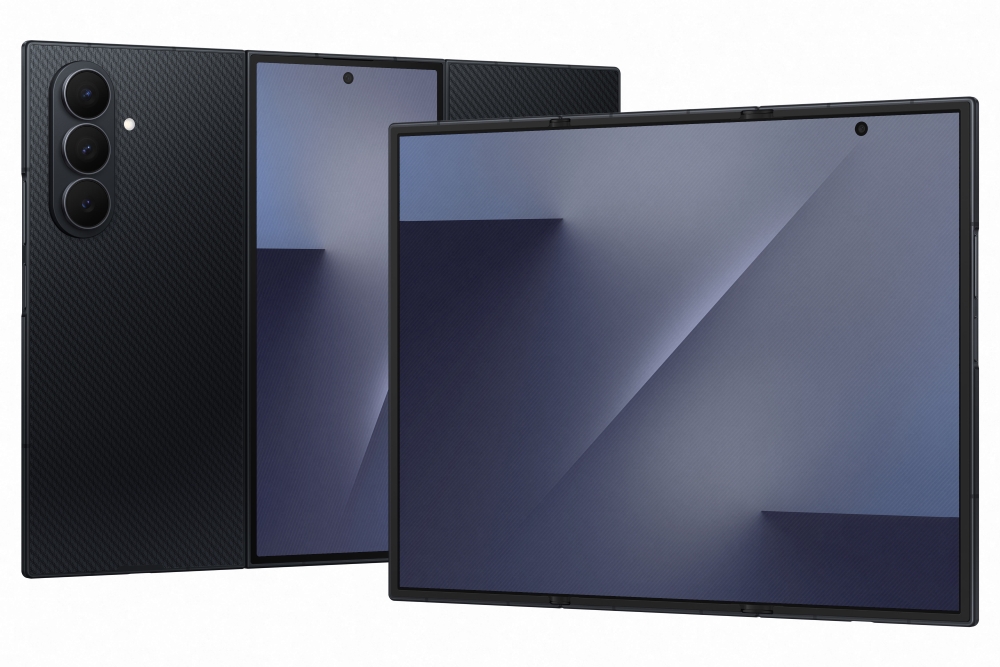
Samsung’s Galaxy Z Fold8 is the clearest signal that the company no longer thinks one book-fold shape can serve everyone. It uses a 5.5-inch cover display and a 7.6-inch inner display, but the more revealing numbers are the ratios: roughly 10:16 outside and 4:3 inside. At 201g, it is lighter than Samsung’s larger Ultra model and deliberately positioned around reading, browsing, video and everyday carry rather than maximum workspace.
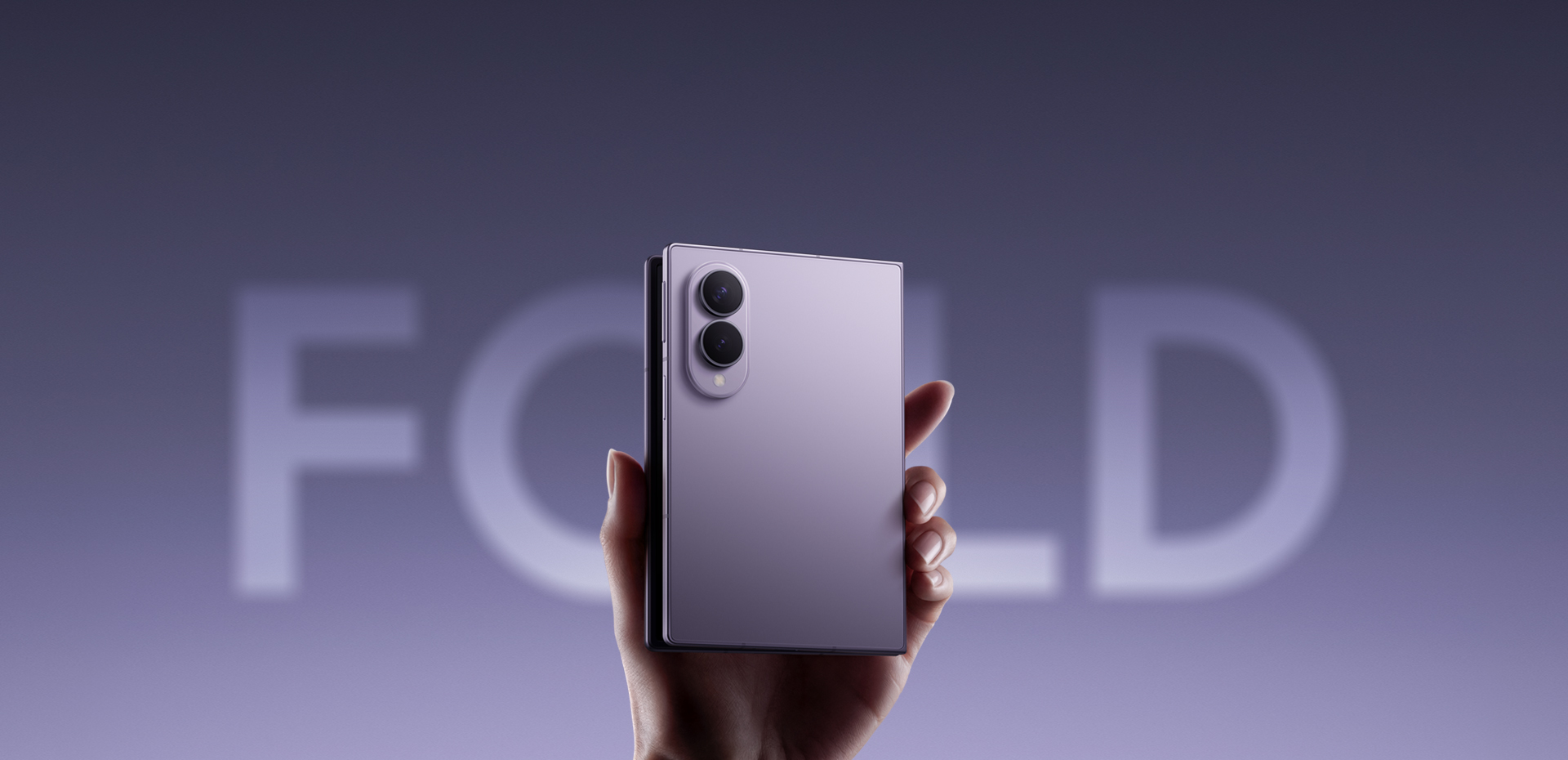
That change makes Fold8 unusually important from a UX perspective. Samsung spent years stretching its cover screens toward conventional smartphone proportions. In 2026 it willingly made one Fold shorter and wider, effectively admitting that a foldable can optimize for the transformation itself instead of pretending to be a normal slab while closed. The 4,800mAh battery, Snapdragon 8 Elite Gen 5 for Galaxy and dual 50MP rear cameras are capable, but the geometry is the real product decision.
Apple iPhone Duo
iPhone Duo is Apple’s first foldable and the highest-profile new entrant in the category. It opens to 7.6 inches and closes around a 5.4-inch outer display. Apple says both displays share the same aspect ratio so content can scale proportionally between states, a seemingly small decision that speaks directly to the continuity problem foldables have wrestled with for years.
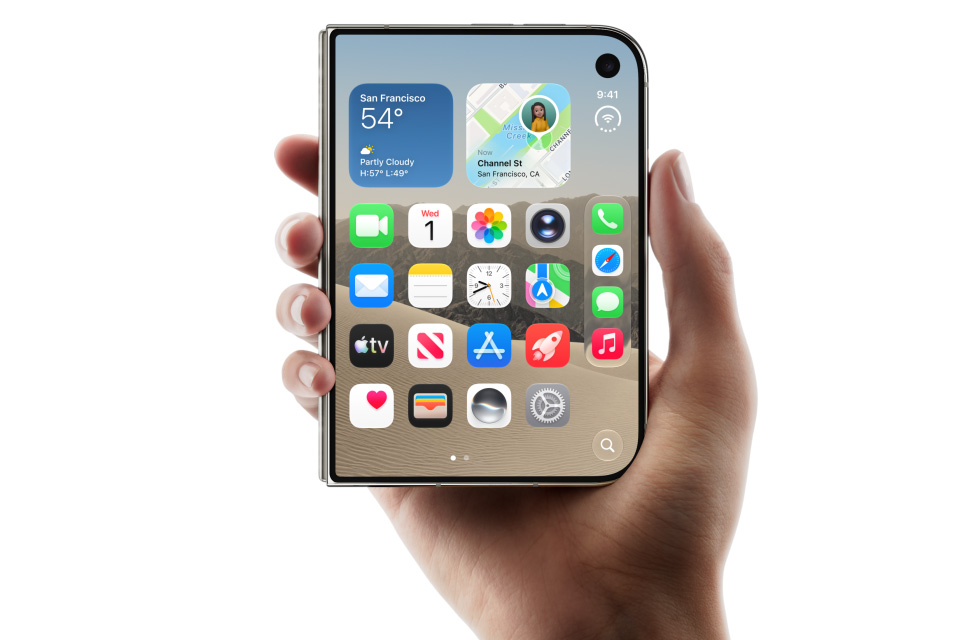
The device weighs 254g, uses an A20 Pro chip, supports Apple Pencil (USB-C), and runs a fold-aware version of iOS 27 with side-by-side apps and multiple physical poses. In the US it starts at $1,999; in India it starts at ₹299,900. Pre-orders begin October 16 and availability starts October 23, so it belongs in this guide as an announced 2026 product rather than a currently shipping one.
DesignWhine has already looked at whether Apple’s first foldable can solve the UX problem and at what its changing screen state means for responsive design systems. The interesting part is not that Apple finally built a hinge. It is that millions of iOS users and developers will now have to think explicitly about continuity, posture and interface reflow.
Xiaomi 18 Fold
Xiaomi’s 18 Fold arrived in China in September with a 5.38-inch cover display and 7.58-inch inner display, putting it squarely in the new passport-style camp. Xiaomi’s store lists the device, while the launch configuration pairs the company’s Xring O3 processor with a 6,000mAh battery, 67W wired and 50W wireless charging, and a Leica-backed 200MP main camera.
The significance is strategic as much as technical. Xiaomi had previously built conventional large book foldables. The 18 Fold changes the proportions instead of merely thinning the old formula. It is currently a China-market product, but together with Fold8 and iPhone Duo it turns the wide fold from an eccentric design into a recognizable subcategory.
Huawei Pura X Max
Huawei Pura X Max stretches the wide-fold idea further. Its 5.4-inch outer display opens into a 7.7-inch inner screen, in a body that is 11.2mm folded and about 229g. Huawei pairs the form with HarmonyOS 7, a Kirin 9030 Pro platform, 5,300mAh battery and IP58/IP59 protection.
Where a conventional Fold says “phone outside, tablet inside,” the Pura X Max feels closer to “compact reading device outside, broad canvas inside.” The distinction sounds semantic until interfaces designed for tall smartphone viewports encounter a display that is intentionally wider from the beginning.
Huawei Pura X
Pura X remains one of the strangest useful foldables on sale. It is a compact fold with a 3.5-inch outer screen, but it opens horizontally into a 6.3-inch 16:10 display rather than vertically into the long panel associated with a normal flip phone. At about 194g, it sits between flip and book categories in both scale and intent.
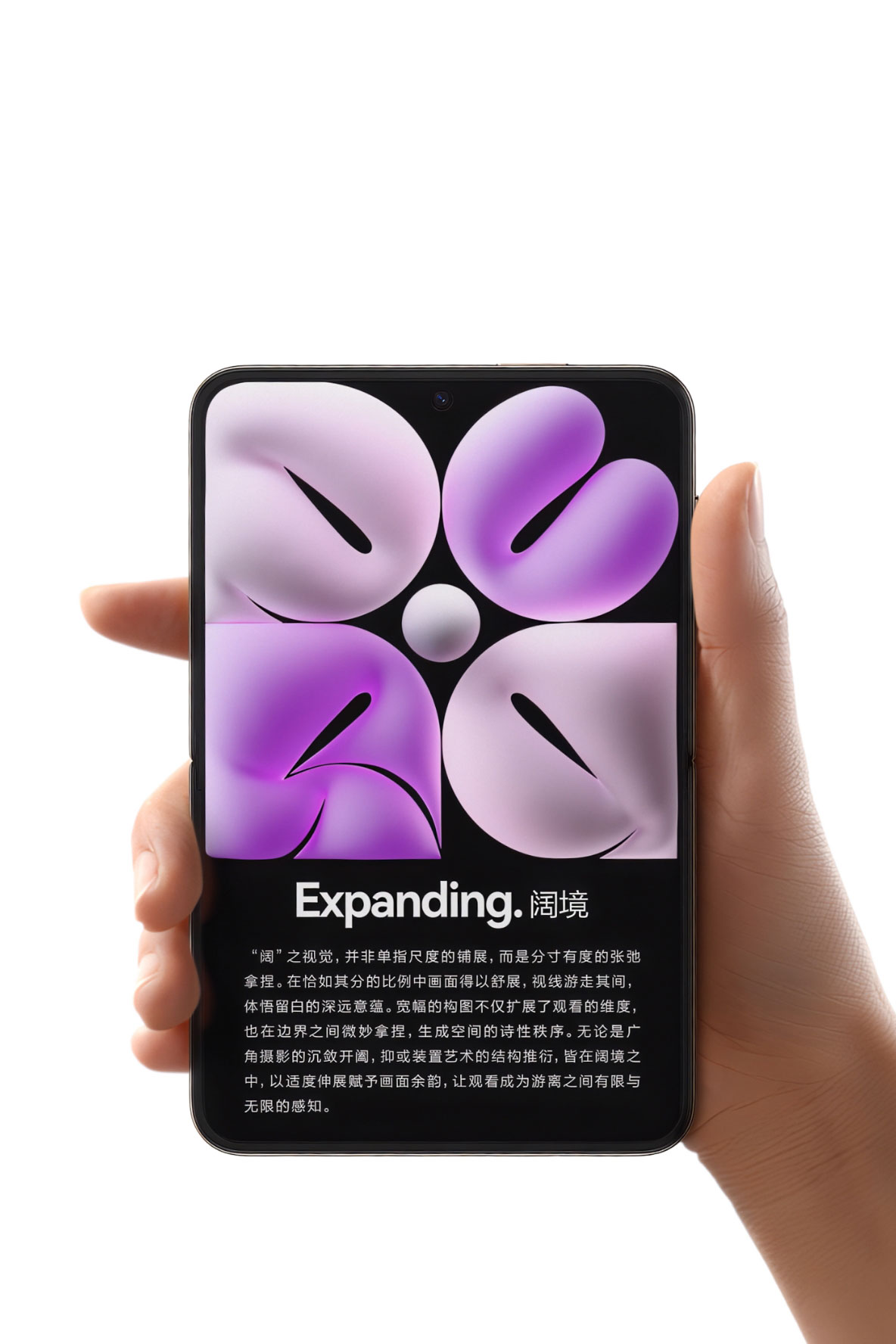
That makes it more than an oddity. Pura X demonstrates that a foldable does not need to inherit either the smartphone rectangle or the tablet square. Huawei explicitly frames the wider canvas around reading, games and media. It is one of the clearest examples of hardware geometry becoming an interface decision.
The hinge has become ordinary. The software consequence of changing shape is now the real product.
Full-Size Book Foldables
The classic phone-to-tablet fold is not disappearing. It is becoming more mature, thinner and more differentiated. In 2026 the strongest models cluster around an 8-inch inner display, but battery size, weight, stylus strategy and multitasking software vary considerably.
Samsung Galaxy Z Fold8 Ultra
Galaxy Z Fold8 Ultra is Samsung’s maximalist answer to its own compact Fold8. The 8-inch inner display and 6.5-inch cover display create the more familiar full-size foldable canvas. It weighs 215g and measures 4.1mm unfolded, while the rear camera system includes a 200MP main, 50MP ultrawide and 3x telephoto.
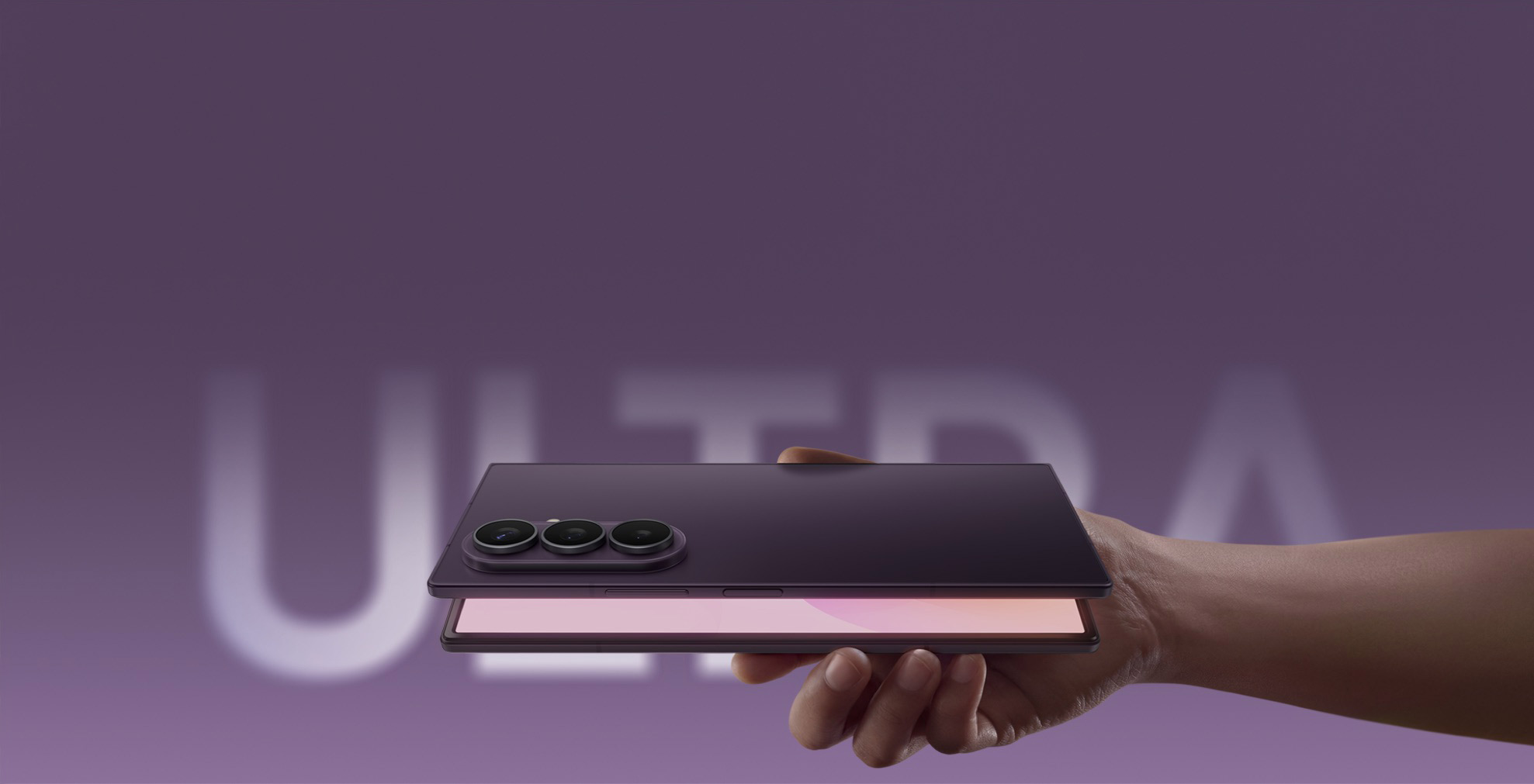
The 5,000mAh battery and Snapdragon 8 Elite Gen 5 for Galaxy matter, but the name “Ultra” is more revealing. Samsung now treats large-screen foldability as a premium productivity tier rather than the definition of Fold itself. That separation may be one of the category’s most consequential moves because it allows smaller folds to optimize for portability without pretending they are workstation replacements.
Google Pixel 11 Pro Fold
Google’s Pixel 11 Pro Fold keeps the 8-inch inner and 6.5-inch outer architecture while refining thickness, durability and AI. It uses the Tensor G6 and Titan M3, offers a new 48MP main camera with 30x Super Zoom, and Google promises seven years of updates.
Pixel’s role is disproportionately important for interface standards. Samsung can optimize One UI for its own hardware, but Google’s foldable is also a reference point for Android’s adaptive-layout behavior. Every improvement to large-screen Android reduces the amount of proprietary work other manufacturers need to do, and every weakness becomes something app teams inherit.
Motorola Razr Fold
Motorola finally moved beyond clamshells with the Razr Fold. It uses an 8.09-inch inner display, a 6.56-inch cover screen, Snapdragon 8 Gen 5 and a large 6,000mAh silicon-carbon battery in a body around 4.6mm unfolded. Motorola also supports three-app multitasking on the large canvas.
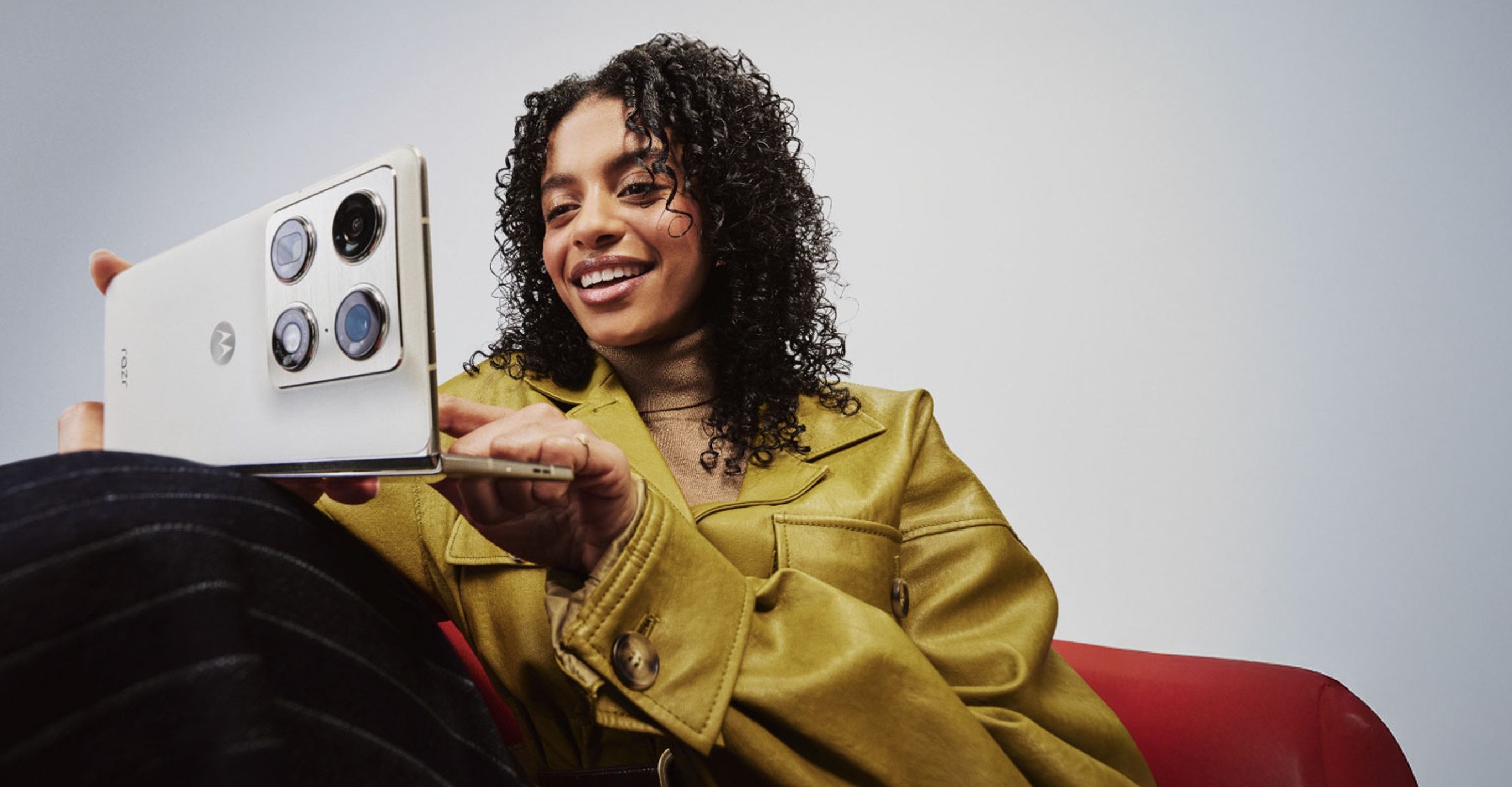
The device matters because Motorola has years of foldable interaction experience, but almost all of it came from flips. A book fold asks different questions: window management, drag-and-drop, large-screen navigation, keyboard ergonomics and app continuity. Razr Fold is Motorola translating its foldable brand from pocketability into workspace.
HONOR Magic V6
HONOR Magic V6 is one of the strongest examples of how quickly the engineering constraints are relaxing. It combines a 7.95-inch inner screen and 6.52-inch outer display with a 6,660mAh silicon-carbon battery, Snapdragon 8 Elite Gen 5, IP68/IP69 protection and a body HONOR lists at 8.75mm folded and 219g.
It also supports stylus input and multi-window software, but its more interesting trick is ecosystem permeability. HONOR promotes integration with iPhone, iPad, Mac, Apple Watch and AirPods. For foldable productivity, that matters because a larger screen is only useful if work can cross devices without friction.
OPPO Find N6
OPPO Find N6 pairs an 8.12-inch inner display with a 6.62-inch cover screen and weighs 225g. It uses Snapdragon 8 Elite Gen 5, a 6,000mAh silicon-carbon battery, 80W wired and 50W wireless charging, and a 200MP Hasselblad-branded main camera. OPPO also offers a dedicated AI Pen.
The company’s “Zero-Feel Crease” language requires a caveat: OPPO itself says this means the crease is typically difficult to see under normal conditions, not that a physical crease does not exist. The more durable story is software. Find N6 treats the fold as a portable workstation with free-flow windows, pen input and cross-app AI rather than as a large phone that happens to bend.
vivo X Fold6
vivo’s newest China-market book fold is the X Fold6. It combines an 8.02-inch inner display with a 6.51-inch cover display and pushes battery capacity to roughly 7,000mAh, a number that would have seemed implausible in a thin foldable only a few generations ago. The device uses a MediaTek Dimensity 9500-class platform and continues vivo’s emphasis on large-screen photography and multitasking.
Its existence alongside the still-global X Fold5 also illustrates an awkward reality of “the 2026 foldable market”: the newest model in China is not necessarily the model a buyer sees in India, Europe or Southeast Asia.
vivo X Fold5
X Fold5 remains officially catalogued in global markets and was still listed by vivo India during this research, even though the newer Fold6 exists in China. It weighs 217g, opens to 8.03 inches, has a 6.53-inch cover display, a 6,000mAh battery with 80W wired and 40W wireless charging, and a ZEISS-branded triple 50MP camera system.
The Fold5 is worth retaining in a current landscape because availability, not announcement chronology, determines what people can actually buy. Foldables are still unusually regional products.
Huawei Mate X7
Huawei Mate X7 is the company’s current full-size book fold. It pairs an 8-inch inner display with a 6.49-inch cover screen, weighs about 235g, folds to 9.5mm, and runs HarmonyOS 6. The Collector’s Edition uses Kirin 9030 Pro and a 5,600mAh battery, while the standard model is rated at 5,525mAh.
Huawei’s large-screen software is now developing in parallel with Android rather than merely reskinning it. That makes Mate X7 particularly interesting to product designers: the same physical problem, two displays and a changing posture, is being solved by a different operating-system ecosystem with its own assumptions about windows, agents and continuity.
The Older Books Still Sold
Several older book foldables remain manufacturer-supported and, in some markets, commercially relevant. They should not be confused with 2026-generation launches, but excluding them would make a “what can you buy?” guide incomplete.
- OnePlus Open remains officially listed in multiple markets. Its 7.82-inch inner display, 6.31-inch cover screen and Open Canvas multitasking system still make it one of the category’s most influential software designs, even though its Snapdragon 8 Gen 2 hardware dates to 2023.
- TECNO PHANTOM V Fold2 5G is a regional alternative with a 7.85-inch inner display, 6.42-inch outer screen, Dimensity 9000+, 5,750mAh battery and stylus support. TECNO still maintains active product pages across several markets.
- nubia Fold is sold in Japan with an 8-inch inner screen, 6.5-inch cover display, Snapdragon 8 Elite and 6,560mAh battery. At 249g it is heavier than the newest global leaders, but it demonstrates how widely the basic book architecture has spread.
- VERTU AlphaFold is the luxury outlier. It has an 8.05-inch inner and 6.53-inch outer display, a foldable body wrapped in VERTU’s luxury-material strategy, and prices that begin around $6,880 and extend dramatically higher. It is not a mass-market competitor, but it is unquestionably a commercial foldable.
Flip Phones Keep Growing Up
Flip foldables are easier to misunderstand because the unfolded experience can look ordinary. Their design value appears when the phone is closed. The cover screen determines whether folding creates a genuinely different interaction mode or merely adds a small notification window.
Samsung Galaxy Z Flip8
Galaxy Z Flip8 has a 6.9-inch main display and 4.1-inch FlexWindow, weighs 180g and measures 6.1mm unfolded. Samsung uses the Exynos 2600 and a 4,300mAh battery, alongside a 50MP main and 12MP ultrawide camera.
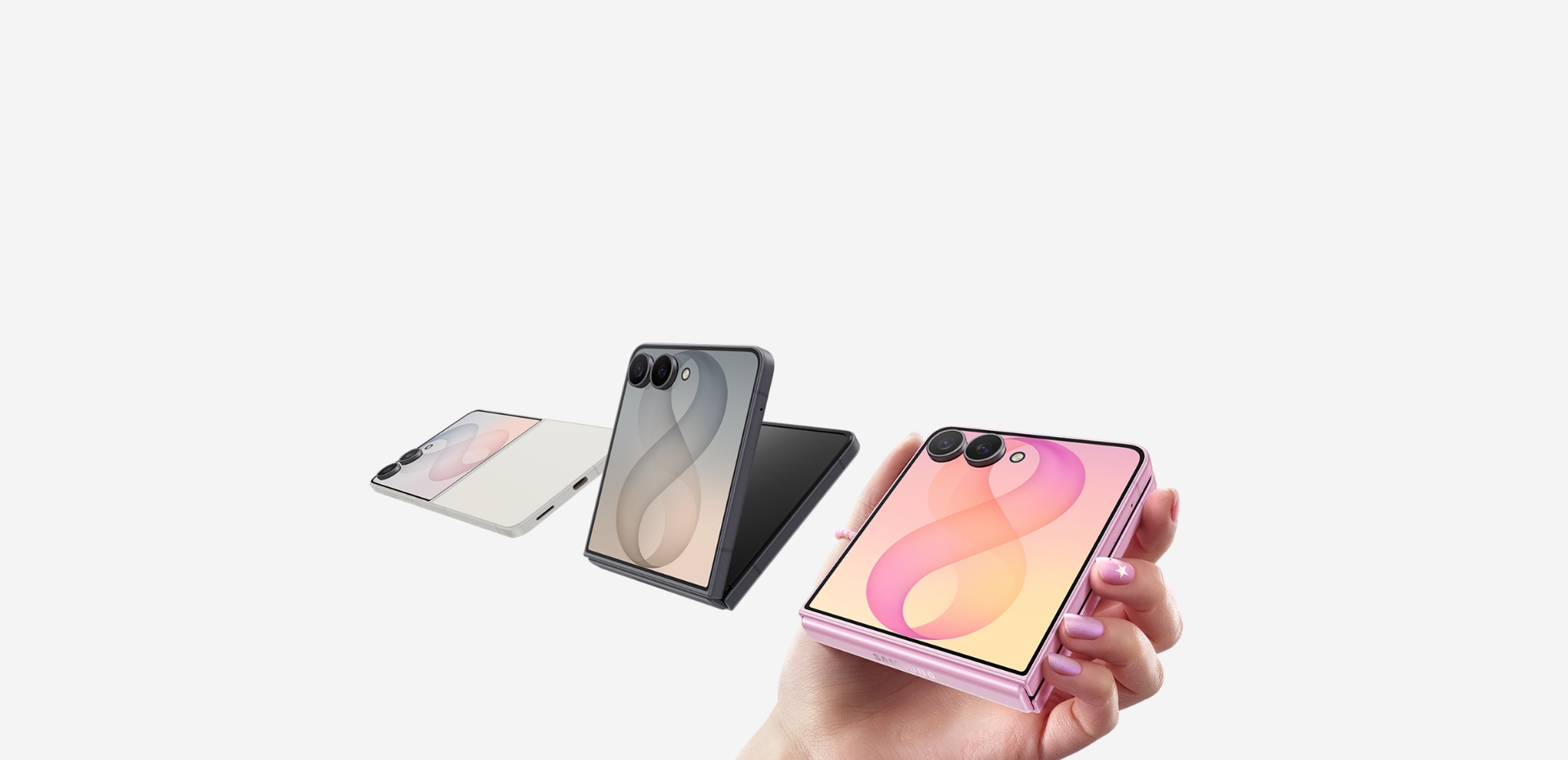
The cover screen is the key interface. A successful flip increasingly has to let users complete small tasks without opening the phone, otherwise folding is only a storage trick. Samsung continues moving FlexWindow toward glanceable AI, camera control and quick actions rather than miniature full-phone replication.
Motorola Razr Ultra 2026
Motorola Razr Ultra 2026, sold as Razr 70 Ultra in markets including the UK, is Motorola’s flagship flip. It uses a 7-inch internal display and a 4-inch external screen that can run full apps, plus a 5,000mAh silicon-carbon battery with 65W wired and 30W wireless charging.
Motorola’s advantage remains philosophical simplicity: the outer screen is treated as a real application surface. That can create more inconsistency than a tightly curated widget system, but it also lets users decide which interactions are worth unfolding for.
Motorola Razr+ and Razr 2026
The Razr+ 2026 keeps a 4-inch external display and 4,500mAh battery with 45W charging, while the base Razr 2026 uses a smaller 3.6-inch outer screen, MediaTek Dimensity 7450X, 4,800mAh battery and 30W charging. Both open to 6.9 inches.
That tiering effectively prices the quality of the closed experience. The more capable the cover display becomes, the less often the hinge needs to be used. It is a rare case where the premium feature is partly about not opening the larger screen.
HONOR Magic V Flip2
HONOR Magic V Flip2 remains a current China-market flip with a 4-inch outer screen, 6.82-inch internal display, 5,500mAh battery, 80W wired and 50W wireless charging, and a 200MP main camera. It uses Snapdragon 8 Gen 3 and carries IP58/IP59 protection.
HONOR also uses the outer screen for translation, payments, messaging and agentic assistance. That matters more than the fashion framing around many flips because it turns the closed object into a distinct mode rather than an inconveniently folded smartphone.
Xiaomi MIX Flip 2
Xiaomi MIX Flip 2 is a 2025-generation model that remains Xiaomi’s current commercial flip in China. It pairs a roughly 6.9-inch inner panel with a 4.01-inch cover display and uses Snapdragon 8 Elite. Xiaomi’s large cover-screen approach emphasizes usable apps and widgets rather than a narrow status strip.
It is included here because Xiaomi’s 2026 foldable story is split: the new 18 Fold changes the book category, while MIX Flip 2 continues carrying the company’s clamshell line.
The Mate XT 2 Ultimate Design opens to roughly 10.2 inches, uses a Kirin 9050 Pro platform and carries a 5,600mAh battery with 66W wired and 50W wireless charging.
Regional and Value Flips
Below the flagship tier, the flip market is much broader than Samsung and Motorola. Several products are older than one year but remain officially sold or actively supported in specific markets.
- TECNO PHANTOM V Flip2 5G combines a 6.9-inch inner display, 3.64-inch outer screen, Dimensity 8020, 4,720mAh battery and 70W charging. Its regional availability makes it important in markets where premium Samsung and Motorola pricing changes the equation.
- Infinix ZERO Flip uses a similar 6.9-inch and 3.64-inch display pairing, a Dimensity 8020 and 4,720mAh battery. Infinix continues to sell it in markets including India, where its official store has listed it well below the launch MRP.
- nubia Flip3 launched in Japan in January 2026 with a 6.9-inch inner and 4-inch outer OLED, Dimensity 7400X, 4,610mAh battery and a 187g body.
- Blackview HERO 10 is a cheaper, 4G-only flip built around a 6.9-inch folding display and tiny 1.19-inch cover screen. Its Helio G99, 4,000mAh battery and 108MP main camera make clear that flexible-screen hardware has reached well below flagship silicon.
- VERTU Quantum Flip occupies the opposite extreme, with luxury-material variants starting above $4,000. Like AlphaFold, it matters less for volume than for demonstrating how the folding mechanism has become a platform for niche positioning.
Tri-Folds Become Real Products
A tri-fold is not simply a larger book fold. Two hinges create more states, more mechanical decisions and a display that can move between phone, medium canvas and tablet-scale workspace. The software therefore has to manage not just “closed” and “open,” but multiple widths and orientations.
Huawei Mate XT 2 Ultimate Design
Huawei’s second-generation tri-fold went on sale in China in September 2026. The Mate XT 2 Ultimate Design opens to roughly 10.2 inches, uses a Kirin 9050 Pro platform and carries a 5,600mAh battery with 66W wired and 50W wireless charging. Configurations launch from 19,999 yuan, with higher storage and privacy-display variants costing more.
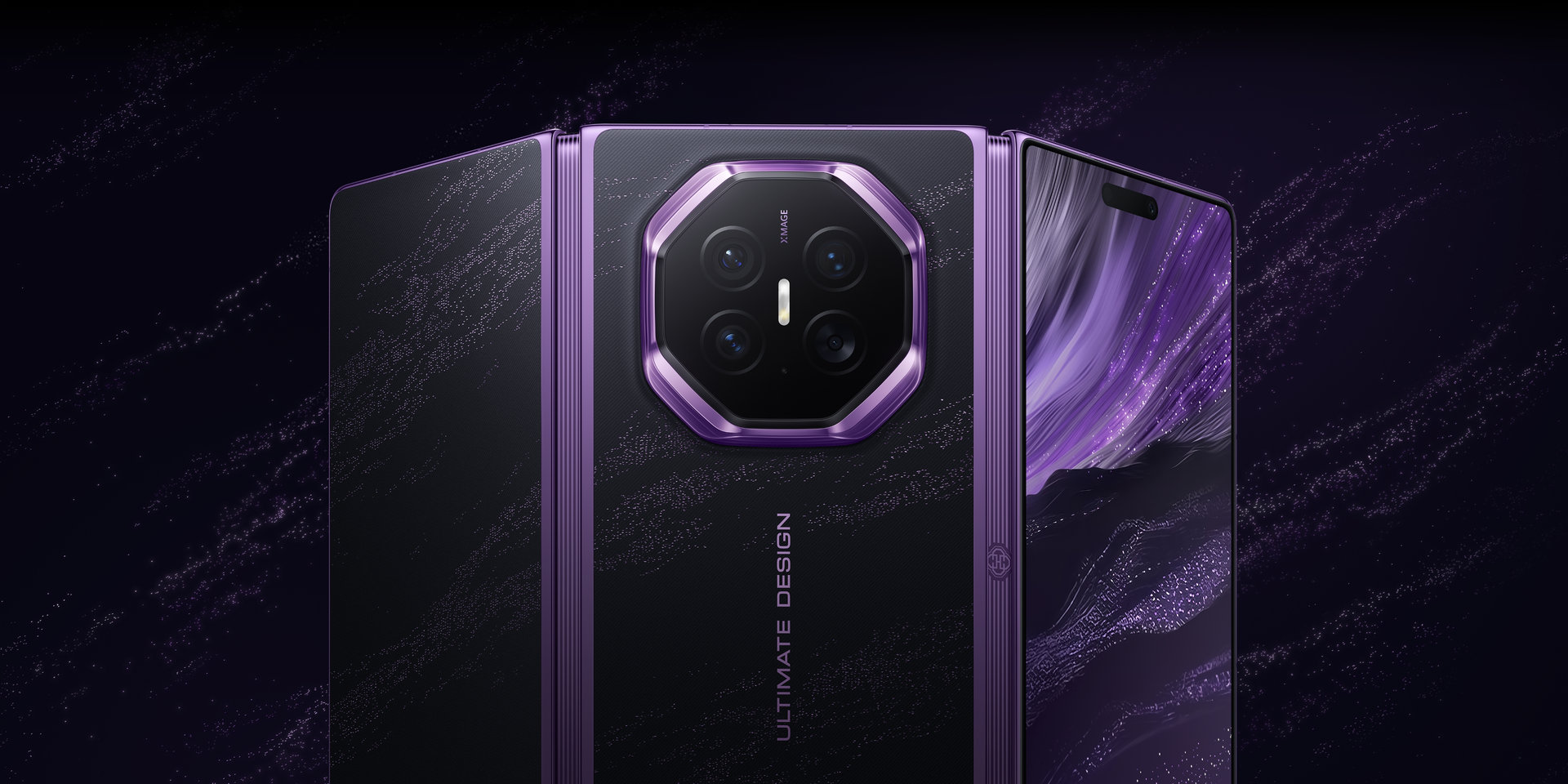
The interaction challenge is bigger than the spec sheet. A 10.2-inch display is large enough for interfaces that resemble tablet or desktop workflows, but the same content must survive when two thirds of that canvas disappear. Huawei’s continuing investment suggests tri-folds are no longer just proof-of-concept engineering.
Huawei Mate XTs Ultimate Design
Mate XTs Ultimate Design remains officially sold alongside the newer XT 2. It provides 6.4-inch single-screen, 7.9-inch dual-screen and 10.2-inch triple-screen states, weighs around 298g and uses a 5,600mAh battery. Its continued sale gives Huawei a two-generation tri-fold catalogue, something no other manufacturer currently has.
Samsung Galaxy Z TriFold
Samsung Galaxy Z TriFold reached the US in January 2026 at $2,899 after launching first in a small group of markets. It opens to 10 inches, keeps a 6.5-inch cover screen, uses Snapdragon 8 Elite for Galaxy and a 5,600mAh battery, and can run Samsung DeX directly on the internal display.
Its folding mechanism differs from Huawei’s exposed Z-style approach: Samsung folds both wings inward to protect the flexible display. The trade-off is a different sequence of opening and closing. Samsung now labels the limited run completely sold out, so this is a genuine 2026 retail device but not currently normal stock. That distinction is exactly why a current landscape needs availability status, not just a list of launches.
What Changed in 2026
Shape Became a Product Choice
The clearest shift is segmentation. Samsung’s Fold8 and Fold8 Ultra are not simply small and large versions of the same phone. One optimizes around a compact wide format; the other preserves the large workspace. Huawei’s Pura X family pushes width further. Xiaomi follows the passport model. Apple enters with a 7.6-inch design whose outer and inner screens deliberately share a ratio.
For product teams, this breaks the old mental model that “foldable support” means adding one tablet breakpoint. A foldable app may now need to move across tall phone, wide phone, square tablet, landscape canvas, half-open tabletop and 10-inch multi-window contexts.
Battery Anxiety Is Receding
Silicon-carbon batteries have changed what can fit inside thin folding bodies. HONOR reaches 6,660mAh, Motorola’s Razr Fold and OPPO Find N6 reach 6,000mAh, vivo pushes higher still, and nubia fits 6,560mAh into its regional Fold. Samsung and Apple remain more conservative, but battery capacity is no longer automatically the obvious sacrifice for buying a foldable.
Durability Is Becoming Boring
That is a compliment. IP ratings, stronger cover glass, revised hinge structures and better dust protection now appear across much of the premium market. Foldables are not indestructible, and flexible inner displays remain more delicate than glass slabs, but manufacturers increasingly compete on degree rather than on whether basic protection exists at all.
The Cover Screen Matters More
On flips, the cover display has evolved from notification window to application surface. On book folds, the outer screen is being reconsidered too. Samsung’s Fold8 and Apple’s Duo show that manufacturers are willing to change its proportions to improve the transformation between states.
That brings the central UX question into focus: what should a user be able to finish without unfolding, and what tasks become materially better after unfolding? If the answer is “the same thing, only bigger,” the hinge is adding complexity without earning it.
Large Screens Need Real Software
DesignWhine’s foldable UX design guide argues that unfolding is useful only when it preserves context, reduces navigation cost or changes ergonomics in the middle of a task. The 2026 hardware market makes that argument harder to ignore. Ten-inch tri-folds, stylus-enabled books and three-app multitasking cannot be served well by stretched phone layouts.
This is also the lesson of the history of foldable phones: flexible screens became technically impressive long before their software consistently justified the extra surface. The hardware is now diversified enough that interface design, not hinge novelty, is the bottleneck.
Foldable UX Now Has Four Jobs
A useful way to evaluate the category is to ask what transformation each shape is supposed to buy.
- Flip: reduce physical footprint and move frequent micro-interactions to the cover display.
- Wide fold: create a compact phone that opens into a more comfortable reading, media or paired-app canvas without becoming a full tablet.
- Full-size book: switch from conventional phone interaction to serious multitasking, editing, pen input or richer information density.
- Tri-fold: cross a device-class boundary into a roughly 10-inch workspace where windowing and input can begin to resemble a tablet or small computer.
The strongest foldables make that transformation legible. The weakest still sell screen area as if area alone were a use case.
Phones We Did Not Count
Completeness also means being explicit about exclusions. Rumoured devices such as Motorola’s reported Razr Flex are not in the main list because they have not been officially launched. Concept devices such as TECNO’s earlier tri-fold demonstrations do not count as commercial phones. Old Galaxy Z Fold and Z Flip generations, Huawei Pocket 2 and nova Flip S, and similar models may remain in support databases or third-party channels, but they are no longer the manufacturers’ active foldable proposition in the same sense as the devices above.
Huawei Mate X6 is a borderline example: Huawei still lists it in China even though Mate X7 supersedes it. Rather than inflate the headline inventory with every previous generation a manufacturer has not yet removed, this guide treats it as legacy current-channel stock. The same principle applies to older regional foldables.
The Market Is Finally Fragmenting
The most interesting thing about foldable phones in 2026 is not that there are more of them. It is that they increasingly disagree about what folding is for.
Samsung now offers compact fold, Ultra fold, flip and tri-fold products. Huawei spans wide folds, full-size books and two generations of tri-fold. Motorola sells three flip tiers plus a book fold. Apple enters with a shape closer to a small notebook than the tall Galaxy Folds that defined the category for years. Regional manufacturers are simultaneously pushing the technology downmarket and into specialist niches.
That fragmentation is healthy. The first era of foldables was largely about proving a flexible OLED could survive in a pocket. The next era is about whether changing geometry can produce a meaningfully better interface.
A larger screen is not automatically a better foldable. It has to reduce interaction cost when the device changes state. In 2026, there are finally enough different shapes on the market to tell which manufacturers understand that distinction.






Which foldable shape feels most useful to you in practice: flip, wide fold, full-size book or tri-fold? The interesting shift in 2026 is that manufacturers are no longer converging on the same answer.